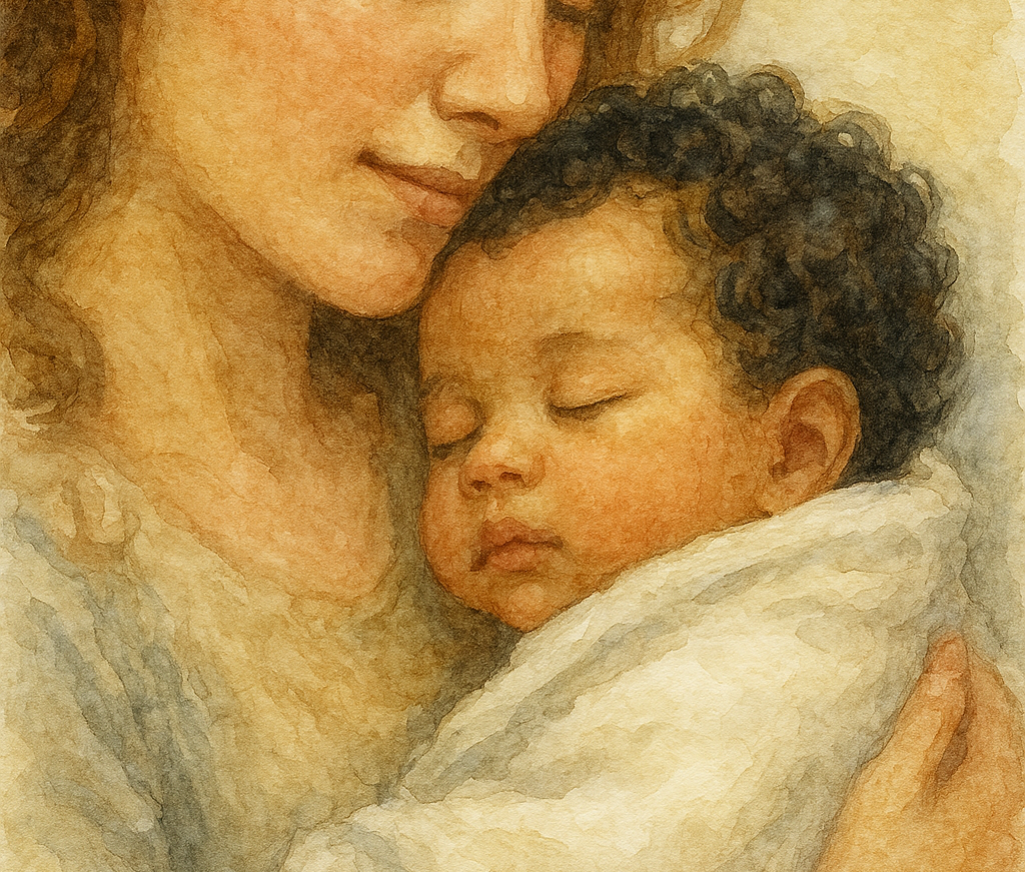
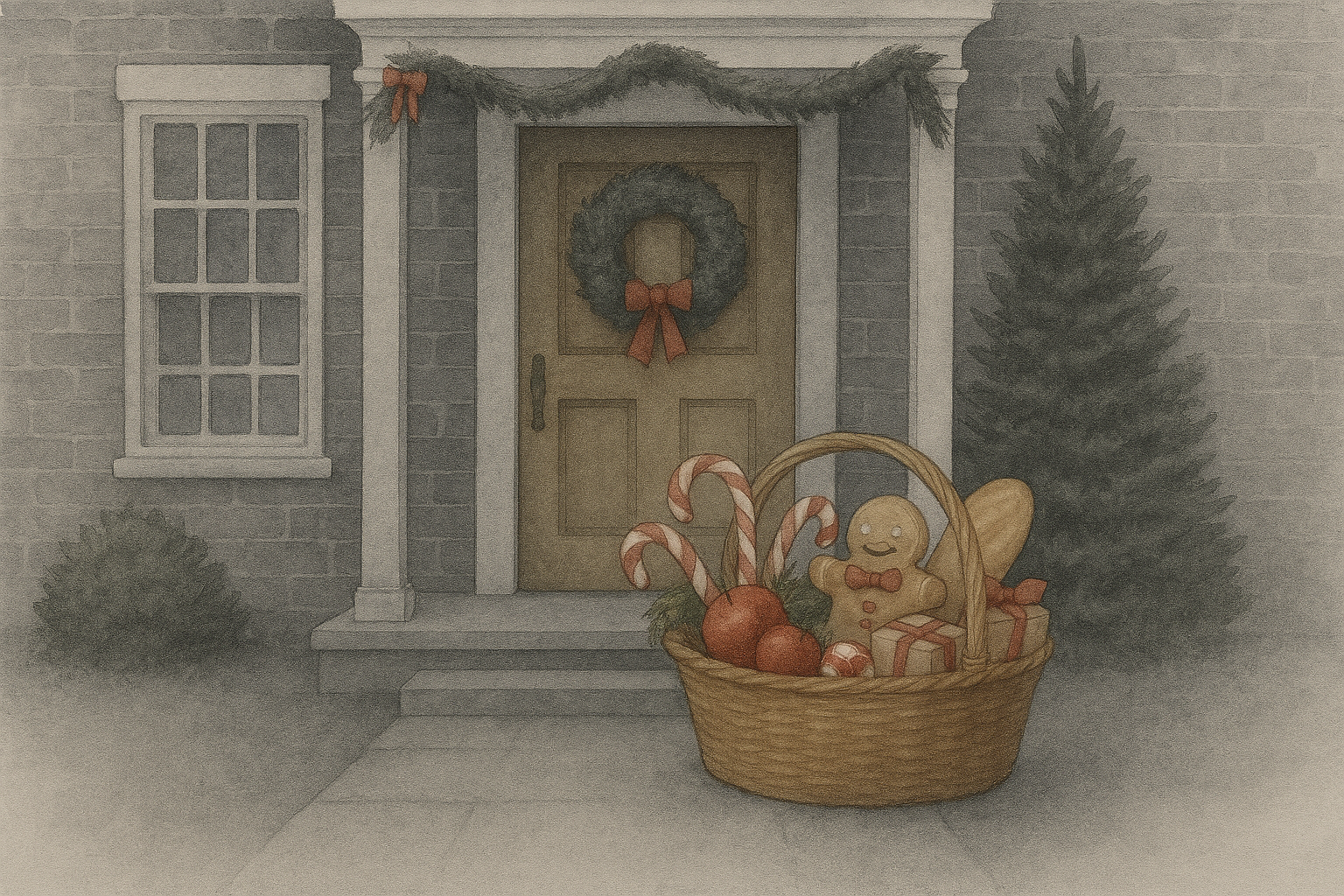
As my plane descended into Manchester, a sick feeling settled into my stomach. So many times I had arrived at this airport to be greeted by my smiling Mom and Dad. Not today.
In fact, I felt a heaviness knowing that she would never be there to greet me again.
Mom was diagnosed with congestive heart failure several years before this. She did everything she could to take care of herself—eating, drinking, and exercising just like they told her. But most of all, she just kept going. She kept doing.
While there were some medications, procedures, and just overall bumps along the road; for the most part, she did much better than expected. And even though her heart function has been hovering at 12-15% for some time, she lived a surprisingly normal life. Loving, serving, and giving of herself. What her heart lacked in health and strength in made up for in grit and bravery. Less than a year before this arrival in Manchester, she had kayaked 17 miles down the Delaware River. She was nearly 72.
As painful as those final days with Mom were, I choose to write about them now because I want to remember. Even in the hardness, there was a sweetness that popped up along the way like the heads of bright wildflowers beside a lonely dirt road that leads to a place you don’t want to go.
It’s hard to say exactly when the “final days” began. She was hospitalized Thanksgiving of the prior year (2022) and again shortly after Christmas. But for me, it was a little harder to know for sure what was really going on since I usually get cheery, upbeat telephone reports insisting she was fine.
I purchased a plane ticket for her to come and visit us in South Carolina for Mother’s Day (2023). Unfortunately, she would not be able to make that trip. She was in the hospital—one of a series of long hospital stays. A quick google search of her symptoms and reports told me what I hoped was not true—she was in stage four heart failure.
When I came up with the girls to visit Mom and Dad at the end of May, she was back in the hospital. There were still a scattering of Christmas decorations around the house. It was plain she hadn’t been feeling well for some time.
The girls and I got to see her a few times in the hospital during that week. Dad was holding on to hope that she would bounce back and be able to enjoy plans that they had made for the summer. In fact, they were so determined, that after she was released in early June, Mom and Dad drove down to South Carolina for a wedding.
Shortly upon arrival, she was having trouble with nausea and ended up getting admitted to the hospital June 13 for her final hospital stay. Since she was in Greenville, South Carolina, I was able to see her for eight of the ten days that she was there. My siblings made long trips to see her and, of course, Dad stayed with her for the long, long days. Paul stayed all night with her. Erin’s daughter played harp for her in the hospital. Allyson brought her “Gladly” the cross-eyed bear. Still, we were never able to all get together as a family—something that grieved Dad and I deeply.
After the initial admission, the hospital doctors seemed to be giving good news. Her organs were stable. They expected her to get better. One of the nurses even told me that she thought Mom’s main problem was anxiety and perhaps that why she wasn’t able to eat without vomiting.
I appreciated the good news, but I knew Mom’s problem was not anxiety. Mom knew her problem was not anxiety. She had fought all she could fight and her body was shutting down. Understandably, Dad wasn’t ready to give up and when they moved her from ICU to the cardio wing, it seemed like perhaps there was progress. Mom and Dad were anxious to get back to New Hampshire and we talked about ways she could make the trip.
Still, Mom was not able to eat without nausea. The numerous meds they tried seemed to make no difference. Her system just would not process food of any kind; sometimes she could not keep a drink down; no matter how small the sip. They gave her an IV—messing with the delicate balance between her fluids and her heart. Finally, the labs began to tell the story that my mom had been telling through her weakness: her system was shutting down. She was not going to get better.
I’m thankful my brother was there when they delivered the news. Erin and I weren’t far away. Mom was weak and by this time; unable to stand. They were ready to discharge her from the hospital and home was a thousand miles away.
There are moments from that day that were horrible. A few that were strangely sweet. Lots of “I love yous.” Lots of tears. A few goodbyes that Mom wanted to say over FaceTime and phone.
Mom seemed somehow relieved that someone had given her permission to stop fighting—even if it was an arrogant doctor with the heart of a grinch and the soul of a Scrooge. She was ready to pull all the plugs, cords, and wires, and go home. Home to New Hampshire. Home to heaven.
The five of us tried to work on a plan of what to do next. There were so many details —big and small—to work out over the next 24 hours. Curtis helped us find an airplane, a pilot, and a plan. We spoke with palliative care, hospice South Carolina, case management, and hospice New Hampshire. We worked to find rides for Mom to and from the airport. She was now not able to even sit in a wheelchair or do any functions herself.
As I watched the team arrive with a gurney and wheel her out, all I could think of to say was, “we’re blowing this joint!” Looking back, it seems I was so heartless, but I was just numb.
Mom lived one more week at home, if you could call the last week “living.” She slowly slipped away from us and to Jesus.
To my mom, the last six days were too long. The last six weeks, longer still. The last six months, an eternity. She didn’t like being waited on. She didn’t enjoy feeling her body giving up—function by function. She didn’t want to feel like she was unable to be useful to anyone—that all should could do was require energy from other people.
But God knew we needed every day He gave her. He knew we needed some time to show her we love her; to listen to her last words of wisdom; and to process the inevitable.
She told me she loved me. She told me she felt no pain. She believed I would get married and my girls would have a wonderful dad. I’ll treasure those words forever.
But, even as I reflect on the sweet memories of that last stay with Mom, the weak woman in the bed is not the one I remember. There was so much more.
So, even as I want to remember those days, there is a long list of things she taught me that I want to remember more:
Read the Bible
Work hard
Give till it hurts
You have two good legs
How not to make money
Life’s not fair
Invest in your kids
The bacon is done when the smoke alarm goes off
Speak to authority with respect
Finish your food and carry your plate
You don’t need a TV
So much I could say about these things and the love and the spankings that made them stick. But alas, life hasn’t given me time to do them justice. Yet.
Dad is engaged now to be married to my aunt Penny in a few months. I’m very happy for him. He needs a wife and Penny will be amazing. I’m sure there’s plenty I can learn from her as well. Loving my mom doesn’t mean he can’t love someone else.
But it also doesn’t mean we can’t look back with full hearts on Mother’s Day and be thankful for the beautiful woman I got to call “Mom.” And for the wildflowers peeking their vibrant heads along the edges of a road that led somewhere I didn’t want to go.
December 1775 a letter containing British intelligence is intercepted by American patriots. It tells of an impending British invasion of Charlestowne, South Carolina.
To prepare for the British attack, Col. Moultrie and his Regiment arrive on Sullivan’s Island in March, 1776. Their plan: construct a fortified defense to protect the harbor. But time is short and there are few resources. With no other choice, they hastily begin the process of creating log fortifications from the thousands of spongy palmetto trees which are abundant and close at hand.
Despite the American’s best efforts, the fort remains unfinished when on June 1st the British first appear in the harbor. The half completed fort constructed of flimsy palmetto logs presented an unimpressive sight. The British were thrilled; they can blast the ragtag fort apart in minutes.
And they aren’t the only ones wholly unimpressed with the fort. The American General- General Lee arrived at the fort shortly before the fight began.
Moultrie wrote: “… when he [Lee] came to Sullivan’s Island, he called it a ‘slaughter pen,’ and wished to give up the post.” But Moultrie insisted he would hold the fort.
The British continue their advance and the night before the battle, word was circulated through the British fleet that “no quarter would be given the Americans.”
The battle is about to begin. On one side is the British armada with a fleet of nine mighty men-of-war bristling with 300 heavy guns. On the other stands the flimsy-looking palmetto log fort of the Americans with 31 cannons.
At 11:30, a powerful broadside erupts from the closest ships. Describing the bombardment that followed, Lee wrote: “ it was the most furious and incessant fire I ever saw or heard.” In fact, multiple witnesses to the event all told how on one occasion, 3 or 4 men- of- war simultaneously unloaded broadsides striking the makeshift barricade in concert and causing a massive tremor down the entire fort.
The shelling lasted nearly 10 hours. The British reportedly fired 17 tons of gun powder and landed over 1,200 shots into and around the fort, many of them 13” cannon balls.
THREE WORDS
“Love is patient.” Now the most common English translation of I Corinthians 13:4.
Indeed, these three words have found their way into greeting cards, wall decorations, common parlance, and even our memories.
Words we often read with an understanding that is…shallow. It is as if they were plucked from a hallmark card.
LOVE
For starters, this word, “love,” is “agape.” Paul is not speaking about love in general or love as mere affection. In the Greek text, Paul uses a very specific word: ἀγάπη (agapē)—and he repeats it throughout the chapter: In other words, 1 Corinthians 13 is not a poem about romance or temperament; it is Paul’s Spirit-inspired description of a distinctly Christian love—agapē love.
Scripture does not leave agapē as a vague theological term. You won’t find it necessary for commentators to debate the concept in long thesis or position papers.
God was deliberate to make sure we understand the word. To make it plain, God not only defines it in passages like I Corinthians 13, but most significantly, He personally demonstrated it: John picks up this narrative in his short letter: “In this was manifested the love of God toward us, because that God sent his only begotten Son into the world” (1 John 4:9). And again: “Herein is love, not that we loved God, but that he loved us, and sent his Son to be the propitiation for our sins.” (1 John 4:10) Paul’s words echo the same theme: “But God demonstrates His own love toward us, in that while we were yet sinners, Christ died for us.” (Romans 5:8).
*Agapē love is not prompted by how lovely the object is—it is driven by how holy the Lover is. That is agapē: love that moves first, love that gives, love that acts solely for the good of someone else–most often the undeserving.
*Agape is not a feeling one has; it is an act one does.
Back to John’s short letter: “Hereby perceive we the love of God, because He laid down his life for us: and we ought to lay down our lives for the brethren.” (1 John 3:16) Then, he makes it unavoidably practical: “Let us not love in word, neither in tongue; but in deed and in truth.” (1 John 3:18) So agapē is not sentimental. It is active, costly, and visible—love that absorbs wrongs and still chooses righteousness.
II. SUFFERS
And then there is this word… one most commonly translated in English Bibles as “patient.”
The English translators took a verb-the operative Greek word “makrothymei” and rendered it “patient”- an adjective. An adjective is a word that describes a place, person, thing. As a result, most English translations render it as what love “is” “love is patient.” ;
But “makrothymei” is really a verb- an action word. If we interpret it more closely, the word would convey an active idea- what love “does”. So, what is it love does? I think the NKJV captures it best: “love suffers long”.
That is very different from “love is patient.”
If you are like me, the word “patient” conjures up images of being nice while sitting in traffic or waiting at a doctor’s office. Patience is not being annoyed at how long it takes a package to come to my door or a pizza to my table. It was the instruction of my elementary school teachers to: “wait quietly.”
Instead, the first thing Paul would have us know is “love suffers…”
To be honest, when I read these words from Paul “love suffers…” I want to respond, “Not a good move Paul. C’mon man,- you’re always writing these laboriously unending sentences about bewildering concepts. And now… we finally get to something that we understand and makes us feel good and you are going to lead the discussion with “love suffers”…?
But the truth is, to apply “wait quietly” imagery to this text leads to a wholesale underestimation of the profound capabilities of Agape. Paul is describing a spectacular ability of Agape far beyond “wait quietly.”
Paul wants us to know that Agape can pull off a feat so grand, so impossible, so mind-blowing, it can only be attributable to super-human power.
But first you MUST know… “love suffers”.
Why does Paul talk about suffering?
To understand why Paul discusses suffering, you must come with me to Corinth — because context changes everything.
Corinth was a powerful, wealthy, cosmopolitan city — a crossroads of commerce and culture. People came there to get ahead, to build a name, to win status. And when the gospel reached Corinth, it saved real people who were living in that world of self-centeredness — but it didn’t instantly erase the habits the world had carved into them.
A church full of these people wasn’t merely “imperfect.” It was fractured. It was broken.
Paul says right at the start: “I hear there are divisions among you” (1 Corinthians 1:10–12). They were forming factions — “I’m of Paul,” “I’m of Apollos,” “I’m of Cephas.” In other words: they were turning the church into a status competition. Even spiritual leadership became a trophy.
It gets more painful. Paul confronts serious sin that the church was tolerating (1 Corinthians 5). He rebukes them because believers were taking one another to court (1 Corinthians 6). He corrects them for using Christian liberty in ways that wounded weaker brothers (1 Corinthians 8–10). And even at the Lord’s Table — the very meal that proclaims unity in Christ — Paul says some were humiliating others (1 Corinthians 11). The church that gathered around the cross was cutting each other with their words, their freedoms, and their selfishness.
Why would Paul begin “love suffers”? Because the church of Corinth was on the verge of imploding; he wanted them to stay in relationship when they were wronged, insulted, disappointed, misunderstood, and provoked.
It is wise to recognize that it is a fact that all of us have a sin nature. And all of us live in a very broken world. We are fallen people in a broken world. If we choose to love fallen people in a broken world, all will not go well. KNOW THIS: Anyone who chooses to love fallen people in a broken world will suffer injury—repeated injury.
In fact, the only One who ever loved perfectly suffered greatly.
And let’s not make light of it; sometimes it isn’t just discomfort or a temporary sting, it can bring real “suffering.” The very benefactors of our affections will cause genuine and deep hurt. Parents, children, spouse, friends, even fellow church members. Remember, what we read here was written specifically to Christians within the context of a church.
In all of those loving relationships, there will be injury and suffering. A word thoughtlessly spoken, a generous and sacrificial act gone unappreciated, and probably worse.
That’s exactly what happens in a broken world full of fallen people— in a real church, in real friendships, in real-to-life families.
In a broken world full of fallen people, love and suffering are companions.
I don’t like saying this anymore than I enjoy reading it from Paul. But—this is an important message. It is not recounted to depress you, but to prepare you.
Knowing love suffers dispels the notion that it isn’t love unless it “feels right.” It removes the shock when someone we love mistreats us; it enables us to be prepared to respond with Agape when the blows come. It is so important a message Scripture puts it FIRST in the things we should know about love. It suffers.
Now all love suffers. But how Agape love responds is what sets it apart- it ENDURES or as the Greek would say it “suffers…LONG”
III. LONG–LOVE ENDURES
Remember, chapter 13 is not floating out in the air. Paul intentionally discusses this subject between two chapters on spiritual gifts: 1 Corinthians 12 and 14. The Corinthians were given spiritual gifts; as all believers are — but they were immature. They were impressed with what was spectacular, what was powerful, what was public. They were obsessed with gifts that looked impressive.
Look at the end of chapter 12, verse (29-31). Paul rehearses the gifts that are displayed in public, apostleship, teaching and miracle-working. He then says at the end of chapter 12: “ And I show you a more excellent way” (1 Corinthians 12:31). Or as the NLT says it: “ But now let me show you a way of life that is best of all.”
What is the way of life that is “best of all”? Scripture tells us it is a love that suffers long: “Love suffers long…” (1 Corinthians 13:4, KJV)
June 28, 1776. For hours the British guns poured over a thousand rounds into the fort. But, to everyone’s bewilderment, the tiny fort held together. One eyewitness observed the fort to be “scarcely injured.” A letter written by a British surgeon after the battle said “ I can scarcely believe what I saw on that day; one would have imagined that no battery could have resisted the incessant fire.” But resist it did.
The sought-after hardwoods would have splintered. But the spongy palmetto logs that looked frail had simply absorbed-soaked up- the heavy blows of each broadside.
All love suffers- But Agape is like those palmetto trees- it “suffers long”- ENDURES. It absorbs wrongs like that tiny fort and just keeps loving.
We could say, “Agape can take a punch.”
As Jonathan Edwards said, “He that exercises a Christian long-suffering toward his neighbor will bear the injuries received from him without revenge or retaliating, either by injurious deeds or bitter words.”
Peter puts this succinctly: “Love covers a multitude of sins.” – I Peter 4:8
Agape love is not demonstrated on our best day — but when we are injured. When our motives are questioned. When our sacrifice goes unnoticed. When someone speaks harshly or says something untrue. When a brother or sister disappoints again… and again… and again.
Those things were happening in the church, friendships and families in Corinth. And that that is the story of every church, every friendship, and every family.
Paul says, the best way of life is a love that suffers long—endures. It is a love that survives in real life, a love that is engineered for relationships where wrongs happen, and where, by God’s grace, we choose to keep loving anyway. It is love not fashioned delicately for display, but built to survive the spiritual battlefield.
And notice how Paul develops this in the following verses: He says Agape is not easily provoked — and it “thinketh no evil” (1 Corinthians 13:5, KJV). In other words, Agape gives the benefit of the doubt— it is not living with suspicion. It does not go about with fists clenched, keeping a ledger of wrongs, collecting evidence, building a case, or nursing resentment. Agape doesn’t become vengeful. Agape doesn’t become bitter. Agape doesn’t act cool toward others.
So, when you read in the Hallmark card, “Love is patient” don’t picture a person quietly waiting in a doctor’s office. Picture the church at Corinth — a community of redeemed sinners learning how to live together without destroying each other. Picture ordinary believers learning how to respond when the very people they are commanded to love become the source of their pain.
Isn’t that exactly how you want, even terribly need, God to love you? With a long-suffering, never-ending, never-fading, forgiving kind of love? Isn’t it true that you- again and again- have been difficult to love? Isn’t it true that you have given Him every reason to cease loving you?
Aren’t you thankful:
When God choose to reveal Himself to Moses, God declared Himself to be “compassionate, gracious, slow to anger…” (Exodus 34)
Can’t you rejoice with David and say:
“The Lord is compassionate and gracious, slow to anger and abounding in lovingkindness…He has not dealt with us according to our sins, nor rewarded us according to our iniquities. For as high as the heavens are above the earth, so great is His lovingkindness toward those who fear Him.” (Psalm 103)
Don’t you worship with Peter who reminds us:
“God is long-suffering toward us, not willing that any should perish” II Peter 3:9
Aren’t you a witness to the words of the prophet Jeremiah:
“The steadfast love of the Lord never ceases, His mercies never come to an end, they are new every morning, Great is His faithfulness.” (Lamentations 3:22-23)
DON’T WE DESPERATELY NEED GOD TO LOVE US LIKE THAT?!
Reading those words changes my perspective- it causes me to rejoice that “love suffers long”! I MUST BE LOVED LIKE THAT OR I WILL NOT BE LOVED AT ALL.
But it goes against everything within us to love others this way. It causes us to ask, “how can I do that?”
IV. HOW CAN I DO THIS?
Paul’s audience would have asked the same question- they would be more perplexed than we are. Paul’s definition of love to his Greek audience at Corinth was embarrassing and counter-cultural. In Paul’s day it was dishonorable and even shameful to tolerate a wrong.
John MacArthur writes: “In the Greek world, self-sacrificing love and non- avenging patience were considered weakness unworthy of a noble man or woman. Aristotle, for example, taught that the great Greek virtue was refusal to tolerate insult or injury and to strike back. Vengeance was the virtue.”
Scripture gives guidance we need:
By Remembering
Remember the suffering you have caused: To love like this Scripture suggests we consider our own offenses: “…bearing with one another…as the Lord has forgiven you so you must also forgive…” (Colossians 3:12-13)
John Edwards said: “They that love God as they ought will have such a sense of His wonderful long-suffering toward them under the many injuries they have offered to Him that it will seem but a small thing to bear with the injuries that have been offered to them by their fellowman. All the injuries they have ever received from others in comparison with those they have offered to God will appear less than a few pence in comparison with ten thousand talents.”
Edwards’ words call to mind the story of Christ who told of a servant forgiven a vast sum – yet was unwilling to forgive a fellow-servant a small amount. (Matthew 18)
When enduring an offense we do well to remember the truth that we have offended a holy God and have been forgiven much.
B. By Supernatural Sourcing
Love that suffers long isn’t intended to come from us. It isn’t a product of our discipline, being tough, or resolute. It is a byproduct of a relationship with Christ. It is the fruit of abiding in Christ as described in John 15 or Romans 5:5. “The love of God is shed abroad in our hearts by the H.S. Who is given to us…”
Love is a fruit of the spirit working in us. (Galatians 5:22)
CONCLUSION:
Moses stood before a burning bush. What captured his attention was that the bush was not consumed in the fire.
The palmetto tree gained attention because it withstood an incredible barrage; beyond anyone’s expectation. For that, it became our state tree and adorns our flag.
Agape suffers long- This one attribute of agape love so radically defies logic it arrests the attention of anyone who sees it. Love built for the battlefield of real life; love that absorbs the blow and keeps on loving.
Let’s hear afresh the words of Jesus: “A new commandment I give to you, that you love (agapate) one another; Just have I have loved (egapesa) you, you also are to love (agapate) one another. By this all people will know that you are my disciples if you have love (agapen) for one another.” – John 13:34-35
The two did not exactly spring out of bed early on Christmas Eve. Stuart was exhausted from his 16-hour work days and Julia still had catching up from her sleepless night.
But by mid morning, Julia’s Subaru was making it’s way out of the neighborhood. Julia chuckled at all the deflated blowups that littered the neighborhood lawns. “It’s like Christmas threw up in the officer housing,” Stuart joked.
The five-hour car ride to Woodstock was slightly awkward. Julia could see that despite Stuart’s enthusiasm, he was still a bit nervous. It had been a long time since they had tried to do something not related to her illness. And for her part, even though Julia’s fear of the worst had passed, she still felt keenly the distance between them and the rawness of the terrible twelve hours she had lived only a short time ago.
But soon, Stuart was telling her about the remodel he had done and she got to see pictures on his phone. Julia told Stuart about little screaming Malachi and how she had helped Carrie get ready for their family festivities.
“Didn’t you used to say she intimidated you?” Stuart asked.
“Yes…well…not anymore. I am still impressed with her though. I don’t know many women who could handle that much screaming and not lose their minds.”
“Or men.”
“Yeah, I don’t know any men who could,” Julia said teasingly.
“Well…you’re not wrong.”
“I’d be open to doing foster care one day.” Julia kept her eyes on the road; not sure whether she dared read the expression on Stuart’s face at that.
“I’m listening,” he said finally.
And Julia found herself continuing. “It’s funny, as I held that little guy and felt him squirm and kick and scream, it taught me something. I saw myself in a whole new way…”
Stuart truly was listening. It felt so good to communicate about something besides doctors and medical bills. “He taught me something, in fact. Probably sounds silly…but the first day I was there I just saw how he cried and cried; so unhappy with his life even though all his needs really were being met. I thought about you…how you’ve held me through it all. You’ve been there each step of the way. You’ve been patient with all my mood swings. You’ve loved me in sweat pants and no make up. You haven’t complained when we’ve had to spend your hard-earned money on traveling to Boston for second opinions…I realized how thankful I was for you.”
“It was nothing.” Stuart replied in a husky voice that Julia knew was attempting to cover tears of his own.
“But then…I don’t know if I should tell you this part…”
“Tell me.”
“Then I was leaving the Grimsley’s house around ten or so. For no real reason, I decided to drive around the long way back to the house.” Julia still hesitated. “And I saw…your truck.”
They both were silent for a moment. She could see he was absorbing what she was saying.
“I saw your truck at the Greens. I knew Eric was gone; but I didn’t know—”
“Olivia was out of town.”
“Right. The only thing I could think of was that you were lying to me—”
“Why didn’t you ask?” Eric seemed slightly irritated. “Surely, you know I wouldn’t lie to you. I was only there a few minutes.”
“You hadn’t been answering your phone.”
There was silence again. Julia wasn’t sure if she should regret telling him or be glad it was done. She did feel like saying it to him had brought her a sense of relief.
But once it sunk in, Stuart seemed to understand. “I didn’t answer my phone because I was so determined to surprise you. I was afraid you were going to start asking questions and I didn’t want to have to lie.”
It felt so good to be talking again.
He continued. “I know you’ve been through a lot this year; I wanted to make Christmas special. Get you to a different setting where you didn’t have to think about…things.”
“To your credit, even though the facts looked bad; and even though my mind was running away with things; I couldn’t quite believe it. And what’s more, I didn’t want to believe it. There’s nothing like feeling like you’re losing something to make you appreciate it.” She echoed Julia’s words from earlier.
“Boy, don’t I know.” Stuart looked at Julia with a tenderness in his eyes that made her fall in love all over again.
There is nothing as wonderful as falling in love with the man you’re already married to, she realized. Nothing.
There was silence for a moment and then Stuart talked.
“I was feeling pretty low that night too. We weren’t talking much—maybe I shouldn’t have tried so hard to keep a secret. It was all I could think about and I didn’t want to blow it. But anyway…I couldn’t talk to you. Eric’s gone. Most of the guys on base lead pretty different lives…we talk some, but it isn’t the same.”
Julia nodded.
“And this may seem childish to you…but I was really missing my family. Christmas was always a huge deal at our house. We would always have a pickleball tournament—Dad and Mom would buy the winner a new pair of tennis shoes. Brian and I would get pretty cutthroat.” He laughed, then continued. “Mom would made prime rib and Aunt Sally would bring a chocolate cake that’s just out of this world.”
Julia reached for his hand. Stuart had never told her this.
“I missed last Christmas because of our engagement. And the two years before that because I was deployed. I feel like my nephews and nieces are growing up and I’m missing it. You know? I want to be the fun uncle. Especially since…” he drifted off and Julia knew what he was thinking. She gave his hand a squeeze to make sure he knew it was okay to keep talking. But he didn’t finish.
“Next year,” she said, “next year, we will go spend Christmas with your family.” But then she caught herself. “Actually, I think I’m just going to let you plan. I think you do just fine.”
Stuart squeezed her hand and then seemed to find his voice again. “That next morning, my Bible reading was especially meaningful to me. It was about Immanuel.”
“God with us.”
“Yeah. And it was just a perfect reminder for me, right then. I wasn’t alone. We aren’t alone. He will always be with us. And that’s enough.”
The two finished the ride holding hands. The silence no longer felt awkward or sterile. It was warm and comforting. They had a Savior. That was enough.
———————————-
Woodstock was beautifully decorated for Christmas. The hotel was like a storybook. There was a big roaring fire in the lobby and festive trees at every corner. The place was buzzing.
“I thought we’d go to that little church in town for the early Christmas Eve service,” Stuart told her. “Then, I made dinner reservations at 6:30.”
Julia opened her suitcase and started to unpack. “I don’t know if I brought anything to wear to church,” she bemoaned. She hadn’t dressed up in ages.
“How about this?” Stuart was taking her burgundy engagement dress out of his suitcase. “It’s Christmasy. And it looks beautiful on you.”
Stuart wanted to walk to the church so they wouldn’t lose their parking place. It was a little cold for that, but Julia decided not to complain. It wasn’t far and it would be fun to peak in the store windows on the way.
As if God was smiling on them, a light sprinkling of snow began to fall. “This reminds me so much of last year!” Julia commented. And just then, they reached the wooden covered bridge where Stuart had popped the question one year ago, today.
It was still just as quaint. The falling snow hadn’t started to stick yet, but it did make it even more romantic. Julia was trying to find the words to say something more when Stuart interrupted her thoughts.
“Look at that dog over there.” Julia turned to see where he was looking. That was something they had noticed last year; everyone seemed to have a dog in this town. But this time, she didn’t see one.
She looked back to see Stuart, down on one knee. “Julia, I can’t imagine my life without you. I believe God has made us uniquely suited to do life together as a family. I love you and I always will. Would you grow old with me?”
“Yes.” Julia said. Because, in that moment, she could think of nothing else to say. But yes was not enough. So she said it again. “Yes…yes…YES!” And with that, she threw herself into his arms.
Julia did not sleep, however. She did not sleep at all. Her mind raced circles through life, looking for clues as to what was going on. She didn’t want to believe Stuart was lying to her, but it was hard to conclude otherwise. She felt guilty for not being a good wife. She felt angry for being betrayed. She felt bad about doubting him. She felt foolish for believing.
She refused to completely believe the worst; but she could not ignore that it was staring her in the face. It did seem like Stuart was hiding something. She knew him well enough to know that something was a bit off.
It was a long, long night. She heard every tick of the wall clock. Every dong of the hour. She tried not to think about Olivia’s engaging smile and her cute, active kids.
Stuart slipped out early once again; but this time, Julia was up immediately upon hearing the door click. She didn’t know what to do, but she could not lie by herself in the dark even a minute longer.
She went to their bedroom…still looking for clues. She saw nothing except Stuart’s Bible—open by his bedside. He read it every morning; no matter how early he had to leave. Next to it was a small Advent Bible study. Stuart had suggested they do it together, but Julia had never felt like waking early enough.
She glanced at today’s reading. Isaiah 7:14, “Therefore, the Lord Himself will give you a sign: the virgin will conceive and give birth to a son, and will call him Immanuel” (which means ‘God with us’). This verse, written seven hundred years before Christ, was then mirrored in the Gospels, Matthew 1:23, “The virgin will conceive and give birth to a son, and they will call him Immanuel” (which means ‘God with us’).
The devotional went on to talk about Jesus, the Son of God, being God’s presence with us. It ended with Jesus’ words at the very end of Matthew, “Lo, I am with you always…”
Julia took a deep breath, but for once, she did not burst into tears. Immanuel.He was with her. Always. Julia felt an unusual sense of peace and continued to chew on that verse as she took a shower and went through the motions of getting ready for the day. She had nowhere to go; but she had to do something, and this was a start.
Somehow, in the next eight hours, she needed to figure out what to say and do when he got home that night. And all she had was one, very difficult set of facts. Suddenly, that was not enough. They were always telling Olivia to call if she needed anything. Maybe she had had an emergency. She picked up her phone again. She would not wait eight hours; She was just going to call him back and ask him.
But the phone was already ringing.
“Julia!”
“Oh, hi! It’s Carrie. Hey, I just wanted to say thanks again for last night.”
“Oh, you’re welcome. I was happy to do it.”
“I know it wasn’t easy…and, I didn’t tell you this, but Ryan and Elizabeth are coming home tonight and Elizabeth is bringing her new boyfriend. I had no clue how I was going to get everything done before they got here. I haven’t wrapped a single gift…I haven’t even made a menu for Christmas dinner…and I really wanted to be able to spend some time with Rick…so…you were a godsend.”
Julia could hear Malachi screaming in the background.
“You know, why don’t you let me come over again and help you some this morning? I can watch the little guy while you grocery shop or wrap presents…or whatever you need.”
“Oh, Julia! I didn’t call to ask…I really just called to thank you.”
“Well, it sounds like you could use a little help and I’m free for a bit.
“I-I-Honestly…that would be amazing. Olivia has been helping me out some, but you know she and her kids went down to spend the week with her parents. I’ve missed her help for sure…this little guy isn’t giving me a break.”
“Olivia is out of town? Olivia Green?”
“Oh yes, her parents are in New Jersey or something so she drove down to be with them over Christmas break. We’ve been feeding their hamsters until they get back. That is, we are supposed to be feeding them. Last night, right in the middle of the concert, I realized I forgot for the last two days! I was so sure they would die on our watch that I couldn’t stand it. That’s why Rick was texting Stuart in the middle of the concert. He said he would swing by there on his way home. We knew he was someone Eric wouldn’t mind having the door code. It’s so nice having friends and neighbors we can trust…that’s the beauty of this community…”
Carrie was still talking but Julia had heard what she needed to hear. Olivia was out of town. Stuart was at the Greens feeding hamsters.
Tears. More tears. But this time, they were the gentle tears of relief. Julia sank back onto the couch in disbelief. What a crazy roller coaster the last twenty-four hours had been. It was seared in her mind and already a blur at the same time. All this drama because of screaming babies and hamsters.
Her phone buzzed a few times and then rang.
“Hey, honey.” Stuart’s voice seemed happy.
“H-hi!” She didn’t know how to respond.
“So sorry I missed you last night. I was tied up until late. But the good news is, I think we’re pretty much wrapped up with the project. I should be home at the normal time today.”
“Okay.” Julia had never been good with words; but at this moment, she was so far at a loss that she didn’t even try.
“You alright?”
“Well…just…didn’t sleep…well….”
“I’m so sorry.” His voice was kind. “I’ve missed you.”
“Missed you too.”
“Sorry, it was even later than I thought last night. Rick asked me to go by the Green’s. Then, I talked to Eric on the way over and he asked me to double check and make sure Olivia got all the pipes drained before she left town. It’s supposed to be getting even colder these next few days and he doesn’t want her to come home to busted pipes.”
“I understand.” She choked. “No worries. Glad we could help them out.”
“Love you.”
Julia was still exhausted and in something of a fog, but she left light and free as she once again stood knocking on the door again at Carrie’s. It felt a little like déjà vu, holding the screaming, struggling Malachi again. “Remember,” she crooned to him, “we talked about this. You’re fed. You’re changed. You’re loved. Life is good. You have no need to cry.”
Malachi screamed on.
“You’re a slow learner,” she told him–noting the irony of a 32-year-old saying that to an eight-week old. Yesterday, she had been reminded of how good her life was; all the things she had to be thankful for. But it had not been enough. She had focused on the things that made her feel safe and secure. Then she had learned those things could change in an instant.
This morning, she had been reminded of the truth. The real gift of Christmas. The fact that God came down to be with us. Not for a moment. Not even for a few years. But always— even to the end of the age. No one and no circumstance could take that away. The knowledge that God was with her changed nothing; and at the same time, it changed everything.
She didn’t have to have it all planned out; and she didn’t have to kick and scream against the plan God had made for her.
Eventually, Malachi slept and Julia and Carrie were sprawled on the floor wrapping a pile of gifts.
“This is terrible.” Carrie laughed. “Every year I tell myself I’m going to scale back the next year…well…here we are. But when your kids only come home once in a while it changes things. There’s nothing like feeling like you’re losing something to make you appreciate it. You know what I mean?”
Julia did know what she meant.
“What are you guys doing for Christmas?”
Julia shrugged. “I didn’t make any plans this year. My parents are in California with my sister’s family. We don’t typically get together at Christmas. Stuart’s parents invited us to celebrate with them in St. Augustine but…it’s so expensive to travel and we didn’t know how I would be feeling.”
Carrie nodded sympathetically. Julia felt a twinge of guilt. Stuart’s parents had offered to pay for them to fly down to Florida for Christmas. The real reason Julia had said “no” was prideful and petty: She didn’t want to accept their charity; and she didn’t want to be the only couple present without kids. She had given a definite no and Stuart had delivered the news to his parents graciously. They seemed to understand.
By midafternoon, Carrie looked around with a happy sigh. “We did it, girl! Time for me to leave for the airport and I think this place looks pretty welcoming, don’t you?”
“I hope you have a great time!” Julia beamed. “And let me know if you need me to…a…feed the hamsters or anything.”
Carrie laughed. “Thank you, Julia. You don’t know what a gift you’ve been,” she said, meaning it.
“You don’t know what a gift you’ve been,” Julia replied. Meaning it right back. Meaning it even more.
——
Julia had just lighted a candle on their own table when Stuart walked in the door.
“I have dinner ready!” she announced, but he seemed more excited about an announcement of his own.
“I have a surprise for you!” He was beaming.
“Oh?” Julia was surprised already.
“We’re going to Woodstock!”
“W-w-what?” Julia had definitely not seen this coming.
“Yes, it’s only about five hours. We’ll go tomorrow morning and stay the night at the Woodstock Inn.”
“Stuart…are you serious? That place has to be booked months in advance. Especially at Christmas.” Julia knew all about it from last year’s intense planning.
He was grinning like a kid. “You’re not the only planner in the family, you know.”
“But…the money?”
“Don’t worry. I told you I was working late this week…and I have been. But not on base. I’ve been helping with a bathroom remodel on the side so I could pay for this.”
Julia hadn’t seen him this happy in a long time, so she smiled too. “Let’s go!”
Come back tomorrow for the fifth and final installment of “A Year Ago, at Christmas.”
This is part 3…if you missed 1 and 2, click here to read the beginning.
At five a clock, Julia was standing on Carrie’s doorstep. She knocked softly when she saw the sign that said, “Sleeping baby. Please do not ring the bell!”
But even a moment of experience told her that there was no sleeping baby and that a soft knock was going to get her nowhere. Screaming and wailing was emanating from inside at a terrifying decibel level. Julia thought about jumping back in her Subaru. But alas, the concert tickets.
Julia knocked, rang, and finally called Carrie’s phone.
When Carrie appeared, she was barefoot but impeccably clad in a classy, black, knee length dress with flowing sleeves. Her hair was twisted up on her head beautifully—quite a transformation from the Door Dash in blue jeans earlier that morning.
“So sorry!” Carrie was warm and apologetic. He just woke up and he’s…he’s…he’s…
“Screaming,” Julia finished for her.
“Yes, I was trying to think of a nicer word. Hungry, maybe?”
Carrie quickly showed Julia around…The changing table…the formula…the pajamas…the swing…all the ways they tried to keep him entertained.
“It doesn’t work…he basically has two modes, sleep and scream. But we keep trying.”
Julia nodded but was secretly convinced that she could get him to be happy.
“Sorry about the house.” Carrie apologized as they finished. “I wasn’t expecting to get another child right now—especially an infant. As you can see, I was just about to decorate for Christmas when they called and I’ve never gotten back to it.”
Julia did see. Red tubs were stacked in the hallway. A few decorations were strewn here and there.
“As Rick says, I have a hard time saying ‘no’. But this one has definitely given us a run for our money. They just can’t seem to be able to find someone else for him at Christmas.”
“That’s okay.” Julia was really trying to reassure herself. “Don’t worry about your house; You have a lot on your plate.”
“I do…and that’s why I really want this evening to be special. Rick puts up with so much of my nonsense. He hasn’t had a decent night’s sleep in three weeks.”
Julia nodded. “Go on and finish getting ready. I’ll get him fed.”
“Would you? That would be so awesome. Rick’s supposed to be picking me up any minute.”
Malachi screamed as Julia changed his wet diaper. He screamed as she mixed and warmed the formula. He screamed as she offered him the bottle. He screamed between anxious sips. He seemed hungry, but didn’t want to stop screaming even to eat.
Julia waived Carrie out the door, sat in the rocker, and crooned to the wriggling, crying creature in her lap. He would stop for a moment and she would sigh with relief only to find that he was just recharging his batteries to scream some more.
No wonder the babysitter had called in sick. No wonder none of her other friends could watch this little guy “so close to Christmas.” No wonder poor Rick needed an evening out. This powerful set of lungs that, by all rights, should secure him a lead role as an opera singer somewhere. No microphone needed.
Julia rocked him. She walked with him. She bounced him.
It made no difference. He cried on.
He was changed. He was fed. He was in a warm, dry house. He was held close by tender arms. But the unhappy little guy wormed and wiggled, kicked and screamed. Julia had never experienced anything like it.
It was only 5:30.
Julia mustered all of the mother instinct she could and started talking to the little guy. When she ran out of small talk, she began to tell him all her troubles. She explained all about the cancer, the treatments, the medicines, the side effects, the loneliness, the depression.
Perhaps he was sympathetic, but if so, he didn’t show it. Then she heard herself say, “Malachi, you remind me of myself. You’re acting like I’ve been acting.”
The revelation was transformative for Julia. She continued.
“I’m cared for. I’m fed. I have clean clothes. A warm roof over my head. A loving husband. A kind family. But I don’t like my circumstances. And I’m being a pill. I’m miserable. And I’m making everyone around me miserable.”
Somehow, expressing that out loud brought a flood of release. Even Malachi seemed to sense it. Or perhaps exhaustion was taking over his tiny frame. His cries were weakening into a fitful sleep.
Julia continued to hold him and rock, thinking about what she had just said aloud. She was loved. She had received excellent health care. She had a warm, safe place to live. She had good food to eat. She had a beautiful life with the man of her dreams. Why was she acting like a screaming infant? Why was she putting Stuart, of all people, through such misery? When had she last thanked Stuart for standing with her through this traumatic year?
When Julia had rocked a long time, and when her soul had found a place of peace, she gently laid Malachi back in his crib. It was only 6:30. She tried to call Stuart. There was no answer so she left him a quick message.
“Hope you’re having a good evening! Love you!” she said in the happiest voice she had used in a long, long time.
The sudden calm sparked something else inside her. Her years of babysitting were replaying in her mind. Not only did the kids love her best, the parents did too. She prided herself in never letting parents come home to a messy house.
She began to load the dishwasher. She folded a mountain of laundry and started more. She swept the floor and wiped the counters. Then she eyed the stack of tubs and the untrimmed tree. Did she dare?
She dared.
It was a pre-lit, fake tree and the lights were the soft gold color she liked so much. She laughed as she thought about how disappointed she had been with the stark white lights. Why had she made such a big deal about that? Stuart deserved a medal for putting up with her. Quickly, the tree came to life with a bucket of red, blue, and silver bulbs. She found a spool of silver ribbon and began to twist it around and around. An enormous red bow made the perfect crown on the top.
Julia felt the best she had felt since…she couldn’t remember when. She found herself humming softly and even started playing some soft Christmas music on her phone. She pranced…maybe even danced a few steps.
She was surprised Stuart hadn’t called back, so she sent him a quick text. “Sorry about earlier. I know you’re trying. I love you.”
Julia was exhausted but happy when Rick and Carrie pulled into the driveway. They thanked her again and again, glancing around the orderly home, illuminated by the glow of the tree. Carrie even had a tear or two in her eyes. Stockings were hanging over the fireplace and the table was set with candles and garland.
Rick pressed some cash into Carrie’s hand. She tried to refuse, but they insisted.
Even though she was tired, Julia decided to take the long way home, around the block. There were a lot of young families in the officer housing and many had their houses decorated with lights and blow up yard ornaments. She had yet to go out to see them.
She was humming softly to herself as she turned the corner. Then something caught her eye.
It was Stuart’s truck.
Stuart’s truck was parked in Eric and Olivia Green’s driveway. Eric, she knew, was deployed. Only Olivia would be home. It was 10:15 pm. There was only one soft light on that she could see; everything else was dark and still.
The joy that she had permitted back into her life began escaping like air from a bike tire punctured by a nail. Why? Why would Stuart be at Olivia’s house? Why would he lie to her about working late? Why…just when she was starting to feel good again…this?
Julia stumbled into her house and sank onto the couch. It seemed as if she was going to lose Stuart too. The only thing she had left.
She looked up at the tree they had decorated together only the night before.
The porcelain ornament she had admired was illuminated by the ultra-white lights. The smiling face seemed to be taunting her. The photo told the fake story. The staged version. In real life, there had been a large, messy splat.
Perhaps, in that moment, one year ago, she should have been a little less confident and a little more cautious. She remembered lying on that bridge, tangled in her dress, with the white fur cape choking her under the chin for an unfortunate moment. She had that choking feeling again. This time, she was not laughing.
She wasn’t sure how long she sat there before she heard Stuart’s truck pull up outside. She didn’t know what to do, but she knew she couldn’t face him. Quickly, she grabbed a blanket, curled up, and pretended to be asleep.
It was dark when Stuart slipped away the next morning. Julia stayed under the covers. The night didn’t seem to want to give way to light. In fact, it seemed like it had been dark forever and winter had just officially begun. Julia finally drug herself from the bed to the living room. She plugged in the tree and just sat looking at it for a few moments. It was a pretty tree…despite the pasty white lights.
She didn’t feel great. But then, she never seemed to feel like herself anymore. She had lost track of what was the disease itself, what was her body struggling to heal from surgery, what were the side effects of the meds, and what was in her head as the side effect of the side effects.
One year ago, she would not have dreamed that she would hear the word “cancer” come out of a doctor’s mouth directed at her. When she had been snapping selfies in Paris and London, it had not seemed possible that in a matter of weeks, her world would come crashing down.
First, there had been the disappointment of being sent to nowhere, New York instead of Hawaii, as they had expected. She had anticipated leaving her job, friends, family, and church, but thought she was about to exchange it all for a few years in a vacation paradise. Oh, how she hated it when things didn’t go as planned.
It wasn’t quite so difficult for Stuart because it meant being united with his best friend, Eric, whom he had gone to school with at West Point. Eric was soon deployed though, leaving just Olivia and their three kids nearby and they were busy with school activities.
Then, there had been the crushing blow of going to the doctor with what she thought was morning sickness and finding out (after a forever long series of tests), that it was actually an estrogen-fed cancer that was going to rob her of her dream of motherhood.
Life had never been the same since that moment. Her body, they told her, would heal. But her soul? She was sure her soul would never be whole again.
Here, away from everyone she loved and all the places that made her feel comfortable, she had sunk into a very great darkness. The harsh New York winter had only seemed to this southern girl like a dramatic finale to the dreams dying inside of her.
Most days she managed to put dinner of some kind on the table. That was about the extent of her daily agenda as her desire to go out, to meet people, and to build a life in Watertown seemed futile (past the effort that it took to manage her diagnosis, of course). Cancer, it seemed, was a full-time job.
Stuart seemed to be home less and less and their interactions were less and less enjoyable. She couldn’t blame him. The medicines had wreaked havoc with her emotions. Truth be told, she didn’t want to be around herself. But in this, she had no choice.
The door bell rang. Julia hesitated for a moment. It was 10:00 am but she was still un-showered and without makeup. Her sweats hung on her like a flag of surrender. That was one good thing that came of all this—she had lost the stubborn pounds that her early thirties and Chandra’s cooking had delivered.
Julia decided to answer it, but by the time she got there, there was just a basket of goodies on the front porch. The deliverer was getting back into her mini van—it was the XO’s wife. Julia recognized her minivan from up the street, even though it was seldom there. Carrie—Julia was pretty sure that was her name—was into everything it seemed. Everyone liked her and was a little in awe of her. She had stopped by and introduced herself right after Stuart and Julia had moved on base. She had brought them dinner, in fact.
Carrie had put her number in Julia’s phone “in case she needed anything” but Julia had never used it, until now. “Thanks for the goodies!” she texted.
“You’re welcome!” Carrie texted back immediately. “Sorry I couldn’t stay. I had a sleeping baby in the car.”
A sleeping baby.
Julia’s eyes filled with tears again. Something she had always wanted. Something she would never have. It was so unfair. It was too much. This maddening cancer was the destruction of every plan she ever made. Every hope she ever held.
The tears began to fall. Again. Not silently. Not slipping down her cheeks. When Julia cried, she ugly cried. She cried in throbs and torrents. She cried until she was red and swollen. Her eyes got fuzzy. Her head hurt. She felt sicker than the sick that she usually felt.
And this had been the story of her life day after day for the past several months.
The flights to Boston to visit the specialist there had added up quickly. By the time they booked hotels and rental cars, the credit card balance had run up and showed no signs of coming down any time soon. With Julia not working, it seemed like they were in a financial downward spiral. Stuart told her not to worry about it, but she did. Every day, every dime, she worried. This was not the way it was supposed to be.
The phone rang. It was Stuart.
“Hello.” Julia did her best to take the tears out of her voice, but there was no hiding them.
“Julia?” Stuart sounded discouraged and Julia felt bad. “Just checking on you.”
“I-I’m fine,” Julia choked into the phone. Fooling no one.
“I wanted to make sure you remembered I wouldn’t be home until late tonight.”
“Yes.”
“Anything I can do for you?”
Julia knew she would cry if she tried to answer…she weighed her options. Cry. Say nothing. Hang up. There were no good options.
Stuart waited a moment and then his frustration came out. “I’m trying, Julia. What do you want me to do?”
“There’s nothing you can do.” Julia’s voice had more of an edge than she wanted. She was trying to communicate that she understood and didn’t expect him to fix it. But he took it as an insult. A reminder that he was powerless against this mess cancer had made of their life together.
Stuart did what Julia wished she had done and said goodbye and hung up.
Then she cried again.
Her phone buzzed again but she didn’t check it right away. It may be Stuart, still angry and trying to vent his frustration. She didn’t feel like she could take it. Or, perhaps he was sorry and begging her forgiveness. She wasn’t ready to give it.
Stuart was right. He was trying. His mom was trying. His friends were trying. Several of their wives had periodically checked on her and even asked if they could come sit with her. Eric’s wife, Olivia, had dropped by a few times but she and her cute children were a bit much at this moment. Especially while the pain of childlessness was so raw.
She suspected Stuart was somehow behind Carrie’s attempted visit. He was pushing her to try to make some friends. But for just a moment more, as trapped as she felt in her pain and aloneness, she couldn’t bear to step outside of it.
The first year of marriage would have been challenging anyway. Julia hadn’t known that Stuart woke up in the middle of the night and blew his nose like a foghorn. Or that he loaded the dishwasher wrong. Or that his method of matching and storing socks was entirely incompatible with hers. He couldn’t say no to a request for money—a story only told by their joint account and credit card bill. And he didn’t like some of her favorite recipes…a preference he had managed to hide during all of those dinners on the fifth floor.
But now that the hormone blocker had completely robbed her of her connection with common sense, those small things were driving a wedge and they seemed to be drifting further and further. Especially when it seemed that there would never be a baby to tie them together.
Her phone buzzed again. Julia checked it this time. It was Carrie.
“Is there any chance you’re free this evening?” was the first, unanswered text.
Then, “I hate to bother you, but it’s Rick’s birthday and I bought tickets to a Christmas concert a month ago. Our sitter just cancelled on me because she is sick and I can’t seem to find anyone else this close to Christmas.”
Julia’s first impulse was a quick no. But the longer she thought about it, the more she softened to the idea. Stuart would not be home. There was no need to cook dinner and no one to share it with if she did. Carrie was always doing things for others—Julia knew that much. She also knew that Carrie’s own kids were grown and gone. Among the hundreds of other things she did, she took in foster kids. That sleeping baby would have been one of those. She loved babies. Why not sit in Carrie’s house with a baby instead of here alone?
Julia opened the package and was surprised when she pulled out a porcelain heart ornament. She studied the happy couple forever memorialized on its front. Her own eyes greeted her. They were bright and shining. You couldn’t see Stuart’s eyes in that particular pose, but his strong arms were engulfing her and his gaze was directed to the glittering stone on her left hand.
She had picked out the ring, of course. They had made payments on it for months; in fact, he had worked a remodel job on the side over Thanksgiving weekend so they could get it paid off in time. Julia had had her heart set on a Christmas engagement from the time she was a little girl. Clearly, there were many Hallmark movies involved.
She had picked the charming town of Woodstock, Vermont. Well, Stuart had officially picked it, she had just planned and hinted and planned and suggested. If a light dusting of snow could have been scheduled, she would have done that too. But it turned out that she didn’t need to; God had sent it as if to show His blessing on that happy Christmas Eve moment. What a perfect day that had been.
Perfect doesn’t mean all went as Julia planned, of course. Just like a gemstone needs a few imperfections here and there to show it isn’t a fake, those tiny flaws are what gives an engagement character and turns a simple event into a story.
Stuart and Julia’s perfect engagement had had one especially notable mishap. When Julia had turned to see Stuart kneeling in front of the iconic covered bridge, she realized that as many times as she had planned and dreamed of this moment, she had never figured out exactly what to say. She had picked the background. She had coached the photographer on what angle to shoot from. She had even chosen the time of day based on the lighting and cloud cover. And yet, she had not figured out what to say.
“Yes” seemed like far too weak of a response. Far too common and ordinary. But, for lack of options, she had said it anyway. And, when words continued to fail her, she had followed it with another “yes…yes…YES!” Then, because the only word she could think of still didn’t seem to be enough (despite being repeated multiple times), she had flung herself at Stuart who was rising off the nearly numb knee that had been so bravely placed on the icy walk. It wouldn’t have been a problem except that Stuart, who was not expecting her to try to jump into his arms, and who was still awkwardly trying to obtain his balance, had slid on the ice bringing them both down with a mighty splat.
Julia’s burgundy dress and white fur shawl had tangled and twisted in such a way that would have made getting up difficult even if the walk had not been slippery, but there was no real harm done. So, when the two had finally found their land legs, and when the ring had been properly placed on Julia’s fourth finger, they were both laughing. They laughed about it for days afterward…the big ”yes…yes…YES!” And then the epic splat.
Stuart was such a good sport. Never had Julia been more sure of herself than when she gave that “yes.” He was a squared-away Army captain. Quiet and confident, healthy and muscular. He was good with people—especially kids. Best of all, he loved Jesus and he loved her—even with her all her OCD intensity. Yes, Stuart had been worth the wait. The long wait. That part of Julia’s life hadn’t gone quite as planned; but at 31, she still felt that there was time…just enough time to make her dreams of motherhood come true…three or four times over.
Julia pulled out her phone to glance through the photos of that day again. Perhaps she should have picked one for their Christmas card. The engagement photos were more Christmasy; but a wedding photo had just seemed more appropriate. The wedding had been on an equally glorious day in May—a day that had been picked out long before the December engagement.
The couple had tied the knot in Florence, Italy with a handful of family and friends. Stuart had a full three weeks of leave and they had made the most of it—visiting many of the European highlights. Julia had scoured many a travel blog and read every review until their plans had been refined and polished down to where to eat breakfast and when to catch a train. They had spent some time at Lake Como, the Dolomites, and Rome before flying over to Paris and finally London.
It was a dream wedding and a dream honeymoon. By the time it was over, their bank accounts were drained to dust, but alas, they concluded it was worth it. They were both young and strong and willing to work to build them up again.
Julia noticed the time and glanced out the window to see Stuart making his way up the driveway. There was no snow tonight. Just a bitter chill that seemed to linger day after day in this dark, lonely place.
Stuart had a shopping bag which he perched on top of the plastic tub of ornaments that was sitting on the floor.
“I got your lights.” He saw the ornament she was holding. “Looks like you got the package from my Mom? She said she sent something for you.”
Julia wrinkled her nose the tiniest bit. She should have known that ornament was from her mother-in-law. Stuart’s Mom was…hard to describe.
Stuart must have seen the look on Julia’s face. “She’s trying.”
Ah, that was the word. “Trying.” Stuart’s mom was always trying. It seemed like she was always trying to worm her way into things. If there was one good thing about the assignment at Fort Drum, in northern New York, it was that it was a world away from Stuart’s parents.
Julia nodded and made her way over to the bag he had set on the tub of ornaments. Last year, she had decorated the tree immediately after Thanksgiving. She was in a fifth story apartment in Fayetteville then and she loved to look up each time she pulled into the complex and see a square section of golden lights shining down as if to say, “Welcome home!” and “Merry Christmas!”
Her apartment had been full of good smells and sounds as she and her roommate, Chandra, baked their way through two issues of Southern Living and one of Magnolia Home. Even with the knowledge that she had a wedding dress to fit, she had gained 5 pounds last December alone. And that was without the sourdough bread. Oh, don’t get started thinking about that sourdough bread, she told herself.
“These aren’t the right lights,” Julia observed looking into the bag. “These are the really pasty white kind. They’re too…too…sterile. Like were trying to light a department store.”
Stuart didn’t respond. Julia wasn’t sure if he hadn’t heard her or if he just didn’t care, so she continued. “I like the ones with more of a gold tone. You get more of a warm glow.”
“Okay. I got you.” Stuart’s response was a bit testy. Julia wasn’t quite sure why. She was just trying to explain why they were the wrong lights. She avoided reminding him that she had been specific as to what kind she wanted before he had left.
He did seem to understand, though, because after a moment, he replied, “that’s all they had left. I went three places looking for the kind you wanted.”
“That’s why I wanted to order them.” She reminded him. “So you wouldn’t have to do all the running around.”
Stuart seemed even more annoyed. “Look, exchange them if you must. I wanted to have them tonight because I have to work late the rest of the week. If we don’t decorate that tree tonight, we shouldn’t bother.”
Julia stopped. Probably not a good idea to pick an argument with a cold, hungry man. To his point, it was already December 21st. And yes, he had told her he had a lot to get done so he could take off some time at Christmas.
She had already set the table and had been doing her best to keep dinner warm. She quickly started pulling the pots off the stove. Admittedly, it was nothing like Chandra used to make. Last year, Stuart used to come join them for dinner most nights and a few Southern Living recipes may have made an appearance in those meals as well. Julia loved to decorate almost as much as Chandra loved to cook and the result was some tables that looked like they belonged in a magazine of their own. Those were some happy winter nights.
Stuart’s mind must have been elsewhere too, because the silence hung between them for several minutes until they had said grace.
“How was your day?” Julia finally ventured.
“Fine,” Stuart replied. And then, as if sorry for his shortness, “How are you feeling?”
Julia felt a few tears welling up in her eyes; but she tried not to let them take over. Stuart dropped his eyes down to his plate.
I finished writing my first children’s book, The Jolly Jeromes, Christmas of 1995.
My sister, Allyson, drew some pictures of each of the characters to illustrate it; and I spent hours formatting each of the ten chapters on our home computer. We edited multiple drafts; but I kept getting confused so I don’t think all the errors ever got fixed. Reading it was a little like completing a school language assignment.
Erin and I literally spent days and nights printing out the novel on our small laser printer. Double sided printing was quite a pain as it had to be fed through twice; and the glossy paper kept jamming in the printer and wreaking havoc. More than a few tears were shed trying to coax those pages out of the printer.
Nonetheless, we found a book binder that did a sewn, hard back binding of the book for $5 each. We ordered a whole 25 copies— quite the major investment.
If you have a copy of that limited edition work of fiction, you are close friend or family. Not only because there were ever 25 copies in print, but because it’s been 30 years. Only a true friend would keep a child’s work that long. In fact, I haven’t even been brave enough to read it myself since then.
Everyone was encouraging though, and after the books were gifted that Christmas, I thought surely I would write a second children’s book.
And I…didn’t. Well, I didn’t and I did. But mostly I didn’t.
Until now.
And I’m reminded that times have sure changed. Not only the price of hardback binding. Everything has changed.
So here I am to introduce you to my second children’s book, A Cell Phone for Christmas. The story of a fifth grader who desperately wants to find a phone under the tree on Christmas morning…and whose parents don’t think it’s the right time for him to have one.
This book is dedicated to my daughters, especially the power-button-loving one who would gladly trade me for a cellphone and not ask for change back. And, of course, to my loving husband who knows the joys and struggles of parenting low-to-no screen time kids.
This time, as much as I’d love to gift you a book, I’m hoping you will go on Amazon and buy it so that you can leave a review. In this digital selling era, positive reviews are everything. Okay, almost everything. So… if you like it or love it, leave a review. If you don’t like it or hate it…you can just send me a private message, and I’ll send you your money back. Deal?
In all seriousness, if you are a parent or know a parent who appreciates resources that respect your authority and affirm your desire to shepherd your children by guiding their use of technology, this book is for you.
If you have a child, grandchild, friend, or library that could use a unique Christmas gift, I hope you’ll consider A Cell Phone for Christmas. Just think of all the fun you can having telling them you”re giving them A Cell Phone for Christmas.
Maybe, just maybe, we can sell enough to motivate me to publish another…this time before the world changes.
For all the cars wrapped around the building and pouring into the street and people buzzing in and out, I bet they feed more left over kale salad to chickens than they do fresh salad to people. I mean, when was the last time you hear someone say, “Let’s go to Chick-Fil-A. I’m craving a kale salad”?
But today, I tried the kale salad.
I know what you’re thinking…did Charleston run out of weeds…particularly thistle and stink weed that you would find it necessary to pay a $2 up charge for kale? Especially when you could have had hot, salty waffle fries?
In my defense, I didn’t realize there was an up charge. Probably because I was placing the order while driving down the road (a practice which is arguably worse for my health than salty waffle fries…but I digress).
Anyway, I felt like I deserved the Nobel Peace prize or something as I sat…
and sat…
and sat…
and sat in the drive through line.
I’m sure the long wait wasn’t because they had a surprising order for a chicken sandwich. No, No. They were inside rooting around for kale. And not just kale. Kale andcabbage to make a salad for the starving customer in the white SUV.
Kale and cabbage? I mean, what could possibly go right?
Who thought of mixing greens that taste like a scrub brush with wisps of rubber and calling it a salad?
Who thought of putting it on a menu and offering it as a replacement for hot, salty waffle fries?
Who thought they could get more money out of it than fried potatoes?
I may never know.
But I made that person happy today. And strangely enough, they made me very happy.
The salad was surprisingly good. I mean, for rubber and scrub brush and all. So much so, that I will probably order another one some day—Even though it means waiting in a Wendy’s length line while paying Chick-fil-A prices.
But I’ve been on mission lately to find some good salad recipes…and having a growing appreciation of the challenge good salads present, I feel that credit must be given where it is due: and that is to the courageous person that put kale and cabbage on the menu of a fast food chain alongside waffle fries, chocolate chip cookies, and a peach iced lemonade.
And then added an up charge.
And then making it good enough that a customer was glad they paid it.
That person…that person right there deserves the Nobel Peace Prize.
Growing up in southern California, we sometimes drove the two hours to his church on Roscoe Blvd on Sunday evenings to hear him preach. That’s right…two hours there, a two hour sermon (it seemed!), two hours home. As a kid, the most I could hope for (besides getting to watch the magic pulpit rise out of the stage) was a stop at Carl’s Jr so I could get something off the .99 menu before we started the long drive home.
But it was a different kind of food that motivated my dad to make that kind of investment of time and energy on a Sunday evening during a busy season of life when he already had a grossly long daily commute during the week.
I can still hear the rustling of pages each time he would say, “open your Bibles…”. As young as I was, I remember some of the times that he preached a whole message on 2-3 words of a verse. And it wasn’t because he was making up stuff to say. His sermons might be narrow, but they were always deep.
It wasn’t just at his church though, I often heard his voice streaming in our car over the radio or by cassette tape. Yep, those small plastic rectangles with yards of tape wound up inside…we had cases of those with his name on the front and the words “Grace to You.”
Sometimes, we went to Grace for Christmas concerts where got to hear musicians like Christopher Parkening and Jubilant Sykes and sometimes, the perky voice of Joni Erickson Tada. One night, we had to park in a neighborhood sort of nearby because Steve Green was in concert. It was standing room only for families like us who came screeching in late and had to park in a different zip code.
And while I’m thinking of Steve Green, one Sunday happened to be the church’s 35th anniversary and Pastor McArthur sang a solo, “Find us Faithful.” A song that became one of my all time favorites.
Once in a while, I’ve heard people criticize McArthur as too dogmatic or too this or too that. I remember reading some comments during COVID that made it sound like he had gone off the rails. But each time I actually investigated myself, it seemed I found what I would have expected to find: McArthur studying the Bible and applying it directly and reasonably to every day life. I don’t know everything, but I do know He stood for God’s Word. He believed in its inerrancy, sufficiency, and relevance for the world today.
I have a few especially memorable moments that involve John McArthur. But the one that stood out to me the most came when I was about 21. We had moved thousands of miles away by then and the trips to Roscoe Blvd had stopped. But somehow, I came across one of those white cassette tapes and a message called something like, “Finding God’s Purpose for your Life.”
As a young, single person trying to navigate my way through law school and life in general, the title especially peaked my interest. I lay on my bed and listened, eventually jotting some notes on an index card.
Give me some grace here because it’s been twenty plus years (and I’ve lost the index card), but my memory is that he suggested you write down a list of interests and abilities you have—you might call them gifts God has given you. Then narrow that list to things that you can particularly use to further the kingdom of God. Then narrow that further to a one-sentence statement on what your life should be about.
This I remember with crystal clarity: He said his was “the exposition of Scripture to the glory of God.” That was his mission.
Looking back over the 86 years of his life, there can be little argument that he stayed true to that mission. That was, in fact, what his life was about.
I saw it as a ten-year old watching him at a microphone singing:
“Oh, may all who come behind us find us faithful.
May the fire of our devotion light their way. May the footprints that we leave lead them to believe;
And the lives we live inspire them to obey.
Oh, may all who come behind us find us faithful!”
I saw it as a twenty year old writing notes of my own on the 3×5 card thinking about what I could do to bring God glory.
I would be inspired again as a roughly thirty year old when a friend gave me a copy of his book, Slave. The first few chapters are really, really good…Maybe I will go finish it. 🙂
He inspired me to be faithful.
The fire of his devotion lit the way.
His footprints led me to believe.
The life he lived inspired me to obey.
But it isn’t about me, of course.
His mission was the exposition of Scripture to the glory of God. May that be true of me as well. And may all who come behind my broken, wandering, faltering steps end up at the cross. To the glory of God.