Love Suffers Long

A message on I Corinthians 13:4 by Curtis Bostic

INTRODUCTION

December 1775 a letter containing British intelligence is intercepted by American patriots. It tells of an impending British invasion of Charlestowne, South Carolina.

To prepare for the British attack, Col. Moultrie and his Regiment arrive on Sullivan’s Island in March, 1776. Their plan: construct a fortified defense to protect the  harbor. But time is short and there are few resources. With no other choice, they hastily begin the process of creating log fortifications from the thousands of spongy palmetto trees which are abundant and close at hand.

Despite the American’s best efforts, the fort remains unfinished when on June 1st the British first appear in the harbor. The half completed fort constructed of flimsy palmetto logs presented an unimpressive sight. The British were thrilled; they can blast the ragtag fort apart in minutes.

And they aren’t the only ones wholly unimpressed with the fort. The American General- General Lee arrived at the fort shortly before the fight began.

Moultrie wrote: “… when he [Lee] came to Sullivan’s Island, he called it a ‘slaughter pen,’ and wished to give up the post.” But Moultrie insisted he would hold the fort.

The British continue their advance and the night before the battle, word was circulated through the British fleet that “no quarter would be given the Americans.” 

The battle is about to begin. On one side is the British armada with a fleet of nine mighty men-of-war bristling with 300 heavy guns. On the other stands the flimsy-looking palmetto log fort of the Americans with 31 cannons.

At 11:30, a powerful broadside erupts from the closest ships. Describing the bombardment that followed, Lee wrote: “ it was the most furious and incessant fire I ever saw or heard.”  In fact, multiple witnesses to the event all told how on one occasion, 3 or 4 men- of- war simultaneously unloaded broadsides striking the makeshift barricade in concert and causing a massive tremor down the entire fort.

The shelling lasted nearly 10 hours. The British reportedly fired 17 tons of gun powder and landed over 1,200 shots into and around the fort, many of them 13” cannon balls.

THREE WORDS

“Love is patient.” Now the most common English translation of  I Corinthians 13:4.

Indeed, these three words have found their way into greeting cards, wall decorations, common parlance, and even our memories.

Words we often read with an understanding that is…shallow. It is as if they were plucked from a hallmark card.

  1. LOVE

For starters, this word, “love,” is “agape.” Paul is not speaking about love in general or love as mere affection. In the Greek text, Paul uses a very specific word: ἀγάπη (agapē)—and he repeats it throughout the chapter:  In other words, 1 Corinthians 13 is not a poem about romance or temperament; it is Paul’s Spirit-inspired description of a distinctly Christian love—agapē love.

Scripture does not leave agapē as a vague theological term. You won’t find it necessary for commentators to debate the concept in long thesis or position papers.

God was deliberate to make sure we understand the word. To make it plain,  God not only defines it in passages like I Corinthians 13, but most significantly, He personally demonstrated it: John picks up this narrative in his short letter:  “In this was manifested the love of God toward us, because that God sent his only begotten Son into the world” (1 John 4:9). And again: “Herein is love, not that we loved God, but that he loved us, and sent his Son to be the propitiation for our sins.” (1 John 4:10) Paul’s words echo the same theme:  “But God demonstrates His own love toward us, in that while we were yet sinners, Christ died for us.” (Romans 5:8).

*Agapē love is not prompted by how lovely the object is—it is driven by how holy the Lover is. That is agapē: love that moves first, love that gives, love that acts solely for the good of someone else–most often the undeserving.

*Agape is not a feeling one has; it is an act one does.

Back to John’s short letter:  “Hereby perceive we the love of God, because He laid down his life for us: and we ought to lay down our lives for the brethren.” (1 John 3:16) Then, he makes it unavoidably practical: “Let us not love in word, neither in tongue; but in deed and in truth.” (1 John 3:18) So agapē is not sentimental. It is active, costly, and visible—love that absorbs wrongs and still chooses righteousness.

II. SUFFERS

And then there is this word… one most commonly translated in English Bibles as “patient.”

The English translators took a verb-the operative Greek word “makrothymei” and rendered it “patient”- an adjective. An adjective is a word that describes a place, person, thing. As a result, most English translations render it as what love “is” “love is patient.” ;

But “makrothymei” is really a verb- an action word. If we interpret it more closely, the word would convey an active idea- what love “does”. So, what is it love does? I think the NKJV captures it best: “love suffers long”.

That is very different from “love is patient.”

If you are like me, the word “patient” conjures up images of being nice while sitting in traffic or waiting at a doctor’s office. Patience is not being annoyed at how long it takes a package to come to my door or a pizza to my table. It was the instruction of my elementary school teachers to: “wait quietly.”

Instead, the first thing Paul would have us know is “love suffers…”

To be honest, when I read these words from Paul “love suffers…” I want to respond, “Not a good move Paul.  C’mon man,- you’re always writing these laboriously unending sentences about bewildering concepts. And now… we finally get to something that we understand and makes us feel good and you are going to lead the discussion with “love suffers”…?

But the truth is, to apply “wait quietly” imagery to this text leads to a wholesale underestimation of the profound capabilities of Agape.  Paul is describing a spectacular ability of Agape far beyond “wait quietly.”

Paul wants us to know that Agape can pull off a feat so grand, so impossible, so mind-blowing, it can only be attributable to super-human power.

But first you MUST know… “love suffers”.

Why does Paul talk about suffering?

To understand why Paul discusses suffering, you must come with me to Corinth — because context changes everything.

Corinth was a powerful, wealthy, cosmopolitan city — a crossroads of commerce and culture. People came there to get ahead, to build a name, to win status. And when the gospel reached Corinth, it saved real people who were living in that world of self-centeredness — but it didn’t instantly erase the habits the world had carved into them.
A church full of these people wasn’t merely “imperfect.” It was fractured. It was broken.

Paul says right at the start: “I hear there are divisions among you” (1 Corinthians 1:10–12). They were forming factions — “I’m of Paul,” “I’m of Apollos,” “I’m of Cephas.” In other words: they were turning the church into a status competition. Even spiritual leadership became a trophy.

It gets more painful. Paul confronts serious sin that the church was tolerating (1 Corinthians 5). He rebukes them because believers were taking one another to court (1 Corinthians 6).  He corrects them for using Christian liberty in ways that wounded weaker brothers (1 Corinthians 8–10). And even at the Lord’s Table — the very meal that proclaims unity in Christ — Paul says some were humiliating others (1 Corinthians 11). The church that gathered around the cross was cutting each other with their words, their freedoms, and their selfishness.

Why would Paul begin “love suffers”? Because the church of Corinth was on the verge of imploding; he wanted them to stay in relationship when they were wronged, insulted, disappointed, misunderstood, and provoked.

It is wise to recognize that it is a fact that all of us have a sin nature. And all of us live in a very broken world. We are fallen people in a broken world. If we choose to love fallen people in a broken world, all will not go well. KNOW THIS: Anyone who chooses to love fallen people in a broken world will suffer injury—repeated injury.

In fact, the only One who ever loved perfectly suffered greatly.

And let’s not make light of it; sometimes it isn’t just discomfort or a temporary sting, it can bring real “suffering.” The very benefactors of our affections will cause genuine and deep hurt.  Parents, children, spouse, friends, even fellow church members.  Remember, what we read here was written specifically to Christians within the context of a church.

In all of those loving relationships, there will be injury and suffering. A word thoughtlessly spoken, a generous and sacrificial act gone unappreciated, and probably worse.

That’s exactly what happens in a broken world full of fallen people— in a real church, in real friendships, in real-to-life families.

In a broken world full of fallen people, love and suffering are companions.

I don’t like saying this anymore than I enjoy reading it from Paul. But—this is an important message. It is not recounted to depress you, but to prepare you.

Knowing love suffers dispels the notion that it isn’t love unless it “feels right.” It removes the shock when someone we love mistreats us; it enables us to be prepared to respond with Agape when the blows come. It is so important a message Scripture puts it FIRST in the things we should know about love. It suffers.

Now all love suffers. But how Agape love responds is what sets it apart- it ENDURES or as the Greek would say it “suffers…LONG”

III. LONG–LOVE ENDURES

Remember, chapter 13 is not floating out in the air. Paul intentionally discusses this subject between two chapters on spiritual gifts: 1 Corinthians 12 and 14. The Corinthians were given spiritual gifts; as all believers are — but they were immature. They were impressed with what was spectacular, what was powerful, what was public. They were obsessed with gifts that looked impressive.

Look at the end of chapter 12, verse (29-31). Paul rehearses the gifts that are displayed in public, apostleship, teaching and miracle-working. He then says at the end of chapter 12: “ And I show you a more excellent way” (1 Corinthians 12:31). Or as the NLT says it: “ But now let me show you a way of life that is best of all.”

What is the way of life that is “best of all”? Scripture tells us it is a love that suffers long:
“Love suffers long…” (1 Corinthians 13:4, KJV)

June 28, 1776. For hours the British guns poured over a thousand rounds into the fort. But, to everyone’s bewilderment, the tiny fort held together. One eyewitness observed the fort to be “scarcely injured.” A letter written by a British surgeon after the battle said “ I can scarcely believe what I saw on that day; one would have imagined that no battery could have resisted the incessant fire.” But resist it did.

The sought-after hardwoods would have splintered. But the spongy palmetto logs that looked frail had simply absorbed-soaked up- the heavy blows of each broadside.

All love suffers- But Agape is like those palmetto trees- it “suffers long”- ENDURES.   It absorbs wrongs like that tiny fort and just keeps loving.

We could say, “Agape can take a punch.”

As Jonathan Edwards said, “He that exercises a Christian long-suffering toward his neighbor will bear the injuries received from him without revenge or retaliating, either by injurious deeds or bitter words.”

Peter puts this succinctly: “Love covers a multitude of sins.” – I Peter 4:8

Agape love is not demonstrated on our best day — but when we are injured. When our motives are questioned. When our sacrifice goes unnoticed. When someone speaks harshly or says something untrue.  When a brother or sister disappoints again… and again… and again.

Those things were happening  in the church, friendships and families in Corinth. And that that is the story of every church, every friendship, and every family.

Paul says, the best way of life is a love that suffers long—endures. It is a love that survives in real life, a love that is engineered for relationships where wrongs happen, and where, by God’s grace, we choose to keep loving anyway. It is love not fashioned delicately for display, but built to survive the spiritual battlefield.

And notice how Paul develops this in the following verses:
He says Agape is not easily provoked — and it “thinketh no evil” (1 Corinthians 13:5, KJV). In other words, Agape gives the benefit of the doubt— it is not living with suspicion.  It does not go about with fists clenched, keeping a ledger of wrongs, collecting evidence, building a case, or nursing resentment. Agape doesn’t become vengeful. Agape doesn’t become bitter. Agape doesn’t act cool toward others.

So, when you read in the Hallmark card, “Love is patient” don’t picture a person quietly waiting in a doctor’s office. Picture the church at Corinth — a community of redeemed sinners learning how to live together without destroying each other. Picture ordinary believers learning how to respond when the very people they are commanded to love become the source of their pain.

Isn’t that exactly how you want, even terribly need, God to love you? With a long-suffering, never-ending, never-fading, forgiving kind of love? Isn’t it true that you- again and again- have been difficult to love? Isn’t it true that you have given Him every reason to cease loving you?

Aren’t you thankful:

When God choose to reveal Himself to Moses, God declared Himself to be “compassionate, gracious, slow to anger…” (Exodus 34)

Can’t you rejoice with David and say:

“The Lord is compassionate and gracious, slow to anger and abounding in lovingkindness…He has not dealt with us according to our sins, nor rewarded us according to our iniquities. For as high as the heavens are above the earth, so great is His lovingkindness toward those who fear Him.” (Psalm 103)

Don’t you worship with Peter who reminds us:

“God is long-suffering toward us, not willing that any should perish” II Peter 3:9

Aren’t you a witness to the words of the prophet Jeremiah:

“The steadfast love of the Lord never ceases, His mercies never come to an end, they are new every morning, Great is His faithfulness.” (Lamentations 3:22-23)

DON’T WE DESPERATELY NEED GOD TO LOVE US LIKE THAT?!  

Reading those words changes my perspective- it causes me to rejoice that “love suffers long”!  I MUST BE LOVED LIKE THAT OR I WILL NOT BE LOVED AT ALL.

But it goes against everything within us to love others this way. It causes us to ask, “how can I do that?”

IV. HOW CAN I DO THIS?

Paul’s audience would have asked the same question- they would be more perplexed than we are. Paul’s definition of love to his Greek audience at Corinth was embarrassing and counter-cultural. In Paul’s day it was dishonorable and even shameful to tolerate a wrong.

John MacArthur writes: “In the Greek world, self-sacrificing love and non- avenging patience were considered weakness unworthy of a noble man or woman. Aristotle, for example, taught that the great Greek virtue was refusal to tolerate insult or injury and to strike back. Vengeance was the virtue.”

Scripture gives guidance we need:

  1. By Remembering

Remember the suffering you have caused: To love like this Scripture suggests we consider our own offenses: “…bearing with one another…as the Lord has forgiven you so you must also forgive…” (Colossians 3:12-13)

John Edwards said: “They that love God as they ought will have such a sense of His wonderful long-suffering toward them under the many injuries they have offered to Him that it will seem but a small thing to bear with the injuries that have been offered to them by their fellowman. All the injuries they have ever received from others in comparison with those they have offered to God will appear less than a few pence in comparison with ten thousand talents.”

Edwards’ words call to mind the story of Christ who told of a servant forgiven a vast sum – yet was unwilling to forgive a fellow-servant a small amount. (Matthew 18)

When enduring an offense we do well to remember the truth that we have offended a holy God and have been forgiven much.

B. By Supernatural Sourcing

Love that suffers long isn’t intended to come from us. It isn’t a product of our discipline, being tough, or resolute. It is a byproduct of a relationship with Christ. It is the fruit of abiding in Christ as described in John 15 or  Romans 5:5.  “The love of God is shed abroad in our hearts by the H.S. Who is given to us…”

Love is a fruit of the spirit working in us. (Galatians 5:22)

CONCLUSION:

Moses stood before a burning bush. What captured his attention was that the bush was not consumed in the fire.

The palmetto tree gained attention because it withstood an incredible barrage; beyond anyone’s expectation. For that, it became our state tree and adorns our flag.

Agape suffers long- This one attribute of agape love so radically defies logic it arrests the attention of anyone who sees it. Love built for the battlefield of real life; love that absorbs the blow and keeps on loving.

Let’s hear afresh the words of Jesus: “A new commandment I give to you, that you love (agapate) one another; Just have I have loved (egapesa) you, you also are to love (agapate) one another. By this all people will know that you are my disciples if you have love (agapen) for one another.”  – John 13:34-35
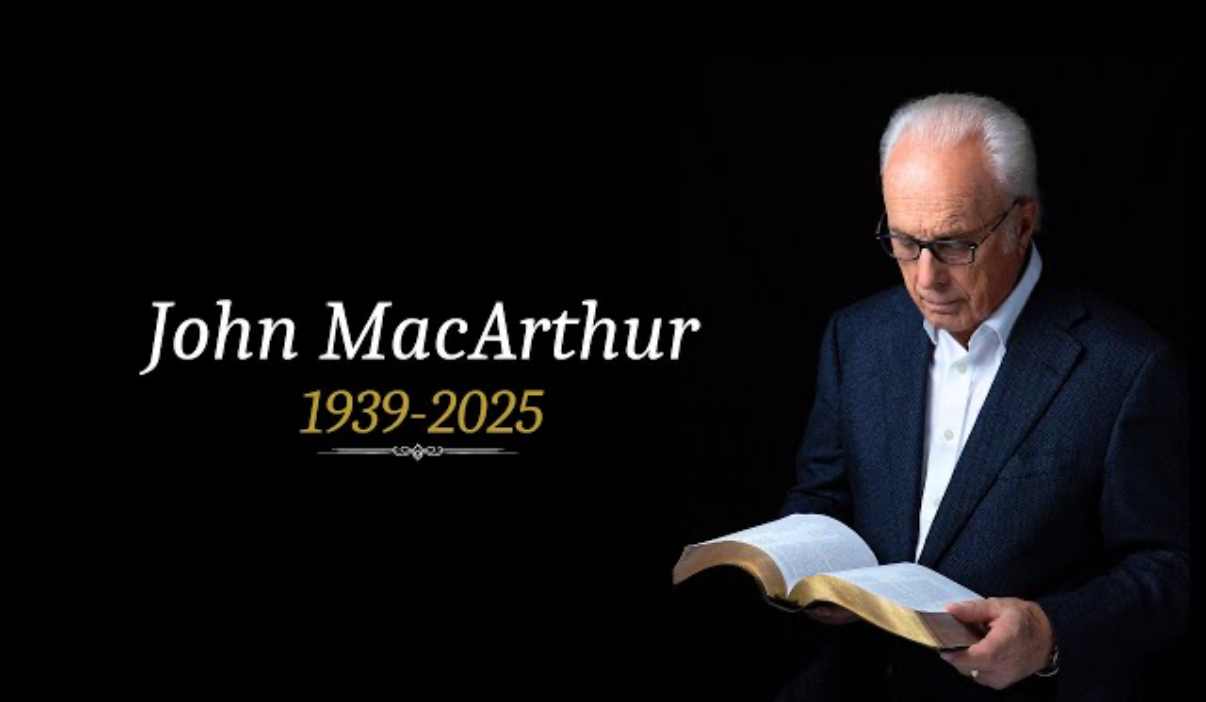
Remembering John McArthur

Dr John McArthur is more than just a name to me.  

Growing up in southern California, we sometimes drove the two hours to his church on Roscoe Blvd on Sunday evenings to hear him preach.  That’s right…two hours there, a two hour sermon (it seemed!), two hours home.  As a kid, the most I could hope for (besides getting to watch the magic pulpit rise out of the stage) was a stop at Carl’s Jr so I could get something off the .99 menu before we started the long drive home. 

But it was a different kind of food that motivated my dad to make that kind of investment of time and energy on a Sunday evening during a busy season of life when he already had a grossly long daily commute during the week.  

I can still hear the rustling of pages each time he would say, “open your Bibles…”. As young as I was, I remember some of the times that he preached a whole message on 2-3 words of a verse. And it wasn’t because he was making up stuff to say. His sermons might be narrow, but they were always deep. 

It wasn’t just at his church though, I often heard his voice streaming in our car over the radio or by cassette tape.  Yep, those small plastic rectangles with yards of tape wound up inside…we had cases of those with his name on the front and the words “Grace to You.”

Sometimes, we went to Grace for Christmas concerts where got to hear musicians like Christopher Parkening and Jubilant Sykes and sometimes, the perky voice of Joni Erickson Tada.  One night, we had to park in a neighborhood sort of nearby because Steve Green was in concert. It was standing room only for families like us who came screeching in late and had to park in a different zip code. 

And while I’m thinking of Steve Green, one Sunday happened to be the church’s 35th anniversary and Pastor McArthur sang a solo, “Find us Faithful.”  A song that became one of my all time favorites. 

Once in a while, I’ve heard people criticize McArthur as too dogmatic or too this or too that. I remember reading some comments during COVID that made it sound like he had gone off the rails. But each time I actually investigated myself, it seemed I found what I would have expected to find: McArthur studying the Bible and applying it directly and reasonably to every day life. I don’t know everything, but I do know He stood for God’s Word. He believed in its inerrancy, sufficiency, and relevance for the world today. 

I have a few especially memorable moments that involve John McArthur.  But the one that stood out to me the most came when I was about 21. We had moved thousands of miles away by then and the trips to Roscoe Blvd had stopped. But somehow, I came across one of those white cassette tapes and a message called something like, “Finding God’s Purpose for your Life.”

As a young, single person trying to navigate my way through law school and life in general, the title especially peaked my interest. I lay on my bed and listened, eventually jotting some notes on an index card. 

Give me some grace here because it’s been twenty plus years (and I’ve lost the index card), but my memory is that he suggested you write down a list of interests and abilities you have—you might call them gifts God has given you.  Then narrow that list to things that you can particularly use to further the kingdom of God. Then narrow that further to a one-sentence statement on what your life should be about. 

This I remember with crystal clarity: He said his was “the exposition of Scripture to the glory of God.”  That was his mission.  

Looking back over the 86 years of his life, there can be little argument that he stayed true to that mission. That was, in fact, what his life was about. 

I saw it as a ten-year old watching him at a microphone singing:

 “Oh, may all who come behind us find us faithful.  

May the fire of our devotion light their way.  May the footprints that we leave lead them to believe; 

And the lives we live inspire them to obey. 

Oh, may all who come behind us find us faithful!”

I saw it as a twenty year old writing notes of my own on the 3×5 card thinking about what I could do to bring God glory. 

I would be inspired again as a roughly thirty year old when a friend gave me a copy of his book, Slave. The first few chapters are really, really good…Maybe I will go finish it. 🙂

He inspired me to be faithful. 

The fire of his devotion lit the way. 

His footprints led me to believe. 

The life he lived inspired me to obey. 

But it isn’t about me, of course. 

His mission was the exposition of Scripture to the glory of God. May that be true of me as well. And may all who come behind my broken, wandering, faltering steps end up at the cross. To the glory of God. 

Read the Bible

If you were to stop by the Bostic house on a weekday morning, you just might find the girls and me on the couch with our heads bent over our Bibles.  We started in Genesis on January 1, and we have our sights set on wrapping up Revelation by the end of the year.  On July 1, we are just about a week behind, but even at that, we’ve navigated through Creation, the giving of the law, the conquest and judges, Saul, David, Solomon, and the books of wisdom, and we’re working through the successor kings in the divided kingdom and starting their interactions with the prophets.

Perhaps the reason this is so significant is that it speaks volumes to the influence of my mom on my life—and vicariously—on the life of my girls.  I don’t know exactly when it started, but every year for a decade or more of my growing years, Mom started our day with all of us at the kitchen table as she read the Bible out loud. 

I didn’t see a lot of point in it then.  My ever-multitasking brain was always trying to think of ways that I could use that time besides just sitting and listening to the Bible.  I was convinced (and even told her) that I didn’t get a lot out of reading the Bible through every year.  I mean, there is a lot of seeming useless information in the Bible…genealogies, old prophecies, laws…words…words…words.

But Mom was determined there was value in getting an overview of the Bible; in being familiar with its stories, characters, and places.  To let the Bible begin to come alive in our minds as one complete story.  She knew we would do specific Bible studies in church and other small groups; but home was the only place we would just read it through.  So she read it through.  Every year.

Times have changed in the last thirty years.  There are a thousands more secondary resources out there.  Books—both fiction and non-fiction, videos, coloring books, and TV series’ abound;  So does the temptation not to read the actual Bible but just to rely on books and shows about it.  The idea of making it “fun” and “understandable” sounds noble.

That’s where I’m thankful for Mom’s influence.  I might have caved to that temptation had it not been for those hours sitting around the dining room table. And now that I’m on the other side, I’m convinced of the value of actually reading it through—not just other people’s commentaries and interpretations; not just bite sized pieces; not always a watered-down kids’ version; not just a “fun” dramatization.

Turns out, reading through the Bible is not for cowardly parents.  By the time you get through Genesis, you will have dealt with a ton of tough stuff—a ton.  I decided that if concepts went over the girls’ head, they probably weren’t ready for them yet.  If they started asking questions, I tried to have honest though still age-appropriate conversations with them.

They like to read with me, so we take turns and it’s been good for their reading and listening skills.  They’ve learned how to pronounce a lot of hard words.  They have asked a lot of insightful questions along the way that help me get perspective on where they are in their understanding of God and His word.

There is still a lot that isn’t getting absorbed on this read through; and that’s okay.  I’m absorbing more than ever before and there is still plenty I don’t know and understand (but far less than there wouldn’t be if I hadn’t had the first 12-15 times through).

We chose a five-day-a-week reading plan that puts the Bible in chronological order (So it isn’t necessarily in book order).  This has made it a little easier to get lost and we’ve ended up repeating a chapter or two here and there.  To compensate, we’ve sometimes listened to longer passages on car rides to help get caught up if we’re lagging behind.  On a regular day, it takes about 30 minutes to read the designated passages. This may not seem like a lot, but it does take some determination to stay even close to on track.

But it’s good for us to do hard things.  And I’m convinced that my Mom was right—it’s good to invest our time and energy in reading the Bible.  There is a richness there that goes far beyond the value of the sum of the words themselves.   And God did not waste words; every record has a reason.  The geography, the genealogies, the associated history…the lines that were drawn when we read through have had a lot of shade and color added by subsequent travels and biblical studies.

And when I’m gone, if my girls look back and remember the time we spent on the couch with our heads bent over the Bible, my life won’t have been wasted.  In fact, I’ll be in heaven cheering and Mom will be next to me saying, “See what I mean?”

Read the Bible.

 “For as the rain and the snow come down from heaven,
         And do not return there without watering the earth
         And making it bear and sprout,
         And furnishing seed to the sower and bread to the eater;

“So will My word be which goes forth from My mouth;
         It will not return to Me empty,
         Without accomplishing what I desire,
         And without succeeding in the matter for which I sent it.

Isaiah 55:10-11

One year ago, Today

I waited 43 years. Almost. 

And when it finally came, the day felt surprisingly ordinary. 

I woke up in a largely empty house—most of the furniture had already been moved.  But I still made the girls load the dishwasher. They thought that was cruel and unusual considering what day it was. But a dirty dish is a dirty dish…even on your wedding day. 

The weather was about ten degrees warmer than promised just a few short weeks before. Not a welcome turn of events for my very Charleston wedding. 

The engraved glass bottles with bamboo lids that we had planned to fill with ice cold tea and lemonade as a gift for our guests had been exploding as they were filled. We had to give up on that particular party favor even though it killed me. I guess that’s better than killing unsuspecting guests. 

Curtis was exhausted from the weeks leading up to the wedding that he had spent trying to give Peaceful Way a face lift. He had been painting, trimming, fixing, oiling, moving, cleaning, sorting, and generally wearing himself out physically and emotionally. Because that’s what hard working men do sometimes. 

Our venue had refused to let us finish some of our set up and decor…I’ll leave that for another day. But I felt bad for a friend who had donated considerable time and energy trying to make the huge tent into a beautiful space only to be told she couldn’t carry out her plan.  

I had stayed up until midnight re-writing the seating chart and a speech for our reception. 

All that to say, it didn’t feel exactly magical. 

But as Curtis and I often said to each other, “this is real life.”

And when it comes down to it, I’d rather have the rugged beauty of the real than the imaginary beauty of a fantasy life. 

Maybe that’s what 42 years in boot camp will do for you. 

My sisters and bridesmaid friends were wonderful. They prayed with me. Cheered for me. Let me feel special in their own ways. All of them are seasoned wives and mothers and fairly unflappable. Thank goodness. 


Because the disappointments were not entirely over as the clocked ticked closer to ceremony time. A vendor let us down. A few of our special effects didn’t work in the end. My ring-bearer nephew almost made me turn into a bridezilla when he refused to do what he was told. Some of our technology went AWOL.  The programs I worked so hard on never got handed out. Two of our friends left the wedding sick from the heat. 

Someone told me, “a year from now, you won’t remember all the things that went wrong.”  

Guess what?  It’s been a year… and I still do. 

But that isn’t all I remember. 

Not at all. 

I remember the beautiful sound of the voices of the group “Selah” carrying across the lawn singing “Before the thrown of God above, I have a strong and perfect plea…”

I remember taking my dad’s arm and getting ready to walk down the aisle in front of four hundred of our friends and family—some who came from across the country and some who came from around the world. 

I remember handing my bouquet to my sister and taking Curtis’ strong hands. 

I remember him looking into my eyes and singing to me, “You make me Better.”

I remember meaning every word of the vows I said. 

I remember him picking me up and feeling like it might have been a good idea for me to sew tread on the back of my wedding dress just in case. 

I remember smashing cake in Curtis’ face because…there were a bunch of people watching and I felt like I had to do something. 

I remember the coolness of the reception hall and the calmness of violin music. A wave of peace washed over me. Hopefully no more guests would be going home sick.  

I remember getting up to say thanks and feeling very, very blessed for the community that had stood beside us through this huge transition in life. 

I remember sharing the words from our processional, “And should this life bring suffering, Lord, I will remember; what Calvary has bought for me, now and forever…God, You’re so good. God, You’re so good to me.”

I remember having peace in my heart as the sunlight faded and the final hugs were given.  

Because I never felt like this day was about me. 

And this is real life.  

And God was good. 

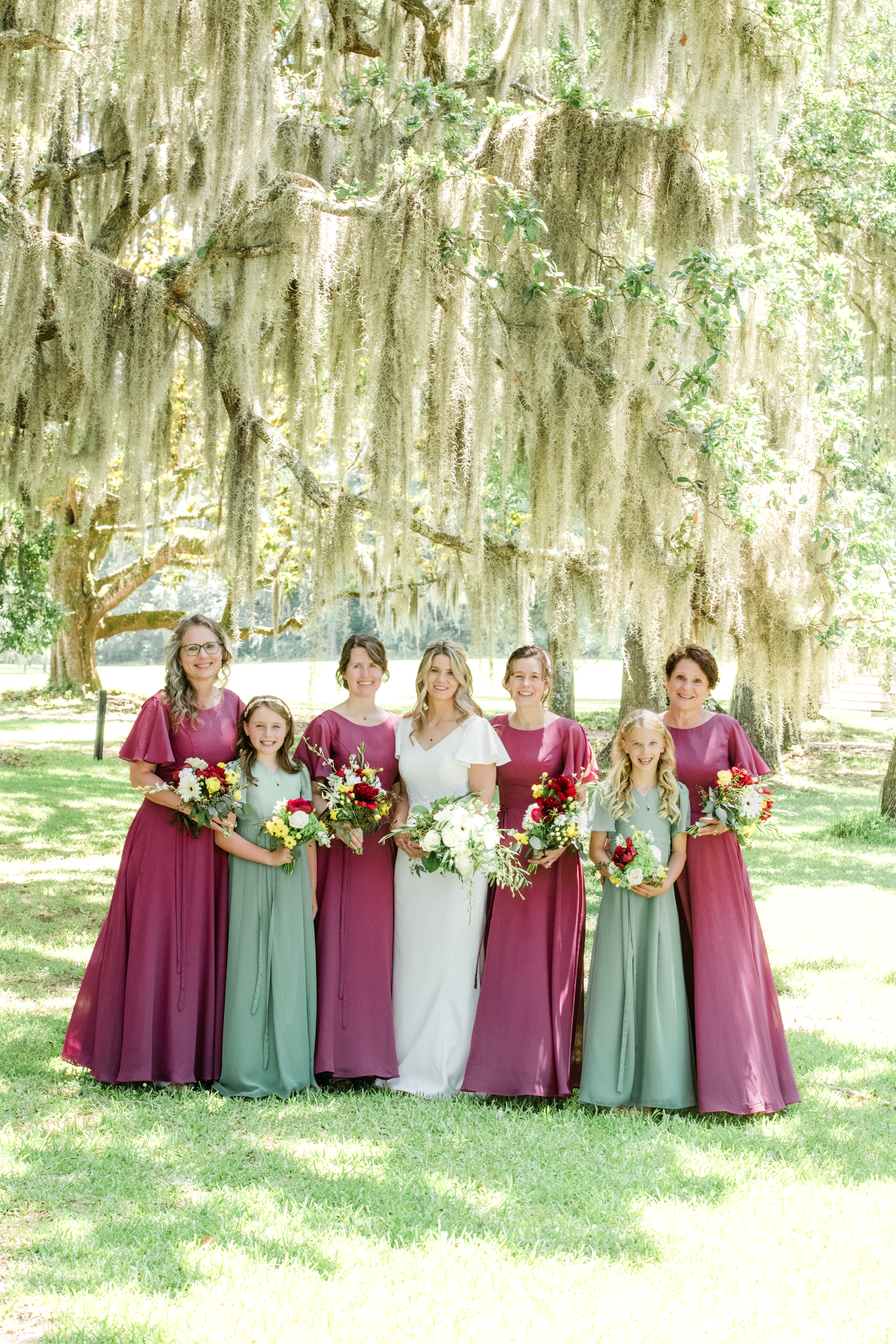
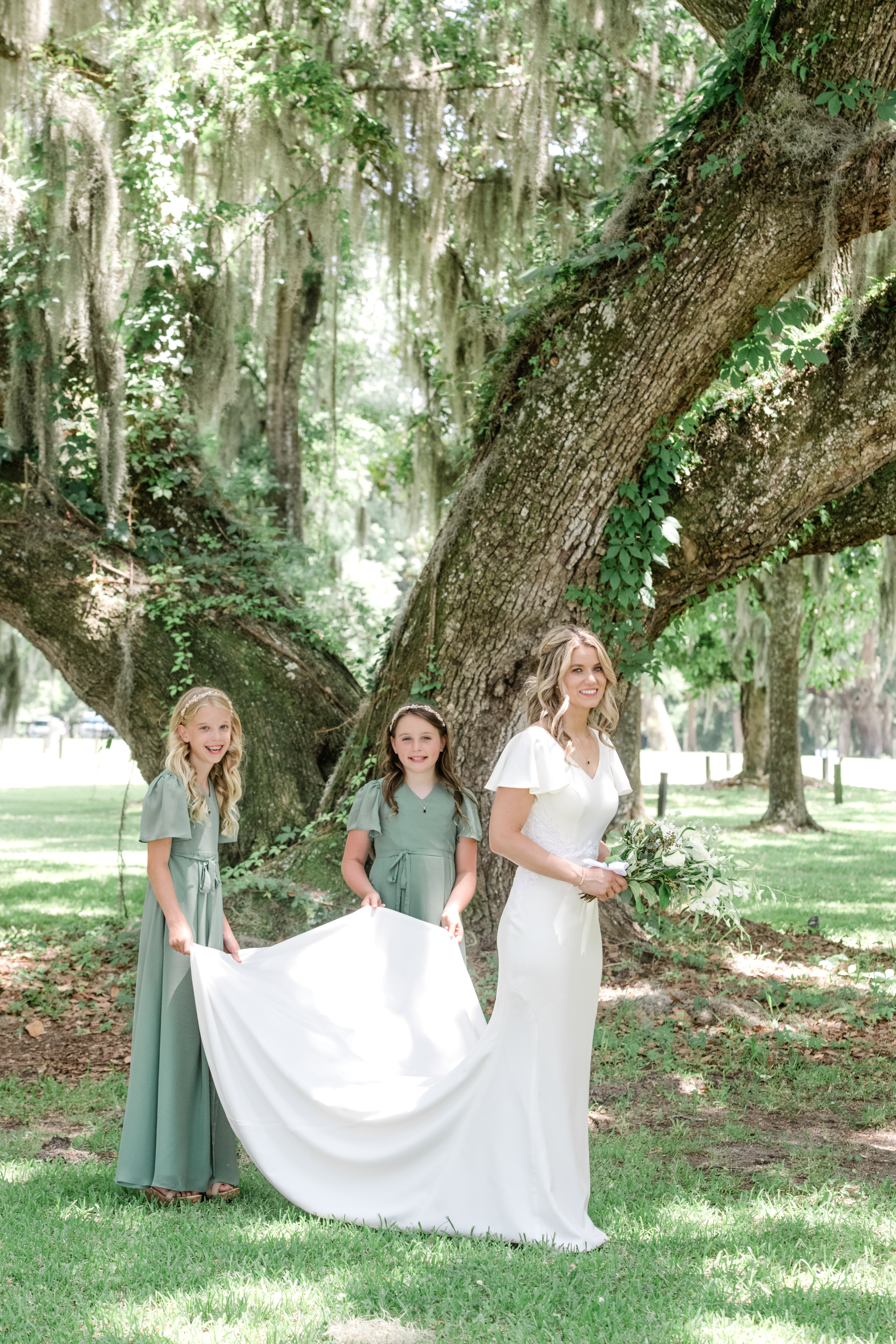
The pictures lie. I’m kinda glad they do. It’s fun to page through an album and see a beautiful day on the bank of the Ashley River forty two years in the making. The picture of Curtis holding me under a mossy oak turned out to be my favorite—we were both genuinely smiling (and he would never drop me).

But I guess I feel the need to post this disclaimer along with the pictures because I want to tell the brides and brides-to-be out there to enjoy their “real” and not live for the fantasy.  

Marriage is real life.  Whether your wedding day feels magical or not, sooner or later, real life will set in. You can choose to focus on the frustrations and disappointments or you can choose to be thankful for the good.  You will have both, but your life will take on the flavor of which ever one you focus on. 

One year ago began the most beautiful season of life yet. I meant every word when I said my vows.  I mean every word of what I’m telling you now. 

I love my real life. 

God, You’re so good.  You’re so good to me. 

Christmas Alone – 3

Part 3 – A Strange Christmas

“Patrick?” Betsy’s pleasant voice greeted him over the phone. “Hey, I hope it’s okay that Gram gave me your number. I just wanted to let you know that we won’t need a cat sitter today after all.”

“Oh…okay.”

“Turns out Sunshine wasn’t able to survive the stomach pumping. So… yeah… I do feel a little bad about giving Gram a hard time yesterday. Sunshine was as stiff as a board this morning.”

“Oh… wow… I’m so sorry…”

“Yeah… me too. Anyway, I think Gram is going to stay home and mourn for the cat so I’m just going to drive down and back myself. I should still be back around lunch and I’ll help with the bathroom if you haven’t finished.” 

“Okay, yeah… that’s fine.” Patrick was struggling to find words to say. “You know, if you wanted, I could drive down there with you.   I mean, to give you some company for the drive…if you wanted…”

“Are you sure? I mean… I’ll come help paint either way.”

“Yes, I’m sure.” Patrick didn’t want to admit that he didn’t really feel confident starting the project without her. And truthfully, he actually liked the thought of getting to know Betsy better… even if it meant a trip to prison. 

Maybe Betsy was anxious to see Reagan. Maybe she was in a hurry to get gone before Gram changed her mind and decided to join them. Either way, she quickly jumped in as soon as Patrick pulled up to the curb. Her hands were empty except for two cups of hot chocolate. She gave one to him. 

The conversation flowed easily as they headed south. The roads were clear and relatively empty. Patrick didn’t ask about Reagan, but he did slowly learn other pieces of Betsy’s story.  Betsy was the oldest of the family and Reagan was the youngest. She didn’t say, but Patrick guessed Betsy was mid to late twenties.  Reagan was the youngest.

Their dad had worked mostly in offshore drilling so the family had lived all over the world and traveled extensively in between the frequent moves. 

“I didn’t know my times tables but I went in every Egyptian pyramid and snorkeled in the Mediterranean. I lived on three different continents before I knew who Abraham Lincoln was. Mom called it homeschool, but it probably bordered on truancy.”

“I bet you learned a lot though.”

“You know, we did in our own way. And we were a close family. Mom was a good mom— I didn’t mean to give you a different impression but I guess she is what you’d call a ‘free spirit.’ The closet she came to cooking was pouring batter in a hotel waffle iron. She couldn’t be bothered with things like housework.”

“I guess if your dad was in the oil and gas industry, she didn’t have to?”

“Well, I didn’t understand it at the time, but basically it was feast or famine. Dad would make a lot of money while he worked on a specific job. But sooner or later, the contract would run out and he’d get laid off. We usually ended up back in Denver living with Gram and Grampa for a few weeks or months until he got another job. Then we’d be off again.”

“Did you enjoy it?”

“Yes… I guess so. I didn’t know any different. I enjoyed traveling enough that I kept it up during college and even taught English in China for a few years after. I’m kinda burned out on it now though. Most of the family is in Texas, but Denver is the closest thing I have to meaningful roots.”

“Is that what brought you back to Colorado?” 

“Well… yes and no… I just came here in August when… well… Reagan got in trouble.” Her voice kinda faded out and Patrick surmised she didn’t really want to talk about that. “But I have a lot of happy memories in Denver, so it might not be a bad place to settle down. Besides, I think it’s good for Gram to have someone nearby. Hard to tell if my family will stay in Dallas. Dad’s still in the oil and gas industry… and I guess he always will be. I don’t think he can afford to retire.”

When they arrived at the detention facility, Betsy took over. She knew where to park, where to enter. “Don’t bring anything.” She instructed. “I’d just take your ID out of your wallet and leave the rest.” She did the same. 

Betsy had clearly done this many times. She smiled at the detention officers and called many of them by name as they went through the reception and screening. She seemed confident, but Patrick saw her eyes well up once or twice. He pretended not to notice. 

Reagan was a copy and paste of Betsy. Slightly younger and taller, but he wore her same cheerful expression despite the ugly prison garb. He gave Betsy a hug and then turned to Patrick.

“This is a friend of Gram’s.” Betsy introduced him. It led into the story of Sunshine’s sickness and sudden death. 

“Good grief, how long has that cat been alive?” Regan asked. “I don’t know if I even remember life before that cat. In fact, I’d probably believe you if you told me BC stood for ‘before cat’.”

“We may be confusing her and cats before her, but Gram definitely always had a cat when we came to visit. It always seemed weird and nasty to us because in most of the world we had been, animals don’t live in people’s houses.”

“Remember when we were in Egypt and I begged Mom to let me keep that puppy I found?”

“The one that eventually bit you?”

“Yeah… that was the only time I remember her taking me to a clinic of any kind.”

“This Christmas will probably go down in Little family history as the year Sunshine had her sunset.”

“Like the famous Christmas of the suitcase!” The two of them laughed together and Betsy explained. “We didn’t typically get gifts for Christmas.” She began. 

“Other than our stockings, which always had candy and a toothbrush.” Reagan interjected. 

“Right. We didn’t have a lot of stuff period because we moved so much. Anyway, when we traveled, Mom’s rule was, you pack it, you carry it. We each had a tattered backpack. We would go for weeks on just what we could carry in our backpacks. No lie.”

Reagan nodded agreement. 

“One fall she had us take a particularly grueling trip that went through like twelve European countries. We were going through all these picturesque little towns climbing castles and bell towers— stuff that might have been fun except that we were all carrying twenty pounds of stuff on our backs everywhere we went.”

“Mom had us in a different place every night so there was nowhere to leave our luggage. Those packs sure got heavy by the end of the day.”

“We whined and complained so much that evidently we wore her down. That Christmas, there were three big boxes wrapped and waiting for us on Christmas. We all got a small rollerboard suitcase.”

“We thought we had won the lottery.” Reagan reminisced. “Suitcases on wheels! I remember mine was blue, yours was green, and Sophie’s was pink.”

“The worst part though was Mom never really let us use them.” Betsy mused. 

“You can’t take rollerboard suitcases up bell towers!”

“Remember how frustrated she used to get paying a Euro every time we needed to use the WC?”

“Yeah, she used to try to get us kids in for free.” They both laughed. “When they wouldn’t, she’d tell us to hold it… ugh. That was miserable.”

The conversation wandered a little until someone gave them a signal that they had five minutes left. Patrick excused himself thinking the two of them might want a few minutes alone. “I’ll get the car warmed up.” He offered, and no one argued. 

When Betsy came out to the car, it was clear she had been crying. He didn’t know what to say, so he turned on the radio and the two listened to Christmas music in silence as they headed back toward Denver. 

“I hate goodbyes.” She finally said as her sole explanation.  It was quiet again until she mused, “Such a strange Christmas.  Thanks for coming with me though. Reagan’s world is pretty small right now. I think it was fun to see a new face. He said you should come again sometime.”

“I’d be glad to.” Patrick said. And he meant it. 

(fourth and final installment coming soon!)

Love Comes Softly

Our story is an unusual one.

But as it has unfolded, I can only look back and say, “God’s hand was in this.” Not that I always perfectly followed His will; not that I had faith every step of the way; but that only God could author a story that takes bitter things and makes them this sweet. 

Ours is a “love comes softly” story. 

Curtis and I met nearly twenty years ago when I came to work at the Bostic Law Group. He was happily married with five well-behaved children. I was fresh out of law school simply looking for a return on my investment in a law degree.  When he interviewed me, he asked what I wanted to do be doing in the next 3-5 years and the answer that came to me was, “doing the next right thing.”  But what I really hoped was that in the next few years, I would be someone’s wife and soon thereafter, a mother. 

Over the years, the next right thing—as best I knew it— was a mix of a lot of hard work; episodes of fun; and great opportunities for ministry.  But even though I always enjoyed what I did, I had always had to fight for contentment as a single person.

As one year rolled into the next into the next, I could feel the dreams of a family slipping through my fingers. My attempts at relationships were confusing and painful.  I tried.  But as the clocked ticked, it started to sink in that despite my God-given desires, it did not seem that marriage was going to be in my future.

But slowly, I began to feel God’s peace in the “letting go” of my dreams.  Even though life wasn’t shaping up the way I had wanted it to, God could be trusted. He gives good gifts.

As I looked for ways to honor God in my singleness, my heart and doors we open to children through foster care.   Eventually, God forever changed “me” into “we” through the miracle of adoption.  God allowed me to become “Mama” to two beautiful girls.  It has been an adventure…single parenting is not for cowards.  

Even in parenting, for me, love came softly. 

Meanwhile, Over the years, Curtis and Jenny became both friends and family. Our relationship was not just employment and the related travel but included church, ministry, and just doing real life together. 

Jenny had been diagnosed with cancer long before I met the Bostics. And though the disease was frequently in our thoughts and prayers, she always seemed able to rebound from setbacks and the way she ate healthfully and exercised diligently…she seemed invincible. It didn’t take much to believe in our hopes and dreams that she was going to “beat it”…maybe outlive us all. 

But a year and a half ago, it became clear that God was calling Jenny home.  It was a dark time. It was terribly difficult for Curtis, as he bore (and still bears) the grief of losing his beautiful partner of 35 years, the glue of his family, and his life as he knew it.  It was very painful for me because I was losing my dear friend, my connection with my “Charleston family,” and my life as I knew it.  

Those months were a blur.  But as God began to lift the clouds, we realized that we were still doing life together. We were still giving our lives to the same priorities. We still involved in the same ministries.  We still worshipped the same Jesus. We still loved the same friends. We still enjoyed working side by side…And we both wanted to be married. 

Which makes it sound so simple. 

In real life, blending families is not simple.

Our first conversations were hurtful. Our first date was awkward. The first person I told was not happy for me. Some of our “firsts” would be hard to identify at all. How do you put a beginning on a relationship born out of a friendship and partnership of twenty years?  

So…when a friend described it as “love comes softly” romance, I had to agree. For us, love came softly-and slowly, and sometimes even painfully.

But it did come. And we are oh, so happy. 

Is it still awkward at times?  In a word, yes. Curtis does and always will love Jenny. In a different way, so will and so will many others who were privileged to spend time with her. I’m so thankful I knew her. I’m so thankful that I learned from her. I’m thankful that I was loved by her—it takes the sting out of “second” for me.  Knowing her kindness and character helps me understand why those close to her are fiercely loyal. 

Our relationship may have come too quickly for some people. I know it came too slowly for others. Too loudly. Too quietly.  Real life is much more complicated than the movies. 

If that weren’t enough, it’s challenging dating in front of your kids. I don’t wish that on anyone. Just sayin’.

But as the months have unfolded, both of us have had a growing conviction that this is the “next right thing.”  And we are so thankful for the wise counsel, kind words, and encouragement of many, many godly people who know us well.

In this new season…I fall in love with Curtis every time I listen to him share the gospel—which is often.  When I see him be gentle and kind.  When I watch him play with children. When he dreams big—and then gives big. When he works hard.  When he makes me stop working. When he leads worship in a way that causes us to lift our eyes to heaven and see Jesus is better, fuller ways. When I see his passion for Bible teaching (especially in its historical and geographical context!).  When he takes time each day to share something he learned from Scripture.  When our gifts seem to fit. 

That is why, when he got down on his knee on the hill overlooking Galilee and asked me “To the glory of Jesus Christ, would you be my wife?

I knelt with him and answered, “I would be honored.”

Our story is an unusual one…And I wouldn’t wish it to be any other way.  

When I think about it, I can only marvel at our great God who has the ability to bring life from death, beauty from ashes, and hope from despair.  He who gives freedom to laugh and love again after the darkest of times is the author of our journey of faith. 

Some of the most beautiful love stories come softly. Painfully. Tenaciously. Courageously.  

This one did.