For all the cars wrapped around the building and pouring into the street and people buzzing in and out, I bet they feed more left over kale salad to chickens than they do fresh salad to people. I mean, when was the last time you hear someone say, “Let’s go to Chick-Fil-A. I’m craving a kale salad”?
But today, I tried the kale salad.
I know what you’re thinking…did Charleston run out of weeds…particularly thistle and stink weed that you would find it necessary to pay a $2 up charge for kale? Especially when you could have had hot, salty waffle fries?
In my defense, I didn’t realize there was an up charge. Probably because I was placing the order while driving down the road (a practice which is arguably worse for my health than salty waffle fries…but I digress).
Anyway, I felt like I deserved the Nobel Peace prize or something as I sat…
and sat…
and sat…
and sat in the drive through line.
I’m sure the long wait wasn’t because they had a surprising order for a chicken sandwich. No, No. They were inside rooting around for kale. And not just kale. Kale andcabbage to make a salad for the starving customer in the white SUV.
Kale and cabbage? I mean, what could possibly go right?
Who thought of mixing greens that taste like a scrub brush with wisps of rubber and calling it a salad?
Who thought of putting it on a menu and offering it as a replacement for hot, salty waffle fries?
Who thought they could get more money out of it than fried potatoes?
I may never know.
But I made that person happy today. And strangely enough, they made me very happy.
The salad was surprisingly good. I mean, for rubber and scrub brush and all. So much so, that I will probably order another one some day—Even though it means waiting in a Wendy’s length line while paying Chick-fil-A prices.
But I’ve been on mission lately to find some good salad recipes…and having a growing appreciation of the challenge good salads present, I feel that credit must be given where it is due: and that is to the courageous person that put kale and cabbage on the menu of a fast food chain alongside waffle fries, chocolate chip cookies, and a peach iced lemonade.
And then added an up charge.
And then making it good enough that a customer was glad they paid it.
That person…that person right there deserves the Nobel Peace Prize.
It’s been a long time since I’ve been in school—20 years in fact. I’ve even wondered if I could still do school…or if the fact-memorizing, test taking, paper writing portion of my brain is gone for good.
But Curtis has a passion for studying the Bible in its historical, cultural, and geographic context and it is rubbing off on me. So we decided to take “Ancient Egypt and the Bible,” a graduate level course offered by Jerusalem University College (a school located in the Old City of Jerusalem). This particular course was being offered both in class and online and included a week-long field study in Egypt.
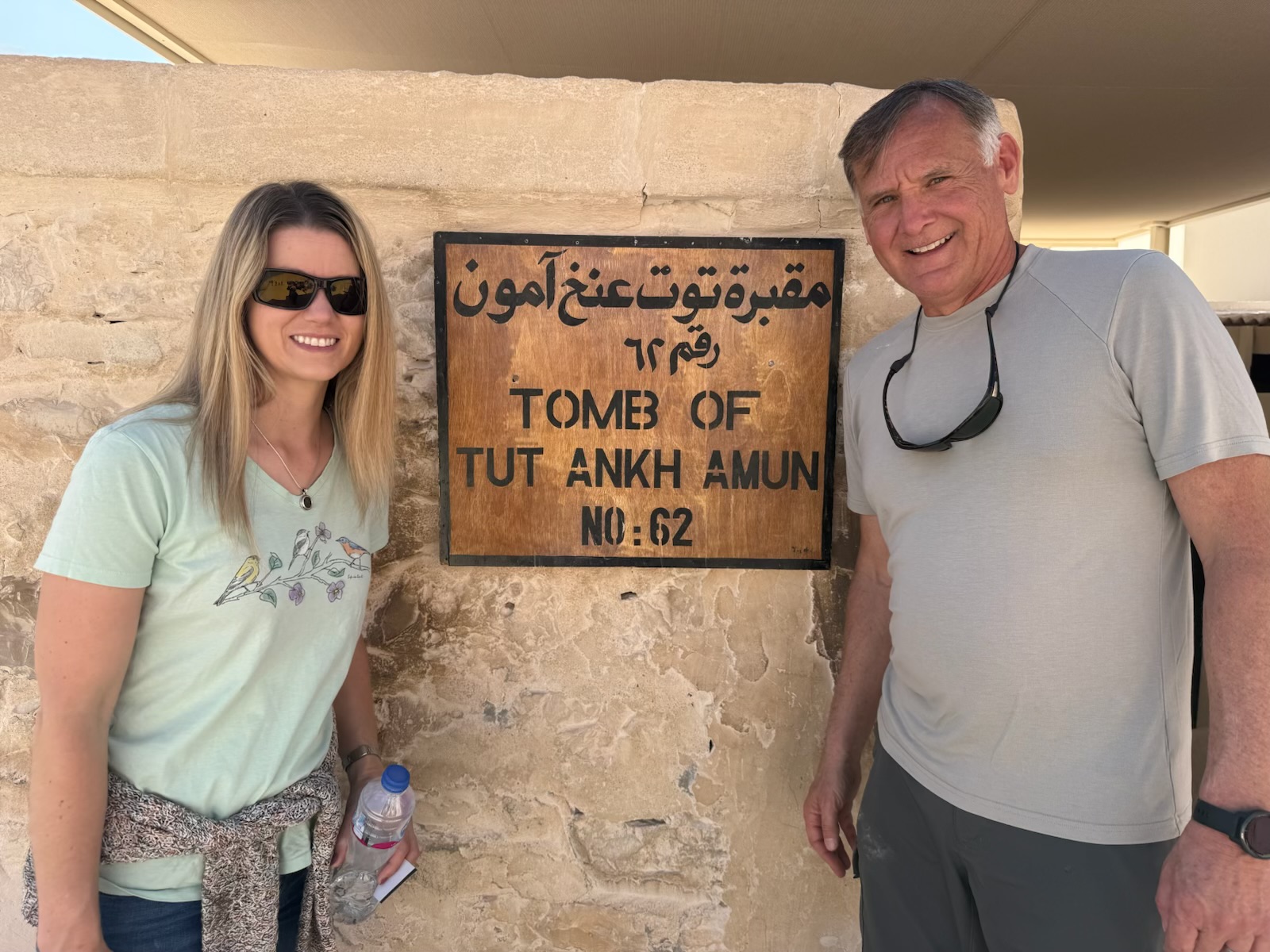
Due to the other “stuff” of life, I ended up auditing the course (so my ability to really do school remains yet undetermined), but I did gain a deepened appreciation for Egypt and its 5,000 year history—which stands in stark contrast to the mere 250 years of US history.
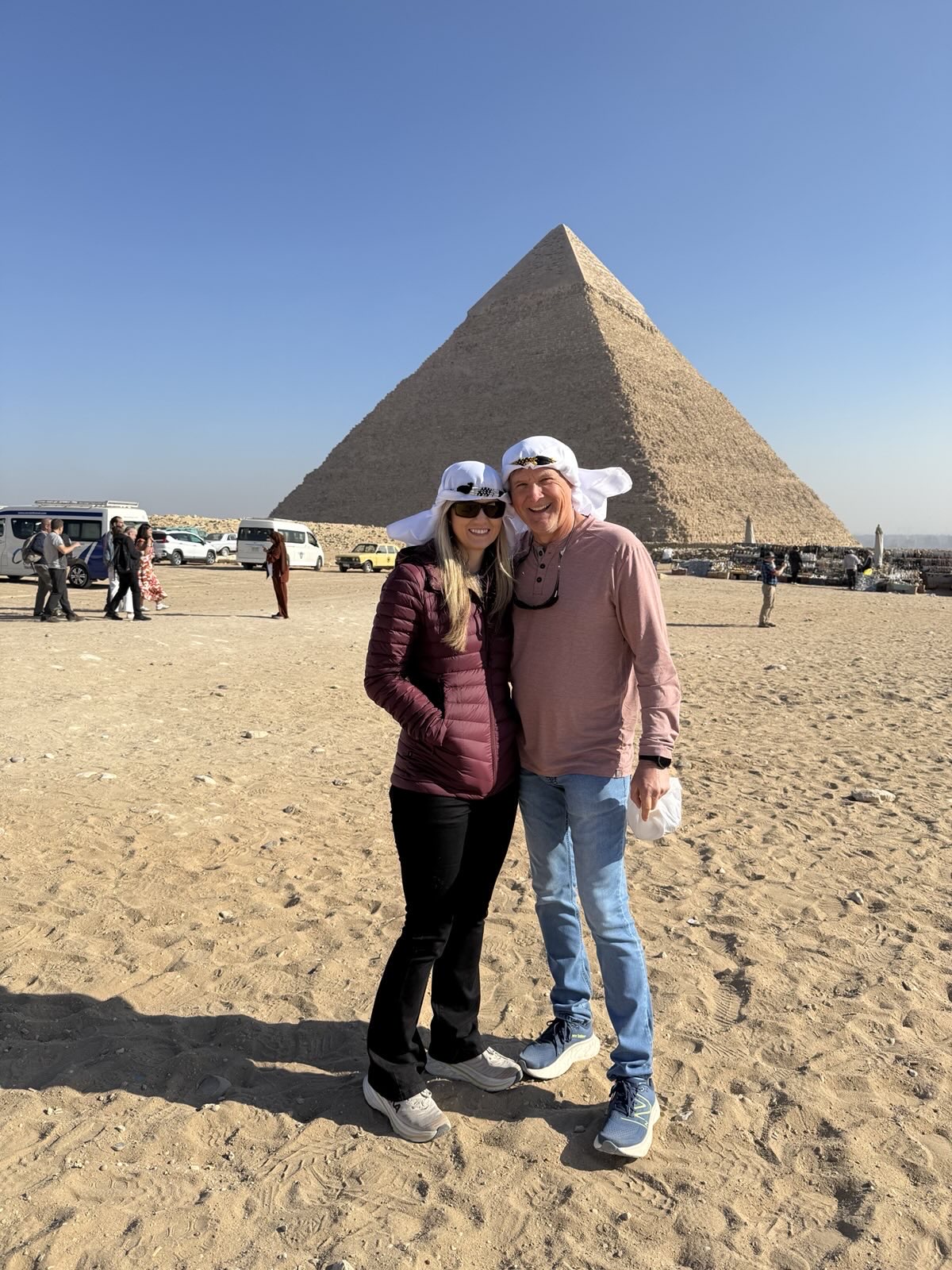
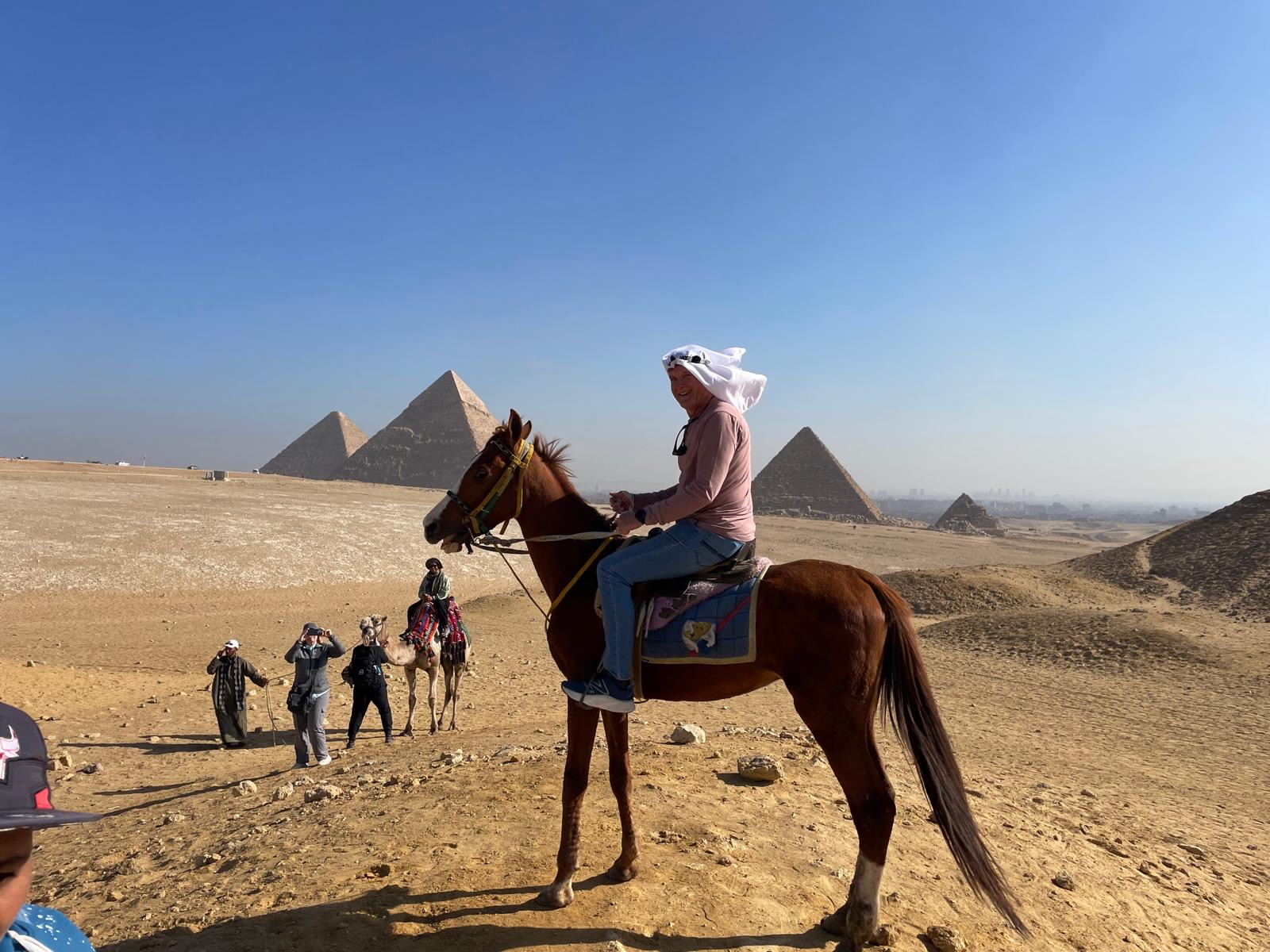
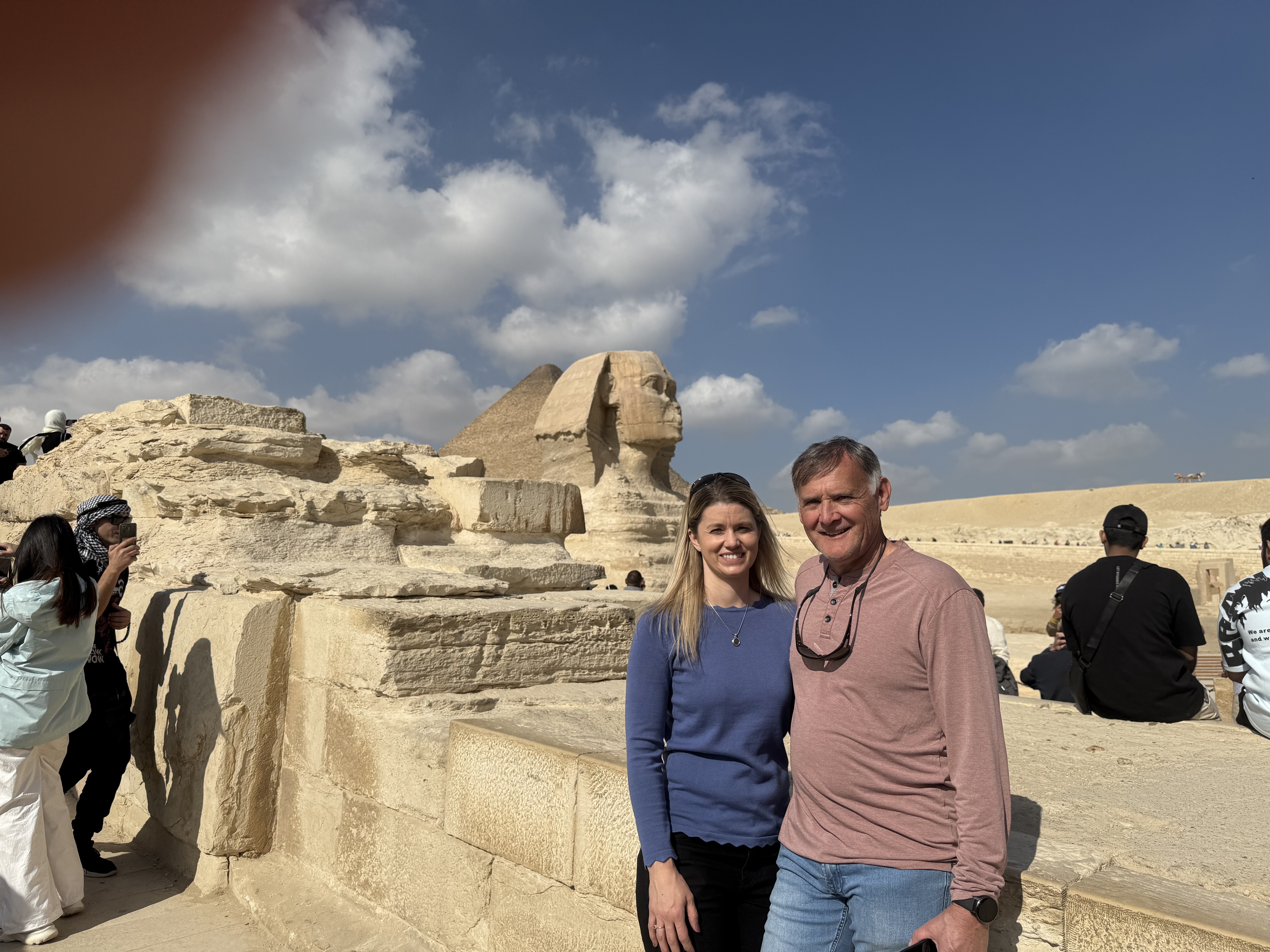
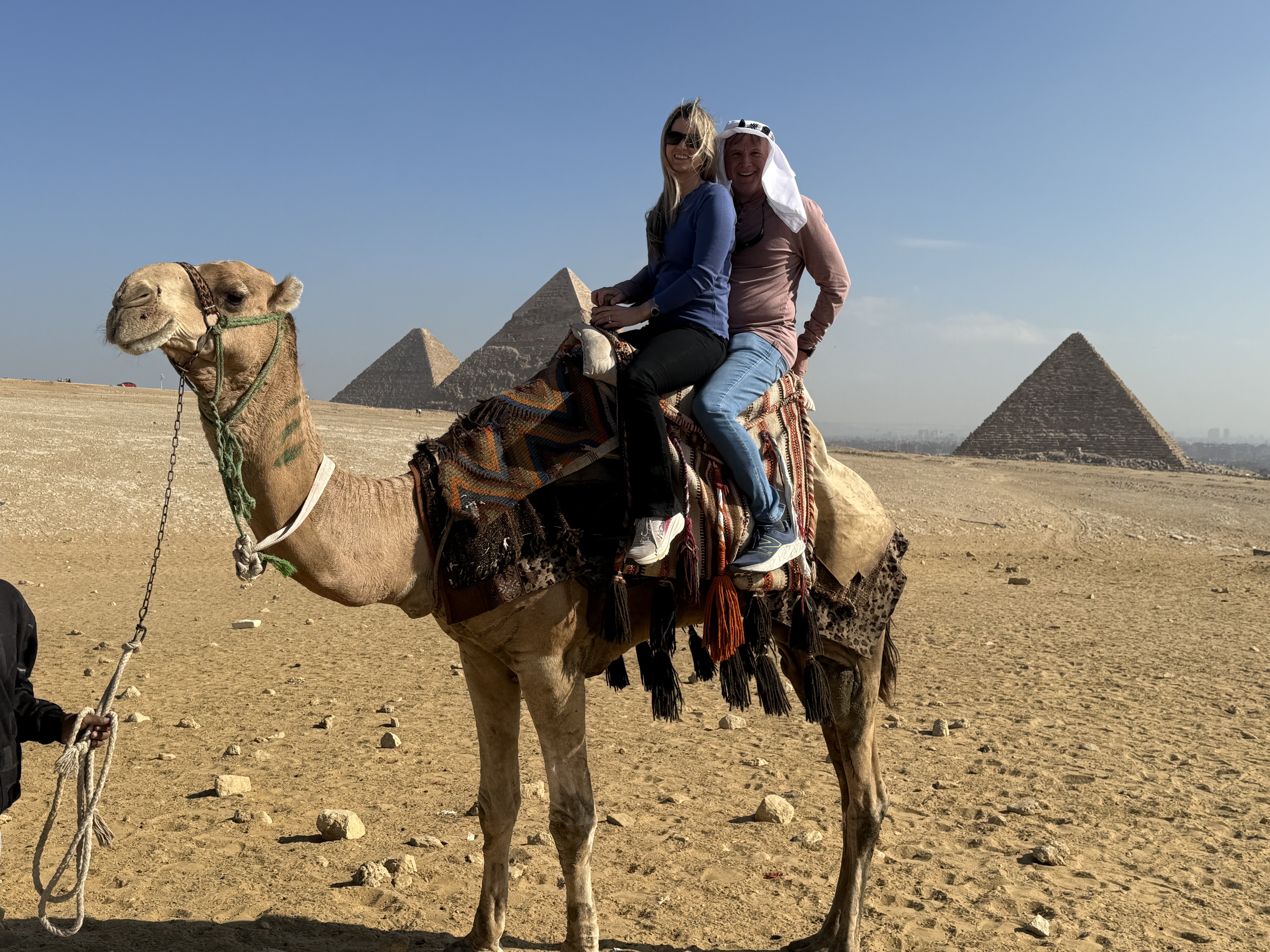
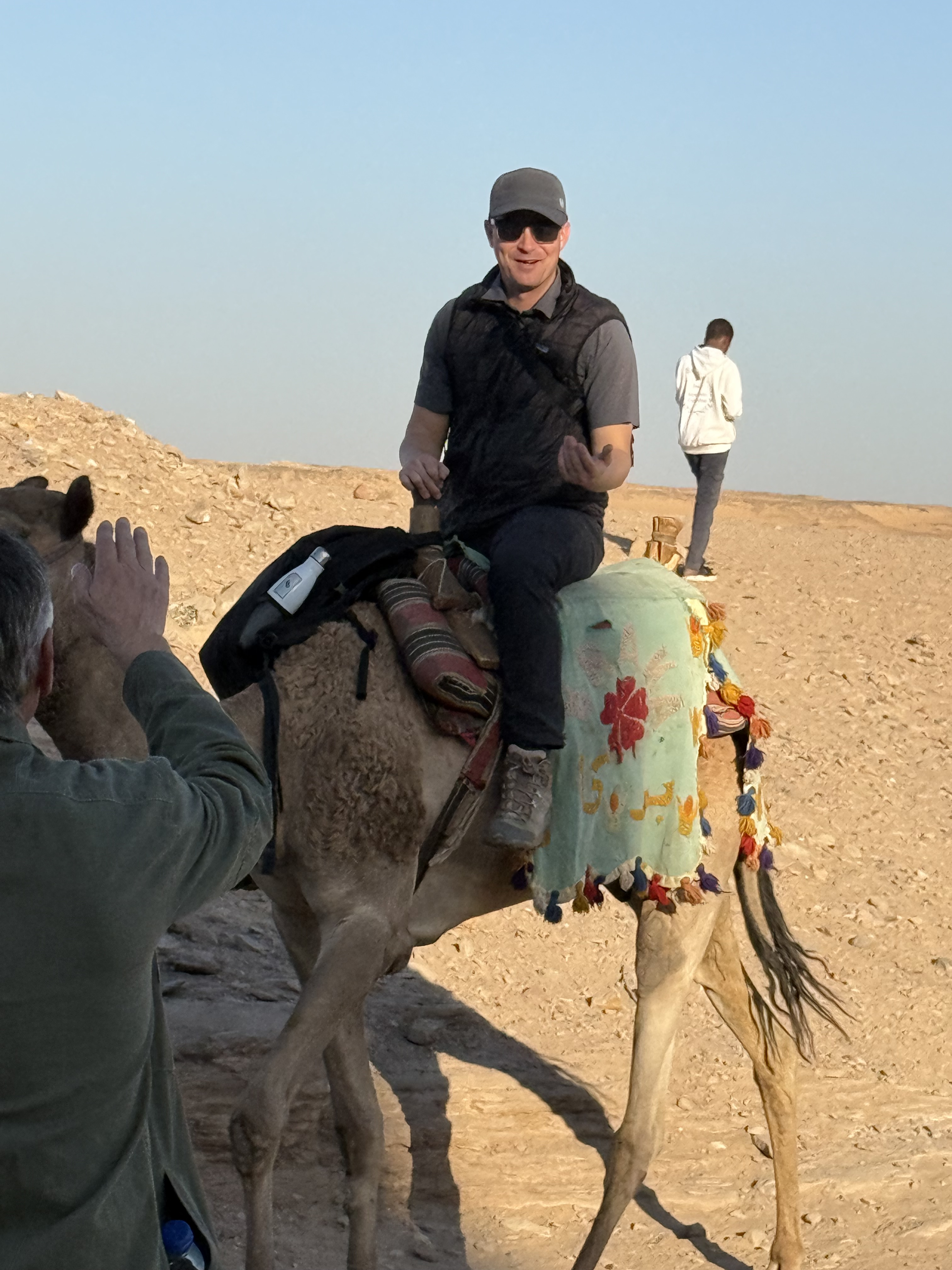
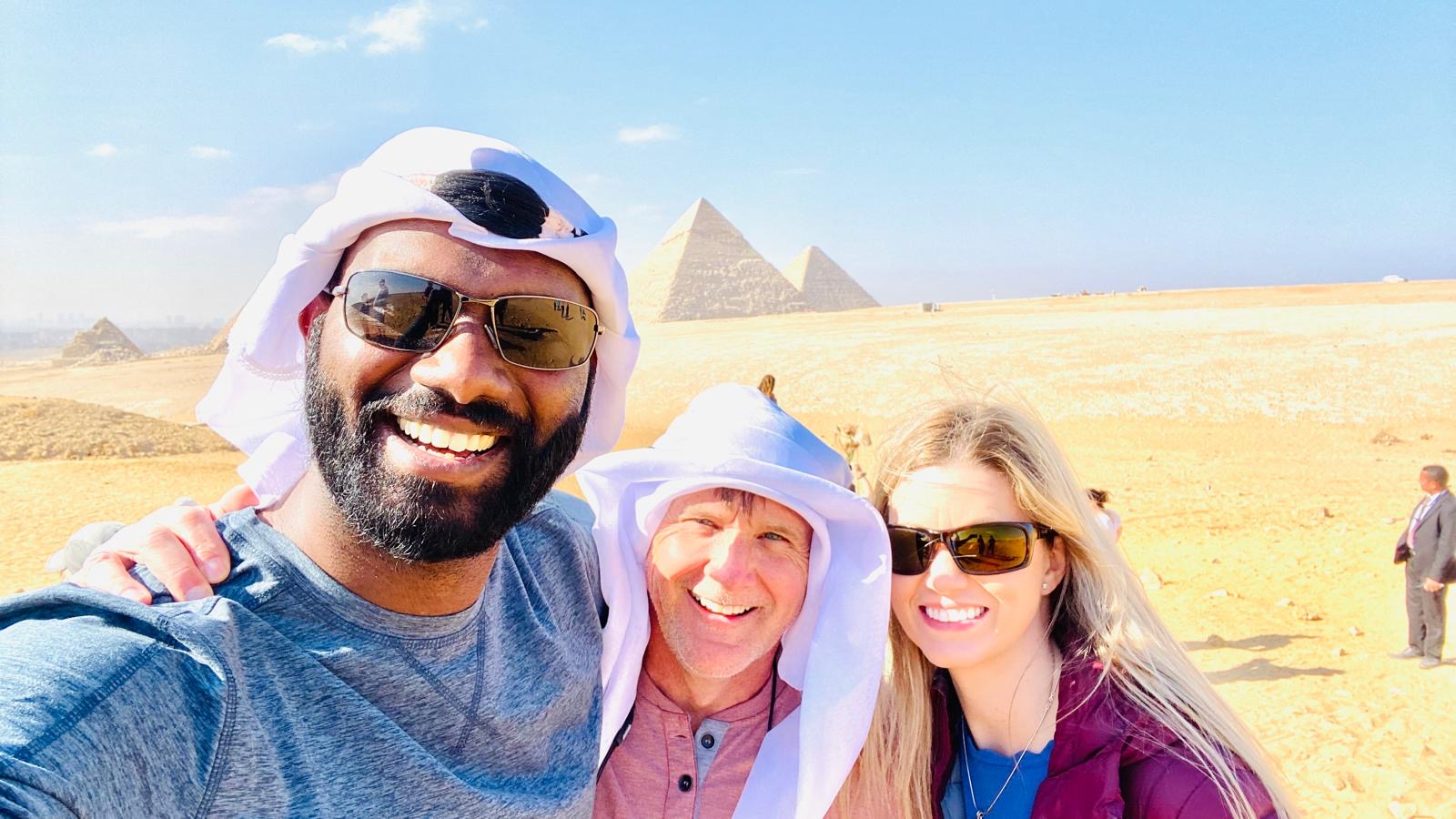
You may know that the first substantive mention of Egypt in the Bible was in Genesis 12 when Abram went there during a famine in Canaan (circa 2000 BC). The pyramids and Sphinx would have already been in existence ~1000 years at that time. Who knows, maybe there were already swarms of vendors there peddling souvenirs and camel rides.
Some time later, Isaac went to Egypt. Joseph, of course, went to Egypt and later brought down Jacob and his other sons.
We had fun learning about the Pharaonic dynasties and who might have been on the throne at the various Bible intersections. We can’t say with certainty where the pieces fit but there are a number of interesting clues.
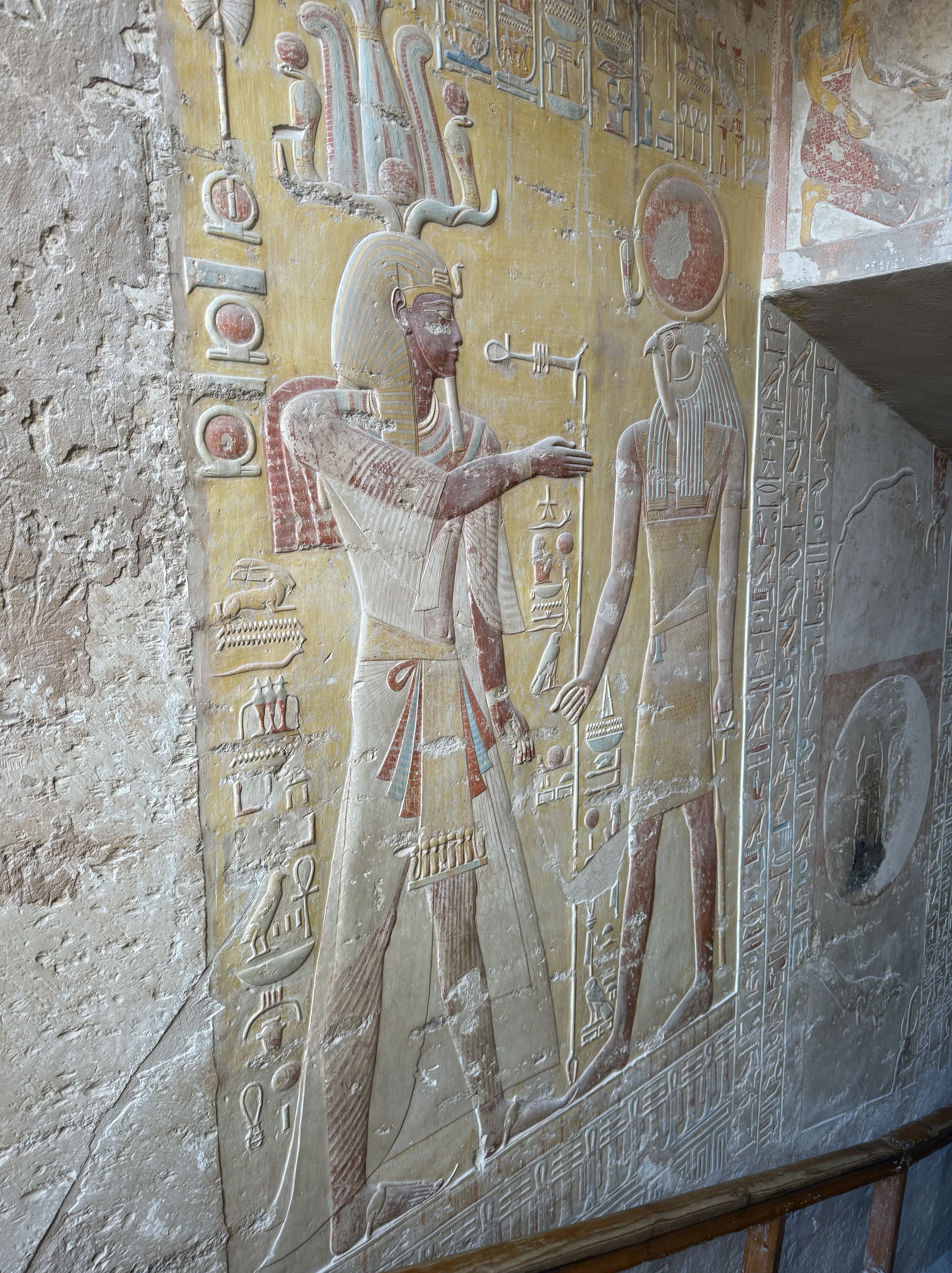
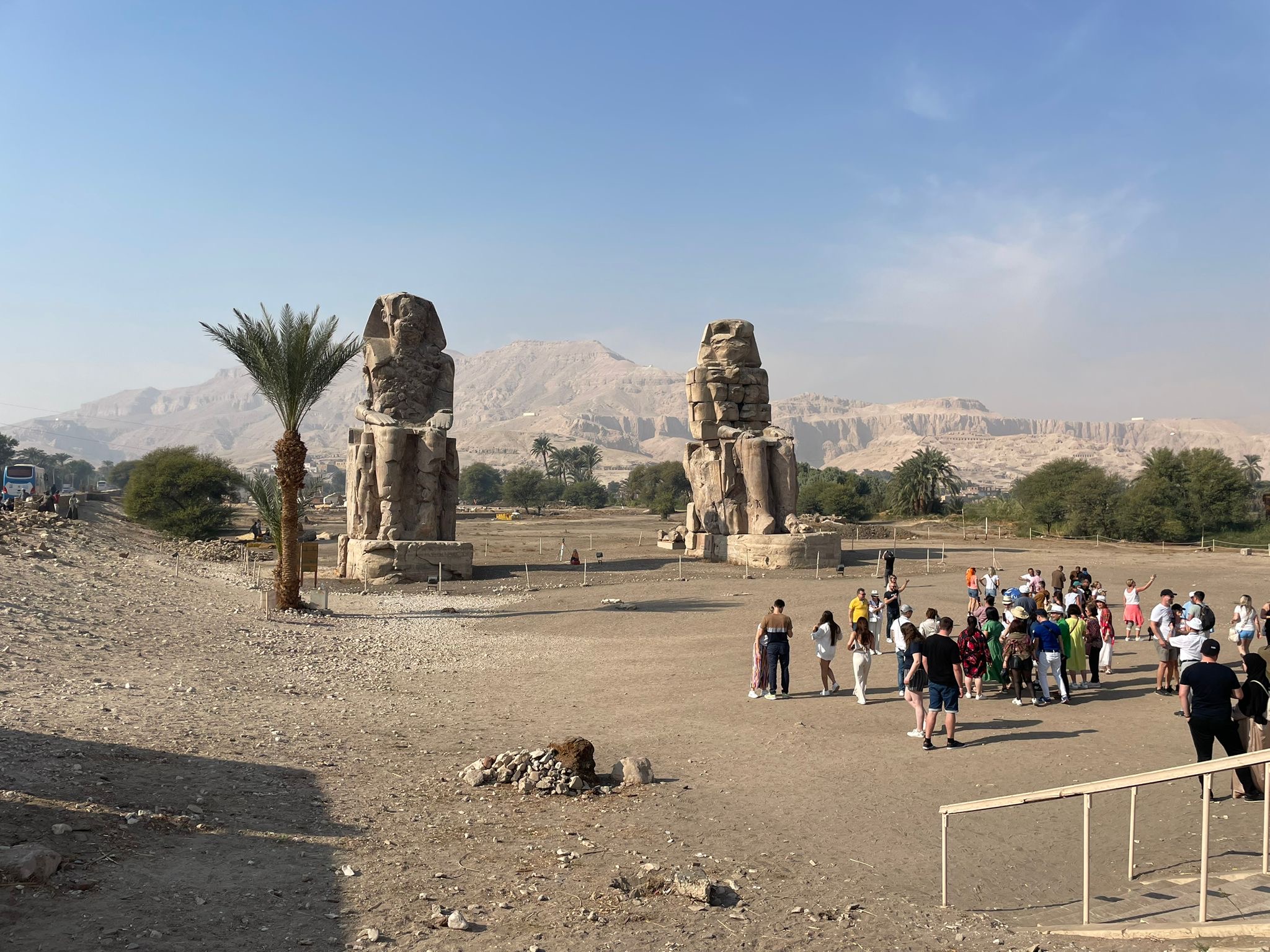
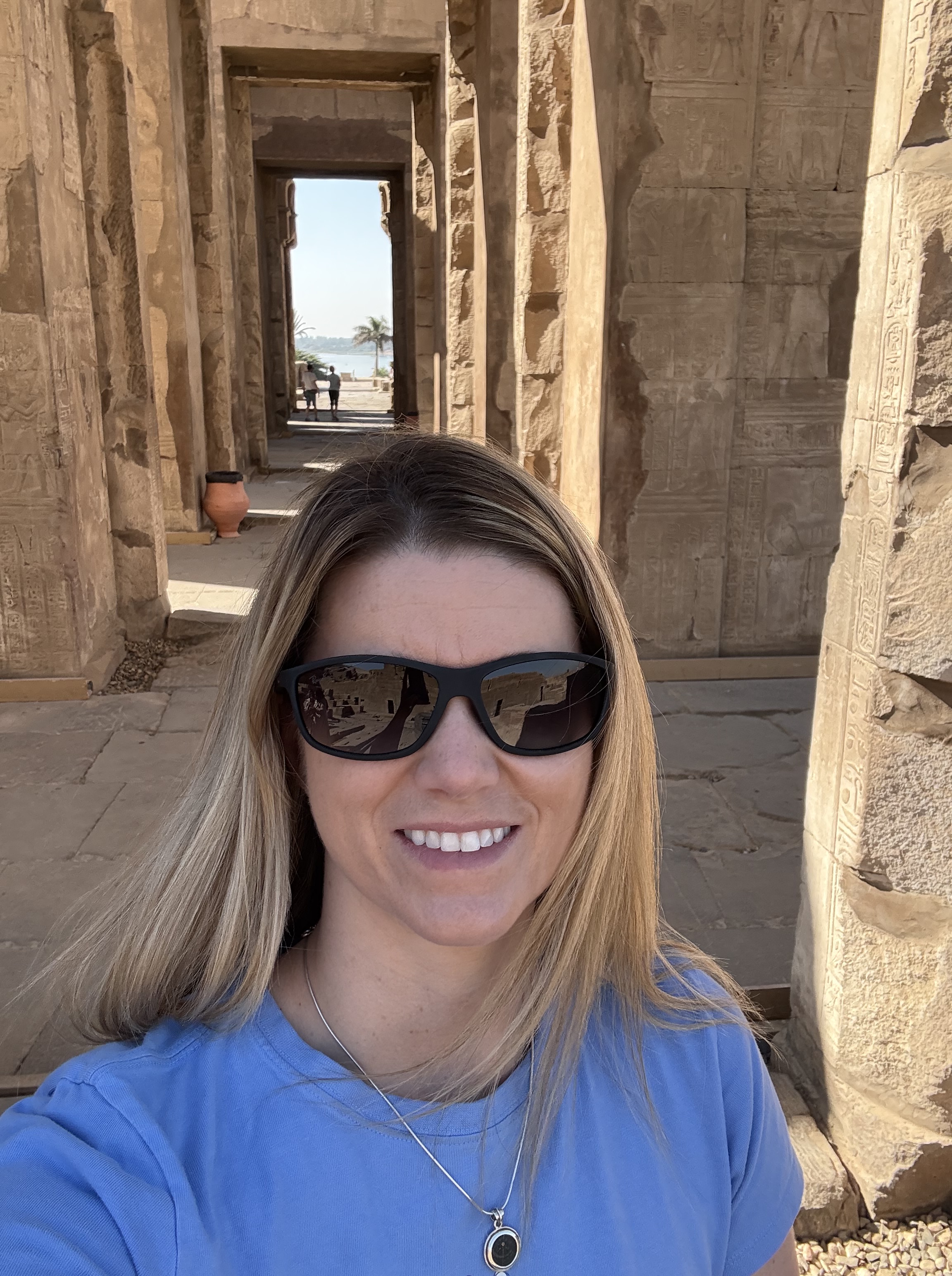
Of course, no study can be made of Egypt without some examination of the many and confusing Egyptian gods. We saw their icons engraved everywhere up and down the Nile in the temples, tombs, and museums. In reality, most of what we know about ancient Egyptian culture comes from tombs and temples because those were the structures built of stone because they were meant to be eternal. Palaces and other dwellings were only built of mud brick and largely did not survive the dessert sands of time.
But the tombs and temples tell us the Egyptians were big believers in the afterlife. We know they went to great lengths to preserve their bodies i.e. mumification—a practice that took 70 days (done to both Jacob [Gen 50:1-3] and Joseph [Gen 50:26] in some fashion although his bones were later taken out of Egypt).
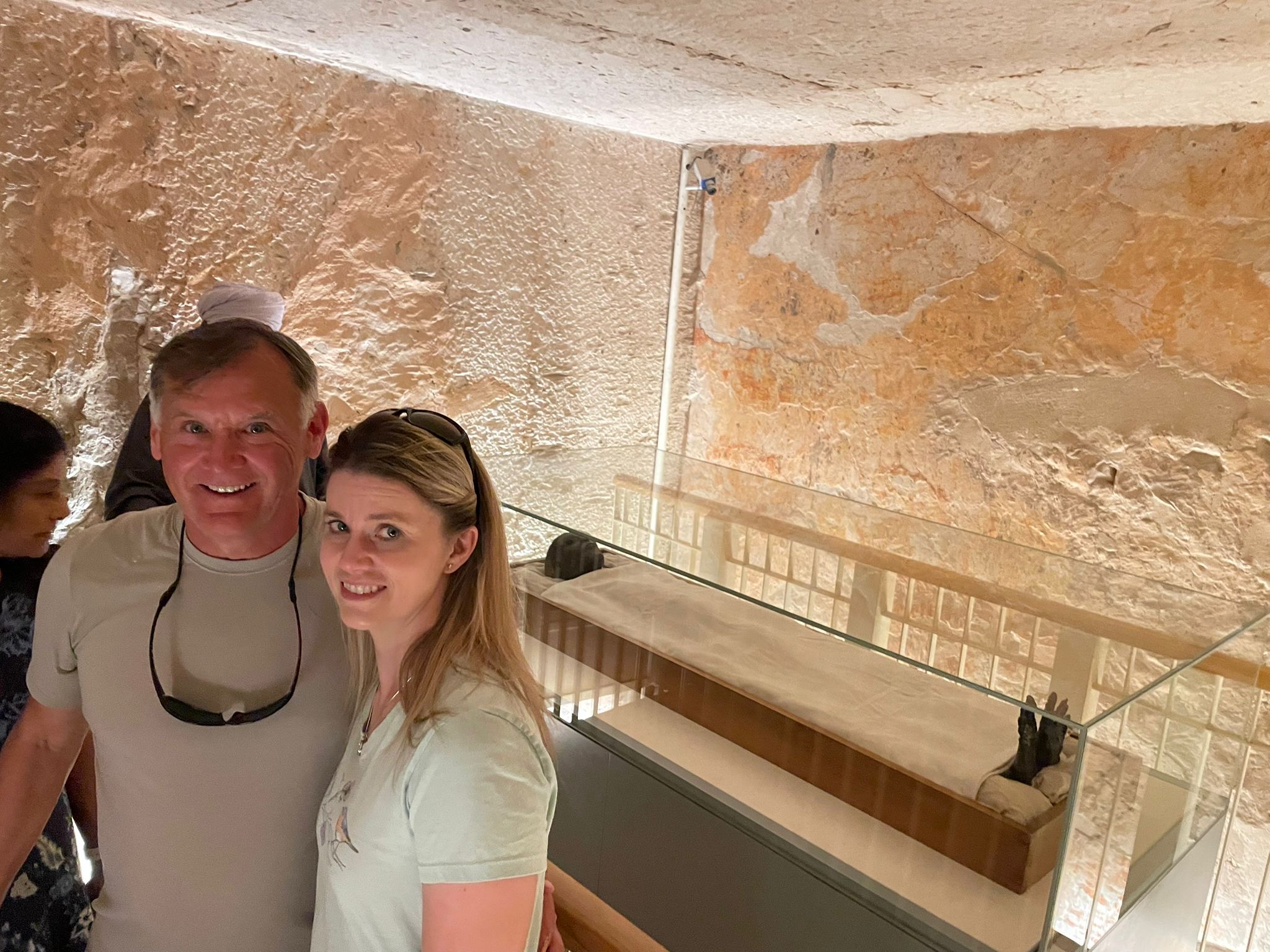
They prepared for the afterlife meticulously and the Pharaohs would begin build their pyramid complex (or mustabas) upon taking the throne—probably a good idea considering the high rates of murder, assassination, and other dangers inherent in being the ruler of the known world. They also prepared extravagantly—although nearly all the ancient tombs were subsequently robbed of all their treasures, the wealth and skill of their civilization was evidenced from the elaborate colored engravings and paintings still surviving in the Valley of the Kings and elsewhere.
We did get to see the treasure found in King Tut’s tomb—the only tomb found in tact—when we went later to the Egyptian Museum in Cairo. His 22 pound sold gold mask is on display together with other intricate and amazing jewelry.
Of course, as with all civilizations, the nation experienced the rise and fall of power multiple times over the years. Our Egyptian guide worked to help us understand the roughly 30 dynasties and how they divided into the old, middle, intermediate, and new kingdoms.
The iconography of the various Pharaohs and gods seemed similar to my untrained eye, but he pointed out what was from “upper” (Southern) Egypt, “lower” (Northern) Egypt, the combined kingdoms, the Ptolemides, and the later Greco Roman rulers (who continued worship of the Egyptian gods in effort to gain favor and keep control of the people).
All of the Pharoahs had five names. Ramses II in particular was big on PR and his “cartouche” bearing his name would be engraved 12-15 times on some of his statues in effort to prevent later Pharaoh’s from erasing his name and pirating his monument. A fairly legit concern…Queen Hatshepsut (or “hot chicken soup” as our guide called her) a few dynasties before suffered from just such an erasing and she was not the only one.
Dr Hersey, the President of Jerusalem University College and our Prof for this class, has studied Egyptology in depth and gave us a number of insights and interesting parallels in the book of Exodus with other passages of Scripture. He informed us that the Hebrew name for Exodus is actually the book of “Names” which is interesting given the infatuation of the Pharaohs with their own names, the absence of certain names—including Pharaoh’s—from the book, and God’s revealing of His own name at the burning bush (Exodus 3).
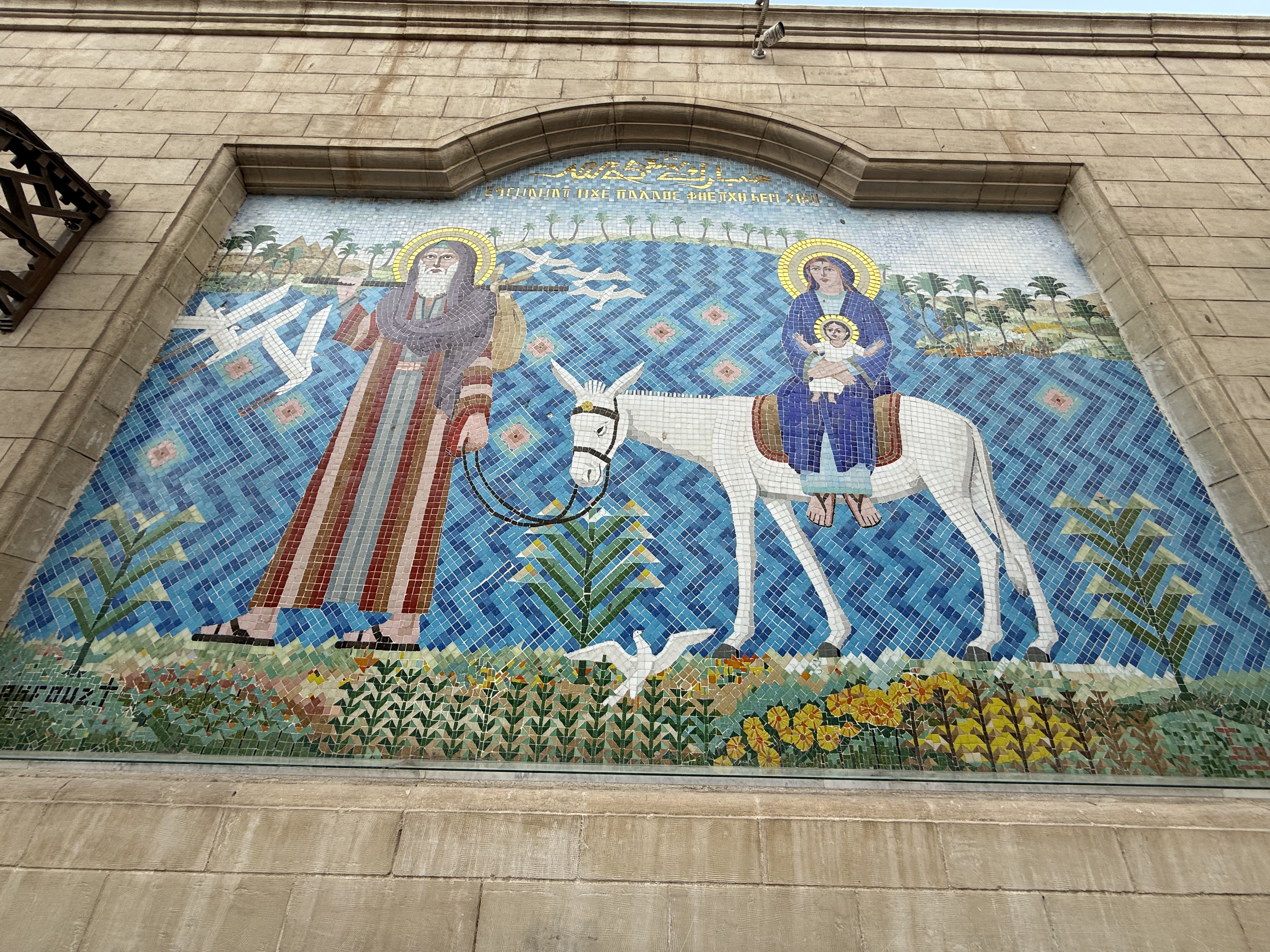
This trip has heightened my interest in some of the other mentions of Egypt in Scripture…We have a record of the prophet Jeremiah being taken to Egypt against his will. The political power of Egypt is mentioned in Isaiah who warns against them turning to Egypt for defense instead of to the Lord. Of course we know Joseph, Mary, and Jesus sojourned in Egypt for some time after era—a fact the Coptic Christians have proudly commemorated in a number of locations (some of which we got to visit).
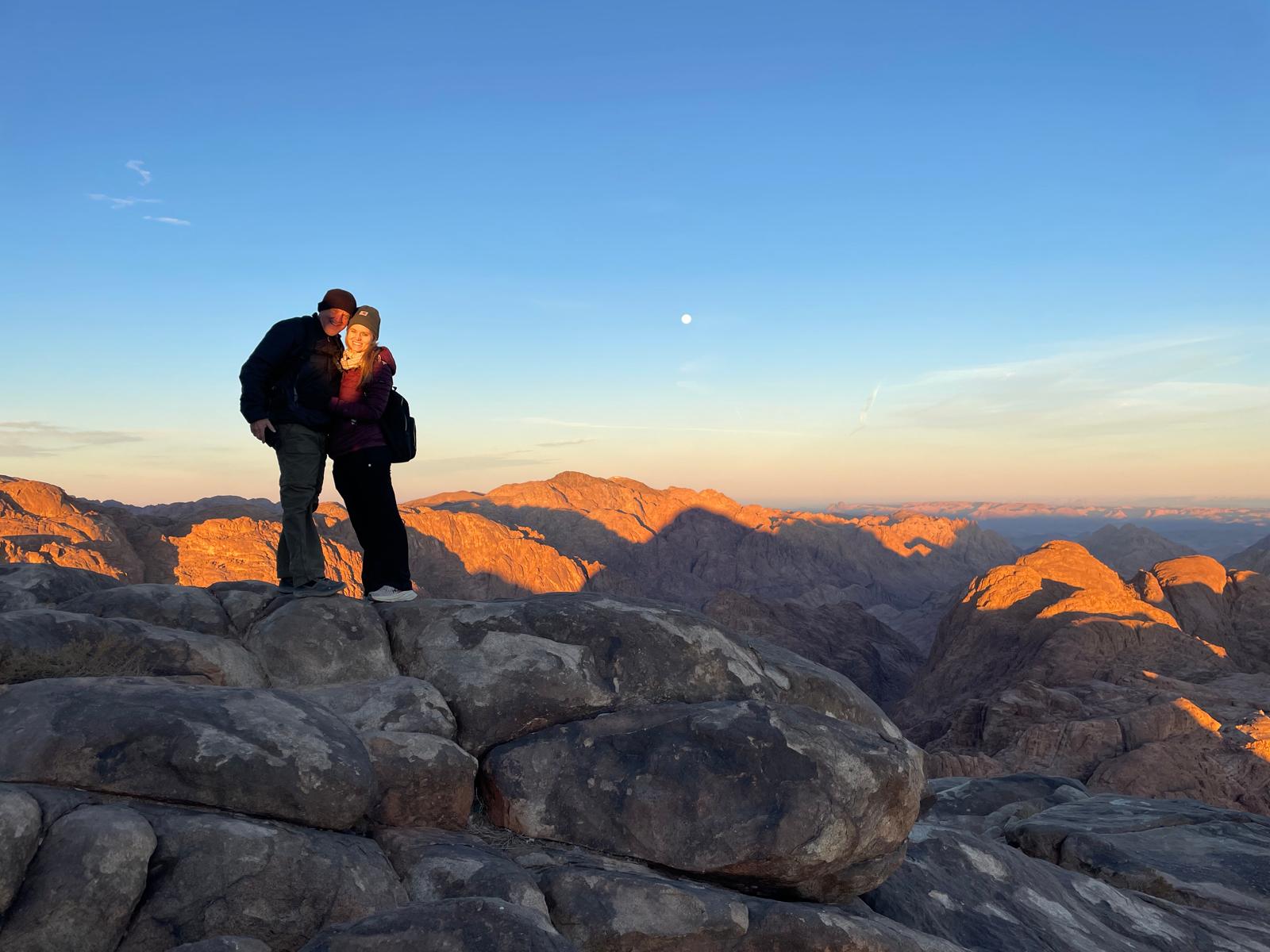
In a week of traveling up and down the beautiful Nile and into the “wilderness of Sinai,” I feel we have only scratched the surface of the incredible nation of Egypt and the way God used it to shape history and the Bible.
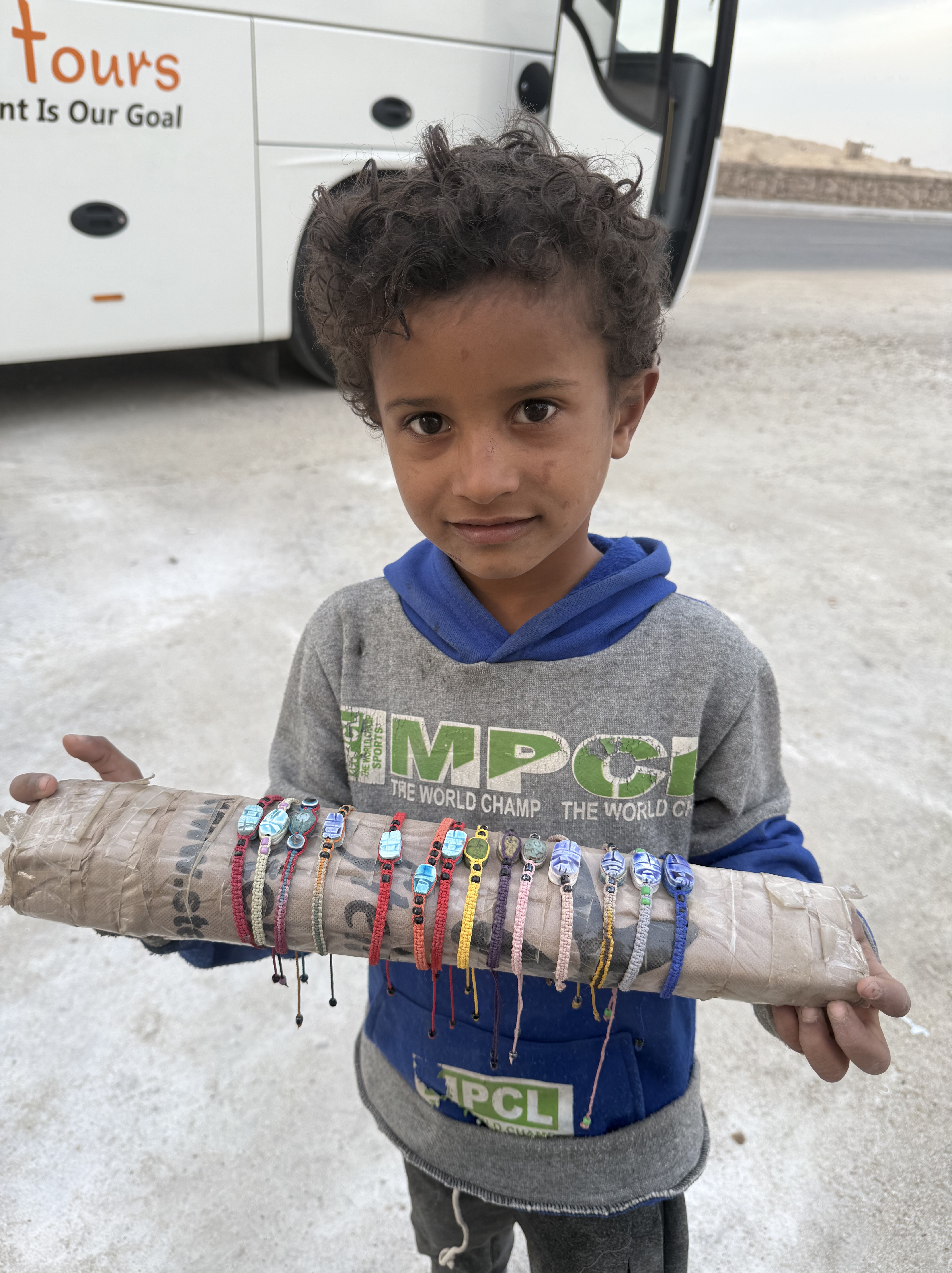
Egypt will ever hold a place in my heart as a unique treasure trove of history where the weather is dry, the people are friendly, the trains are nasty (except cabin 5), and the bathroom is only $.25. Toilet paper included. Usually.
We very much enjoyed our time with Dr Hersey and the other JUC students and hope we can see them again soon on another adventure!
The first part of our morning was consumed with the exciting task of getting our pre-flight COVID tests. As much as we had all enjoyed the trip, when our plane lifted off the tarmac that night, we wanted to be sitting on it.
It was the Sabbath, so clinics were closed but we managed to find an Arab non-emergency “hospital” that would take our cash and swab our noses.
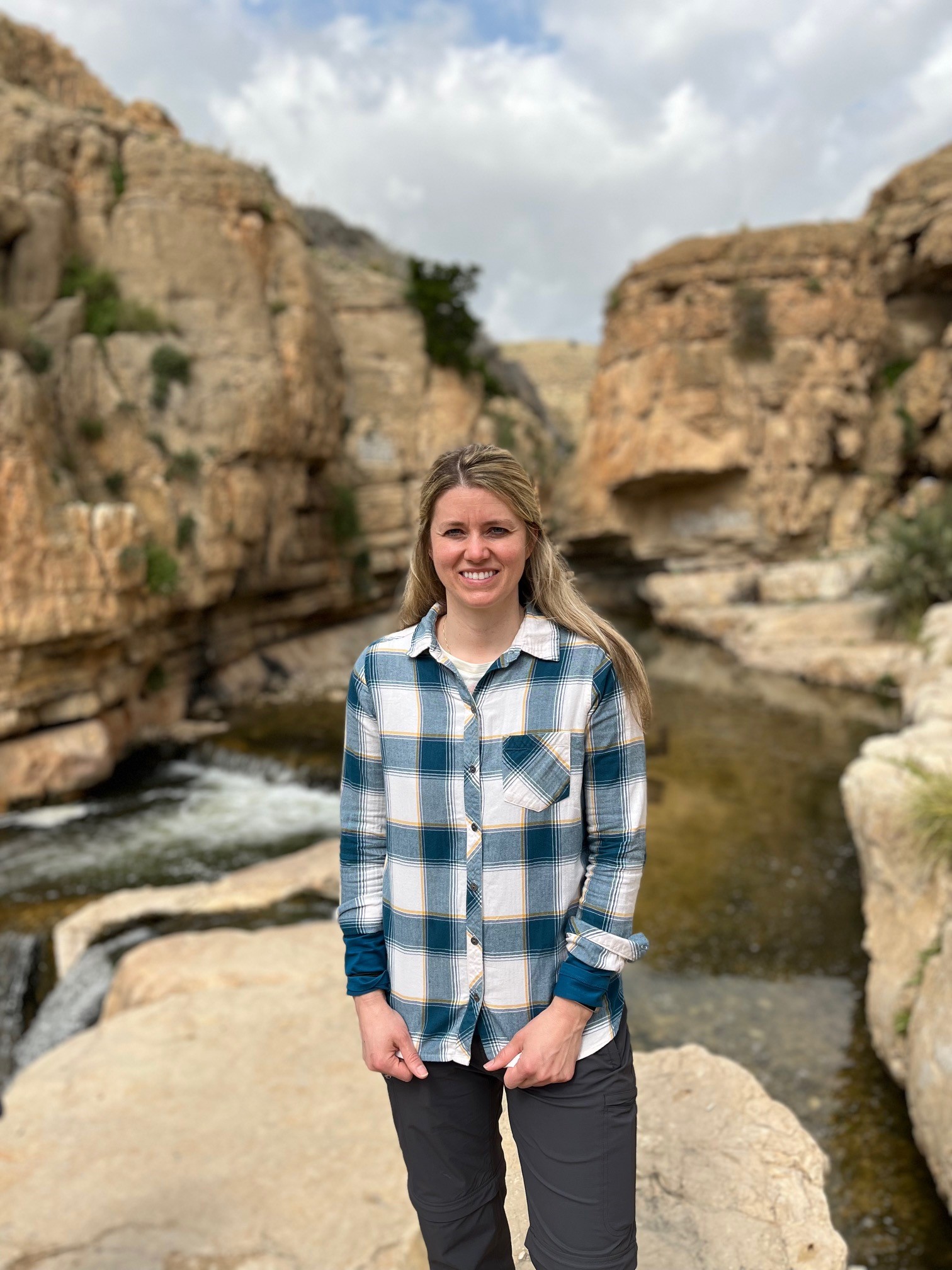
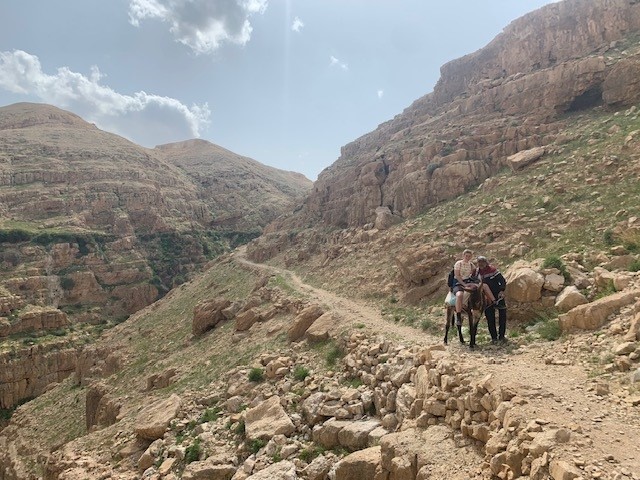
We had another full day in front of us beginning with hiking Wadi Qelt–also known as the Jericho trail–a path through the Judean desert between Jerusalem and Jericho that would have been well traveled by many names we recognize in the Bible. David would have fled from Absolom along this road. Mary and Joseph would have traveled it as part of their journey to Bethlehem. And Christ himself would have traversed it and sometimes stopped along the way to teach his disciples.
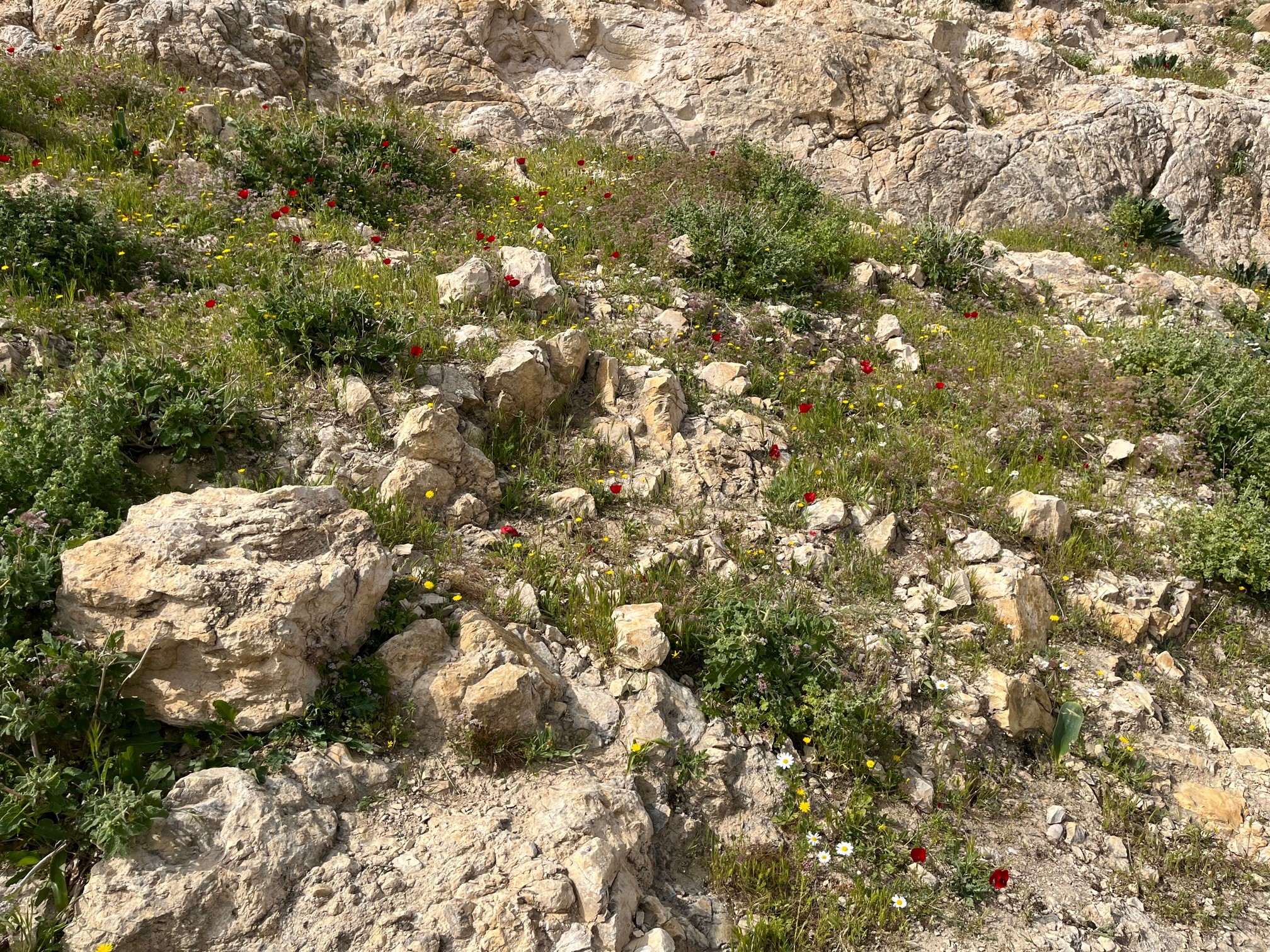
It was a beautiful, warm day and I should probably be quiet for a moment and let these photos speak for themselves:
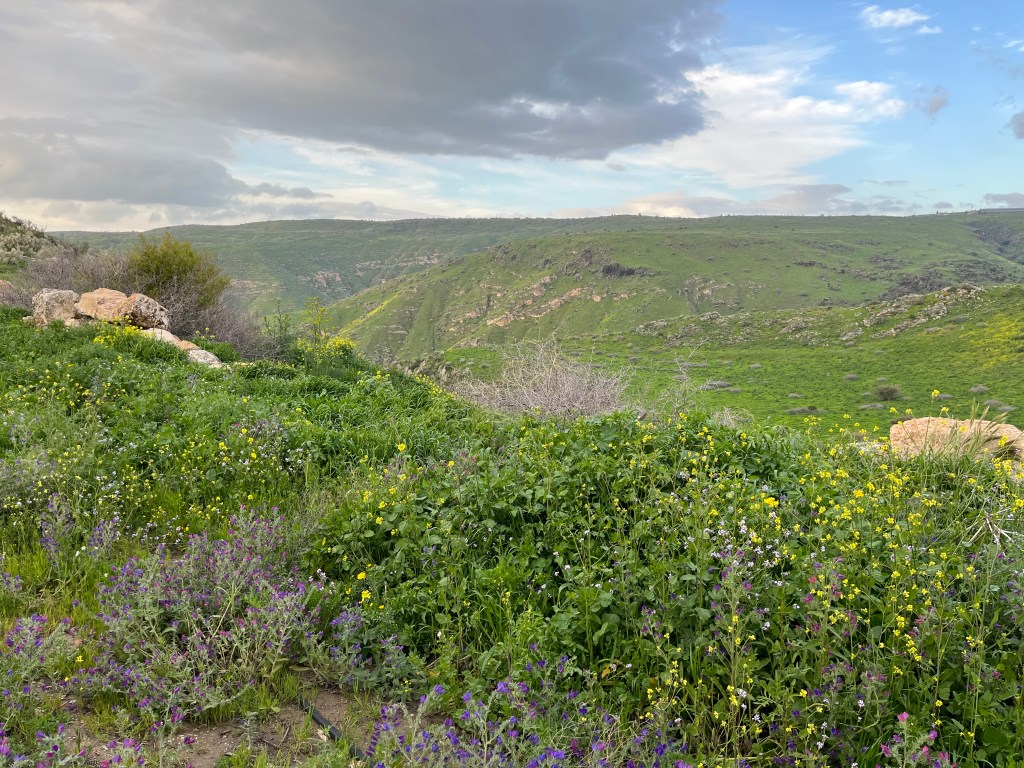
Given the cooler, wetter spring they’ve had in Israel this year, it was much greener than this area would typically be. We saw herds of sheep and goats navigating the rocky mountains and this put a very real spin on the word picture of a shepherd leading his sheep to green pastures and beside still waters.
“The Lord is my shepherd; I shall not want. He maketh me lie down in green pastures. He leads me beside still waters. He restores my soul. He leads me in paths of righteousness for his name sake…” Psalm 23:1-3
Herod, of course, had his fingerprints along this path. An aqueduct he built brings fresh water right through the valley and would have been faithfully filling the swimming pool for his Jericho palace.
We didn’t see any bandits, but that would have been an issue at the time of Christ and perhaps the reason that his famous tale of the Good Samaritan was set along this road. (Luke 10:25-37)
Robbers would not have been the only danger along this path. It had a lot of uneven terrain, a seven mile stretch of scrambling over rocks and up and down inclines…of course, the beautiful views made it absolutely worth every step in March. I don’t believe it would have been enjoyable at all in July or August.
I can’t say I walked the whole way, though…thanks to Abraham and his friendly donkey, Shushu.
After a few minutes on a donkey’s back, I’m convinced once and for all that Mary did NOT ride on a donkey down to Bethlehem. Quite frankly, sitting on a donkey that’s losing it’s footing on the loose rocks on the side of a mountain goes a long way toward making you realize that walking is a great exercise. I’m just saying.
Anyway, it was an awesome way to spend the final morning of our trip and it made the land of the Bible come alive in its own right.
Just as we were reaching our destination, we took a final detour to see what remains of Herod’s winter palace at Jericho. What was once the opulent vacation home of one of the world’s most powerful men is now a pile of ruins surrounded by a few ratty homes and a ton of garbage. Standing in Herod’s Olympic-sized swimming pool made me think of the words of Jesus,“Fear not, little flock, for it is your Father’s good pleasure to give you the kingdom. Sell your possessions, and give to the needy. Provide yourselves with moneybags that do not grow old, with a treasure in the heavens that does not fail, where no thief approaches and no moth destroys. For where your treasure is, there will your heart be also.” (Luke 12:32-34)
Herod’s great power and wealth led to a life of heartache and paranoia. He murdered one of his ten wives and at least three of his own sons; He slaughtered innocent babies; and Josephus tells us that he was so hated by his subjects that he ordered the killing of all the Jewish leaders on his death because that was his only hope that there would be mourning.
What a stark contrast to the simple life and death we had retraced in Jerusalem just the day before. A Jewish contractor with no home, no political status, no fancy swimming pools. His life was not wrenched from Him, it was laid down for all of us. And He changed the world.
His teachings are as counter cultural today as they were two thousand years ago…He is the Good Shepherd asking us to place our simple trust in Him and not where moths and corrupt and thieves break in and steal.
The third of Herod’s praetorium pools we visited this trip
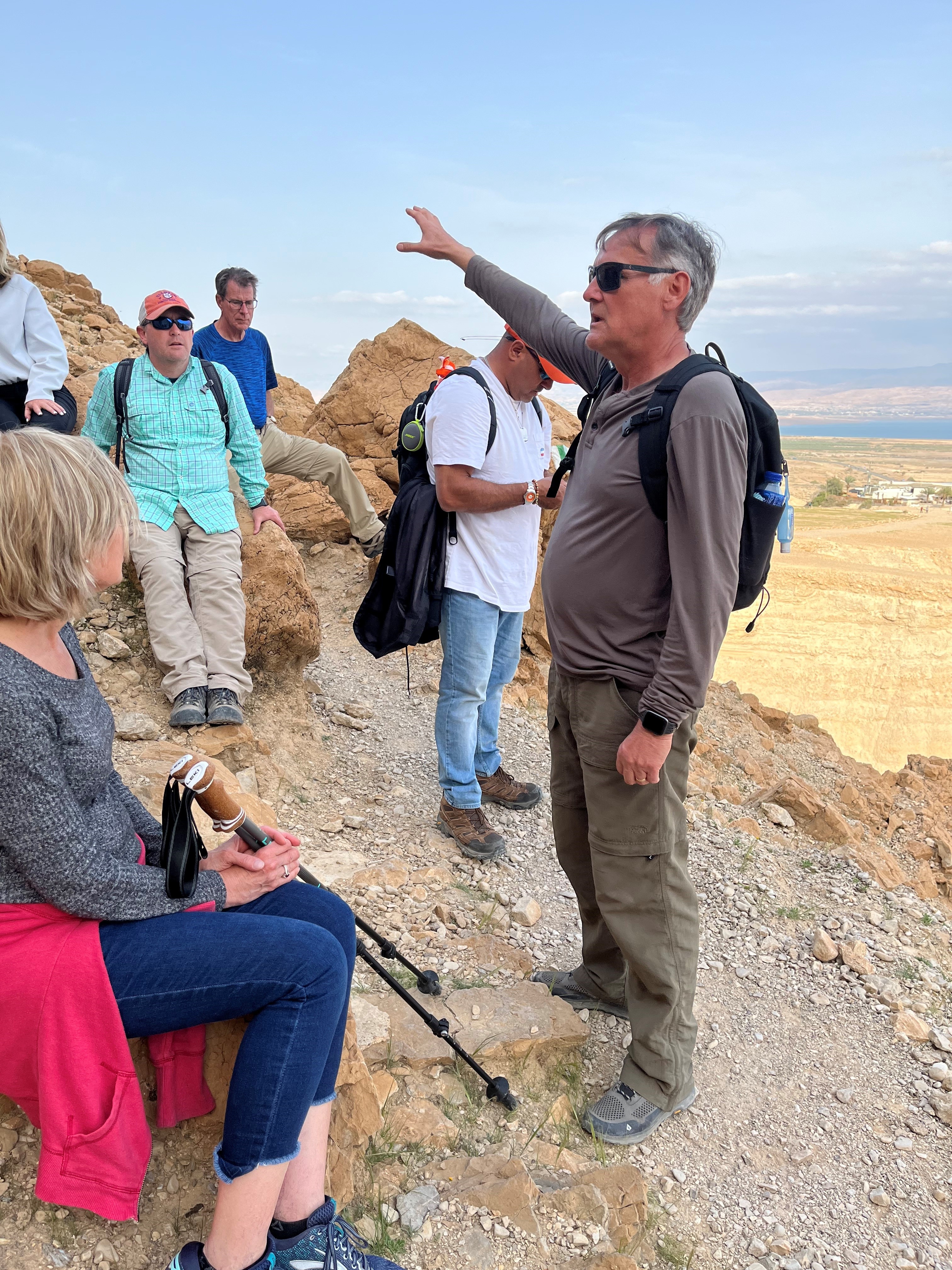
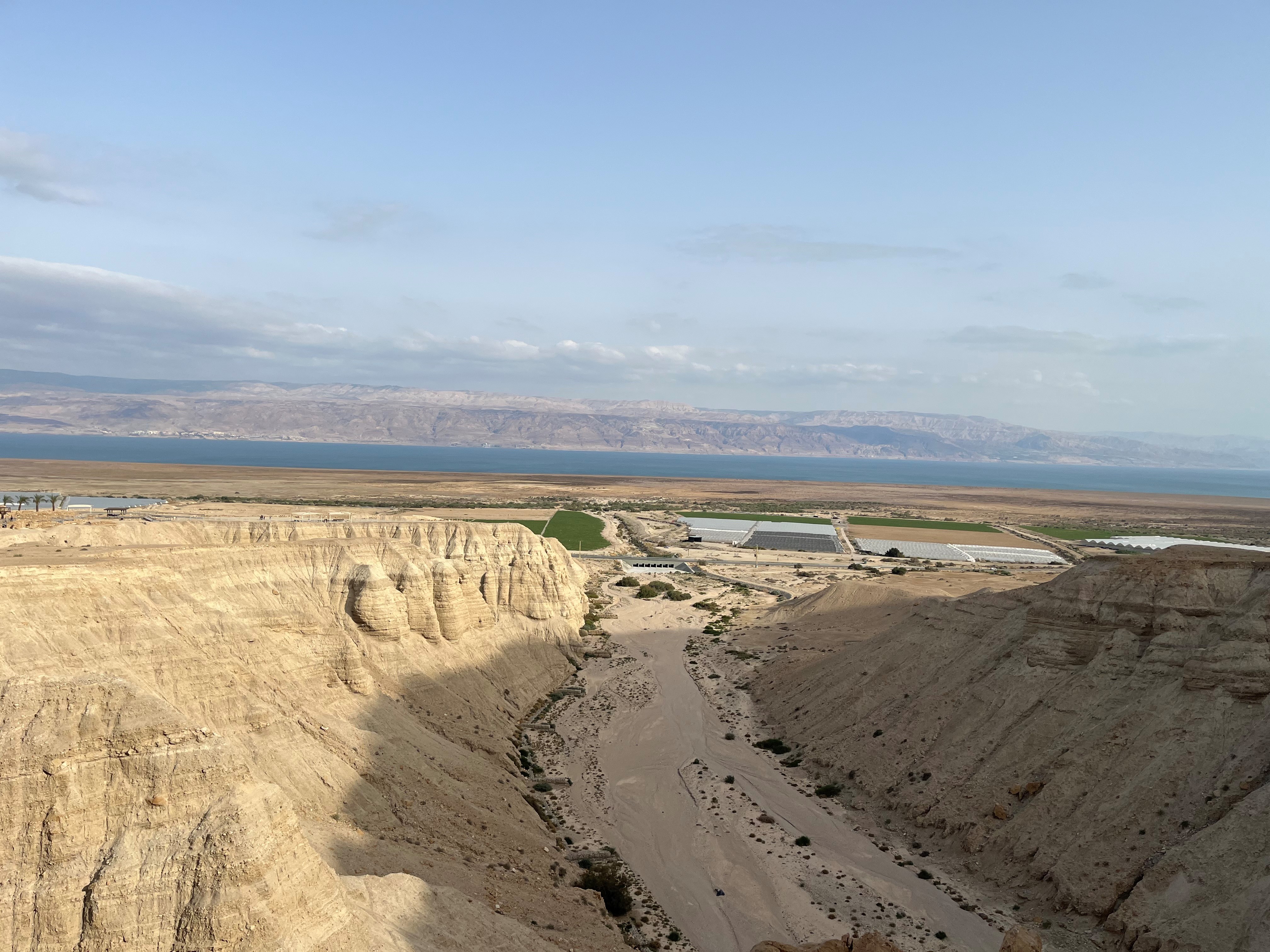
We had one final tourist destination, Qumran. As you know, this was where the Dead Sea scrolls were discovered. Instead of the usual walk through the roped off areas around the digs and watching a move in the museum, we hiked a bit of the cliffs and explored a few caves and tunnels. It was fun. I highly recommend it.
Curtis gave us our final devotional. I’ll be honest and admit I don’t remember it although I’m sure it was good. My brain was just too full at this point. Too many Magnum bars.
We then all ate (okay, almost all ate) an insect in memory of John the Baptist who was likely raised by the Essenes who lived here…I probably shouldn’t tell that detail so it can be a surprise when you come on the next trip. You should. I highly recommend it.
Staci, we saved one for you!
As we headed back toward the van after our second substantial hike of the day and our seventh day of adventure, I noticed that even Jack had stopped taking pictures. When Jack stops taking pictures, you know it’s time to go home.
Thankfully, we were good and tired so we could sleep some on the fourteen hour flight to Miami. The days had gone by quickly but they left a sincere impression I will be slow to forget.
There was a few tense moments at the airport. I guess we looked like a suspicious band of COVID trafficking terrorists. For a moment; it looked like they weren’t going to let us leave. But never mind that story…I have to save something for another day.
We got to sleep in until like…7:00 am. The hotel breakfast was worth getting up for though. By all accounts, the Israelis know how to do coffee.
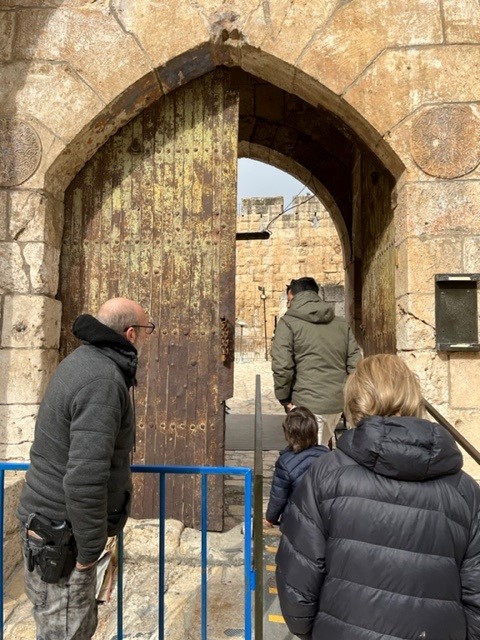
We needed to be at Herod’s Jerusalem praetorium by 8:00 because Curtis had pulled some strings and they were opening especially for us despite the night of Purim parties. We also needed to hurry through the key sites we wanted to see because it was Friday and many things were shutting down early for Sabbath.
We had seen a fair bit of Herod’s handiwork by now but there was still a lot more to come. Herod’s Jerusalem praetorium is a fairly recent dig which has answered a lot of open questions about where much of the Roman occupation force would have been housed.
Pilate would have been staying at this location at the time of the trial of Christ. In fact, Jesus likely would have been tried on the steps Curtis later took us which are now just an inconspicuous stack of rocks jutting out of the city wall. Pilate would have been roused to preside over the trial of this humble Jew and the crowds chanted, “Crucify him! Crucify him.” But we’ll come back to that.
After a quick walk through the remains of what was once a pretty impressive complex complete with numerous swimming pools (I don’t believe there are any cruise ships with more swimming pools that what Herod had) They let us up the narrow metal stairs onto the ramparts and we walked on the top of the city walls to our next stop of the day. Your friends have not done this. It was fortunate for us because we had five minutes to do a 10-minute walk to the Western Wall. As we walked those thick, high walls it was crazy to think that Jerusalem, for all its defensives, was attacked 52 times and conquered 44 of those with two complete destructions.
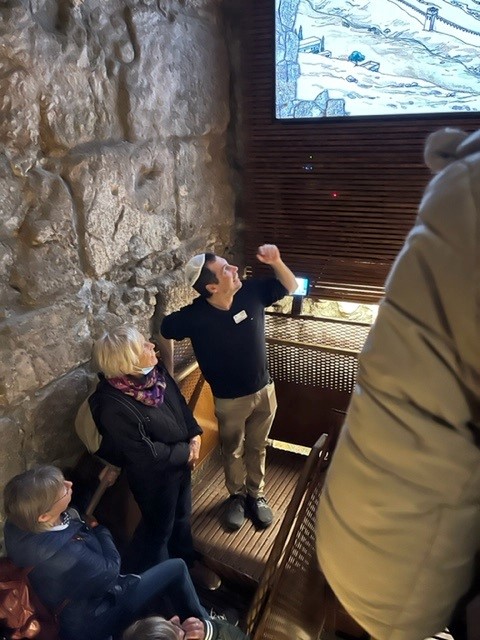
We were headed back to catch a new tour that will take you down to digs under the city that date back to first century and even the Hasmonean period (~100 years before Christ). We had a lively Jewish tour guide who very much seemed to enjoy helping us make sense of the various rocks we were looking at. Given all the destruction, it’s pretty amazing that they can piece together the story as much as they have; according to the guide, they have only finished excavating about 5% of the potential sites so we still have a lot to learn. One thing that we continually marveled at are the huge hewn stones used to construct the Temple Mount. To this day, they have no idea how some of those monsters were transported from the quarry.
We could see ways that the Jews had mixed their customs and ceremonies (like ceremonial baths and the many mikvahs) with Roman/Hellenistic ideas like theaters. It helps make sense of the scene back at those judgment steps when the religious leaders prosecuted Jesus:
“But they cried out, Away with him, away with him, crucify him. Pilate saith unto them, Shall I crucify your King? The chief priests answered, We have no king but Caesar.” John 19:15
Some of the religious leaders had been put in place by Rome; some profited from the corrupt and lucrative temple system; some were perhaps just caught up in the excitement; regardless, Israel as a nation was less than a hundred years from their own independence with factions still wanting to rebel and others choosing to make the bold claim to have “no king but Ceasar.”
By the time we finished, the Jewish quarter was shutting down so we had lunch in the Arab quarter (and got ripped off a little bit, I might add…not that I’m bitter or anything). I was starting to get a little tired of roasted chicken, humas, and their many salads, but they also brought french fries. I never get tired of french fries.
My feet were starting to complain again from hours on stone, but we had to crisscross the city a few more times in order to get in the sites we wanted to see.
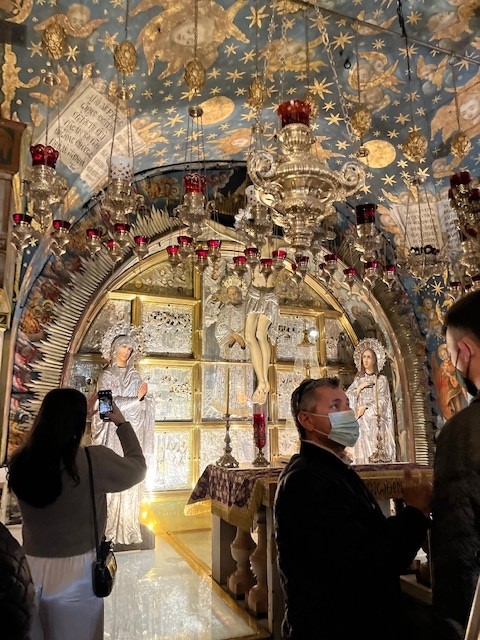
One, the Church of the Holy Sepulture. This is the traditional site of Jesus’ death and resurrection. Meaning, it was identified by Helena sometime in the 3rd century. Churches have since been destroyed and rebuilt on that site a few times since and the current structure is partially owned and managed by like six or seven different churches. And while it may well be the actual site of Jesus’ death and resurrection, it was hard to feel any connection for me because the place is so gaudy and even downright creepy.
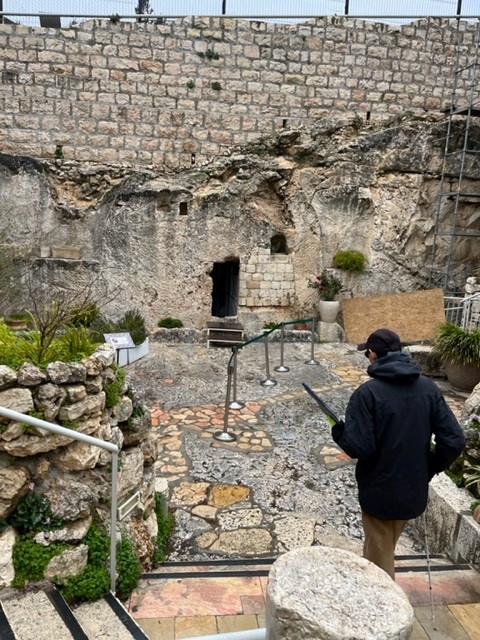
So, to be frank, it was like a breath of fresh air when we went from there to the Garden Tomb. This is another site that has been identified as a potential place for the crucifixion and resurrection of Christ. And while we can’t know for sure where these history-changing events occurred, I love how the volunteers there–including our blind guide– encourage worship of the risen Christ. And I will just add, there are some compelling facts pointing to this site.
Did I mention we were taking things out of order? It just kinda worked that way. After a quiet communion there at the Garden and a few minutes in the gift shop, our feet hit the stone again and some of us chose to retrace the steps of Jesus the night before the Crucifixion.
We went out across the Kidron Valley to the Mount of Olives where Jesus went to pray the night of his arrest. The Garden of Gethsemane was empty and there was a slight drizzle of rain that created a peaceful backdrop. There is a large stone there that many believe Jesus prayed on; and a large basilica–one of the few we went in our whole trip.
I could have lingered there a little longer, but we made our way back up to Jerusalem and through the sheeps’ gate and toward the general location of his first trial at Caiaphas’ house. He would later be taken to the Praetorium where we had started out our day or perhaps to the steps we had sat on–just outside the current city walls.
It’s a little hard to absorb it all–even when you’re there for a second time. And it probably didn’t help that we had had to take the places for the events of Jesus’ final days all out of order. But it still helped it all come together in my mind. And there is nothing quite like walking the city on your own two feet, experiencing the awkward blend of old and new; Jewish, Arab and Christian that wets my appetite to know more not only about the biblical history but also the current confusing culture unique to Israel.
Our day wasn’t quite done. We had high hopes to make it to Mamre; but turns out we’ll have to save that for another trip. We did, however, spend a few unplanned Sheckels in a cool gift shop and enjoy some delicious Mexican food in Bethlehem. To close out the night, we drove by the church of the Nativity. Like I said, we took things a little out of order. But we got the bookends right–we started the day with coffee and ended it with a hot shower and a pillow. In the middle, we marveled more than a little bit at this intriguing city of Jerusalem.
We continued our theme of going where our friends have not gone by heading to Gamala. It was cold. So cold in fact, that it turned out the trail was closed and we could not actually hike out to the site. We were able to huddle above at the overlook, however, and Curtis told us the story. This was the site of the last stand of the Jewish rebellion circa 64 BC. The Rabbi Gamaliel later spoke of it when he encouraged the religious leaders in Jerusalem to leave Jesus alone because if it wasn’t from God it would come to nothing just like the uprising that culminated there at Gamala.
It helped us understand better the political climate of the sliver of time between the Hasmonean dynasty and the failed rebellion that would come in AD 70. Jesus came to a diverse culture full of zealots and Hellenists…Pharisees and Sadducees…Jews and Samaritans…it was an ever-thickening hot mess of strong opinions and corrupt leaders; high taxes and low tolerance of others.
Sounds a little familiar.
Gamla was never rebuilt and it’s ruins were silent. Just us and the birds soaring overhead did not seem to be bothered by the cold.
Again, Jesus likely did come here although it was not specifically named in Scripture. He likely brought His simple message to these redneck farmers. Maybe many times.
From there we took a hard turn and studied some of Israel’s modern history from the unlikely university of the Eli Cohen. Your friends have not been here.
The building lies in a quiet strip of nothing, almost on the current Syrian border (and within the disputed territory). It was a fabulous and fabulously cold experience to walk through the long, graffiti covered halls and ponder the years of hatred and conflict, plotting and planning that was hosted in the many rooms. (If you aren’t familiar with Eli Cohen, you can see the dramatized version of his story in the Prime Video feature, Impossible Spy)
We shivered our way back to the van and it took a while even then to warm up. We headed from there to Banis—there’s nothing quite like visiting the gates of hell on a snowy March day.
Banis is beautiful but it was the site of some of the most grotesque pagan practices of that time. There is record of Jesus coming to this area—known then as Cesarea Philipi. In fact, Jesus may have stood on the same rock we stood on near the temple to the god Pan a/k/a the “Gates of Hell” when he famously declared that he would build his church and the gates of hell would not prevail against it.
It was sunny, windy, and snowy alternately so we didn’t loiter too long before making our way into the restaurant there for a delicious “Lebanese” lunch.
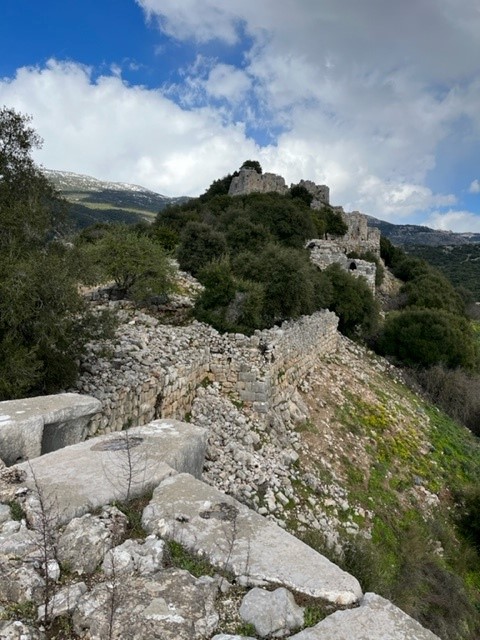
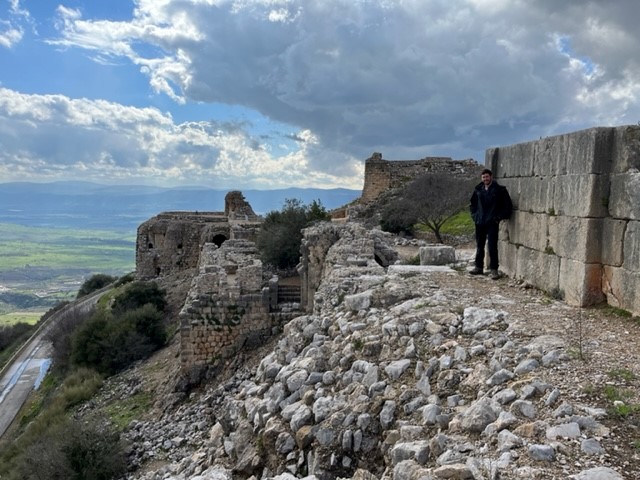
When we were sufficient full of chicken kabobs and hummus, we headed towards Nimrods castle—not an original plan but kinda a cool place if you ever find yourself in Israel with a couple of hours to kill.
The most pressing question on many of our minds was…how in the world did they heat this place? I can’t even imagine living in a stone structure on top of a snowy mountain with nothing but cold wind for company. Brrr.
Clearly, tons of time and effort was spent building this incredible defensive. It now provides an amazing house for the Irex (?) which appear to be living there quite comfortably despite the weather.
Our last stop was beside the side of the road to get some fresh pomegranate juice. The local vendors seemed very glad to see a van of tourists pull up. I suspect it has been a long two years of shut down for them.
I was exhausted by the time we reached the guest ranch and more interested in a hot bath than dinner. The front desk lady took one look at me and asked, “where on earth did you go on this cold day?”
So I told her: A cold place, a really cold place, and an even colder place.
So I told her: A cold place, a really cold place, and an even colder place. I guess I should have told her the truth: a closed national park, the Israeli/Syrian border, and the gates of hell. So…what did you do today?
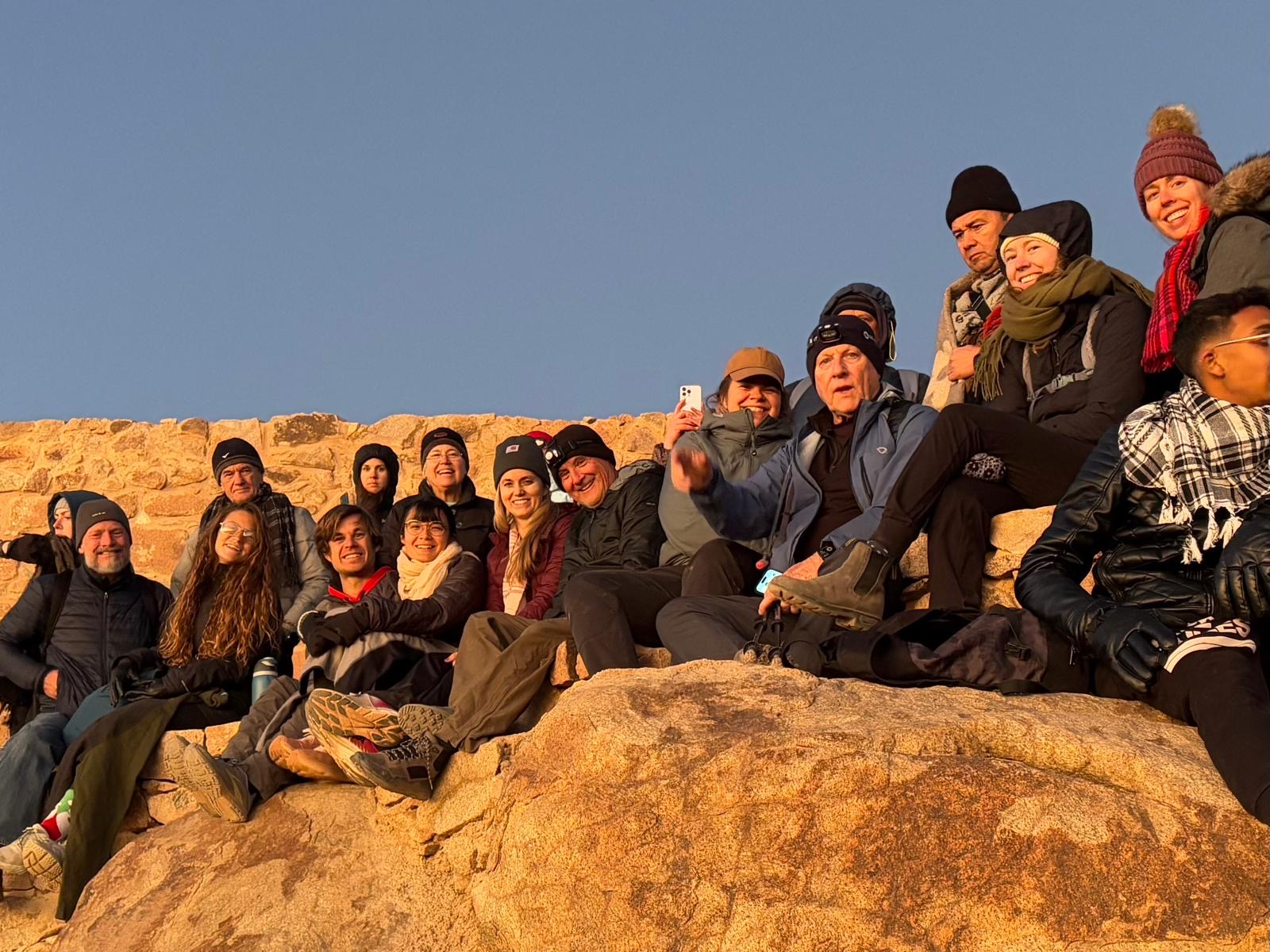
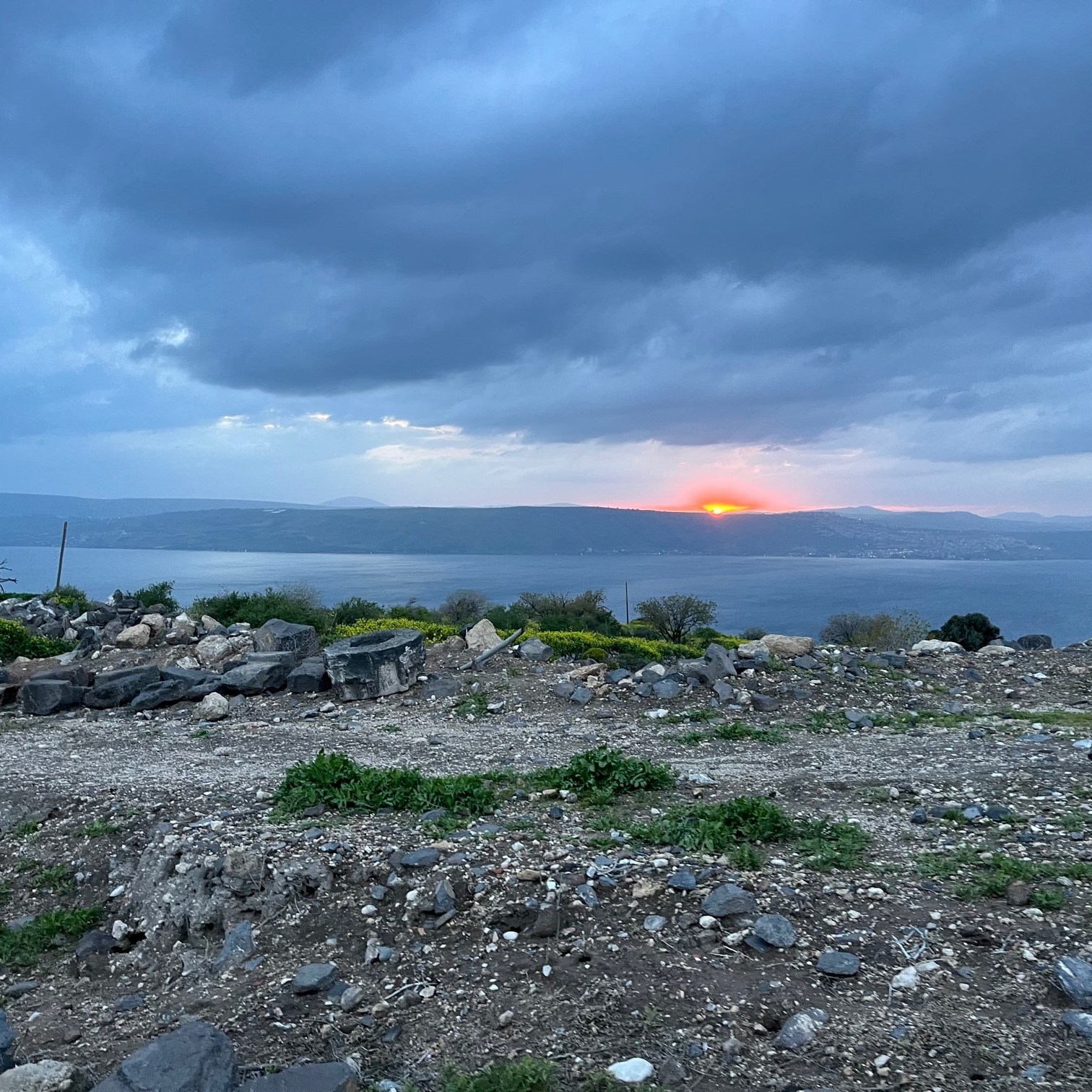
Unfortunately, I could not pull myself out of bed to watch, so all I saw of the beautiful hues is what dared to peak around the edges of the curtain.
When I did pull myself out of bed, I made my way as far down to the water as I could, which was still a ways away but within view of our corner of the lake. I tucked myself behind some rocks and took the time to sit and read my Bible and then just be quiet. It is rare in life that I have the opportunity to sit and be quiet.
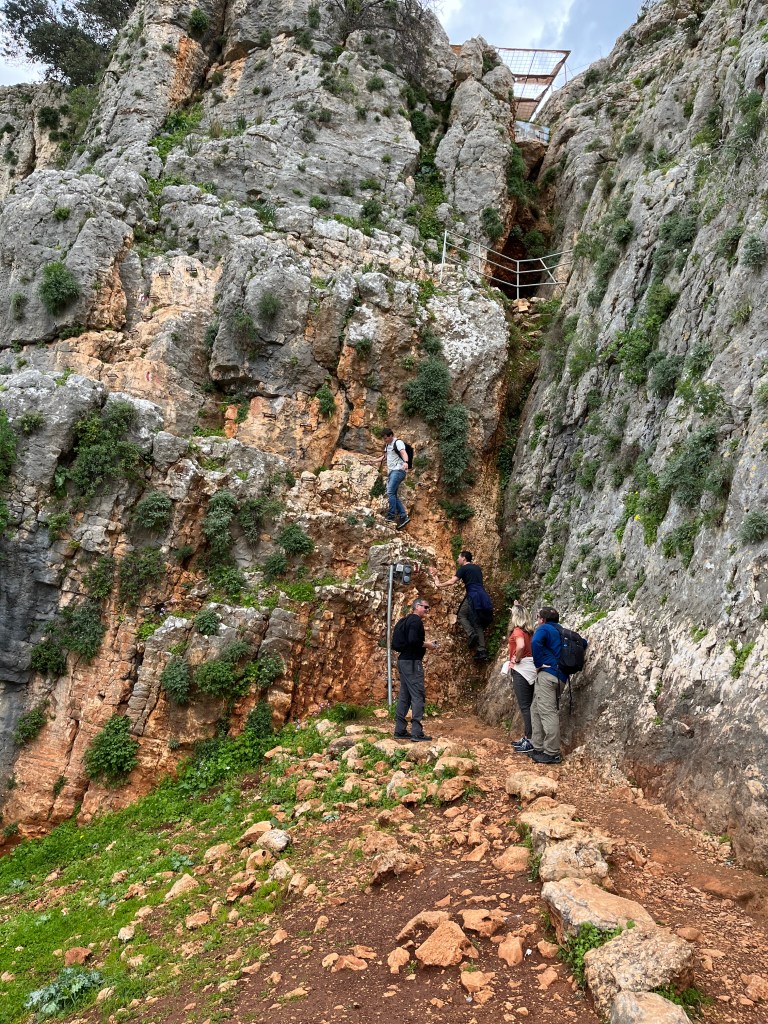
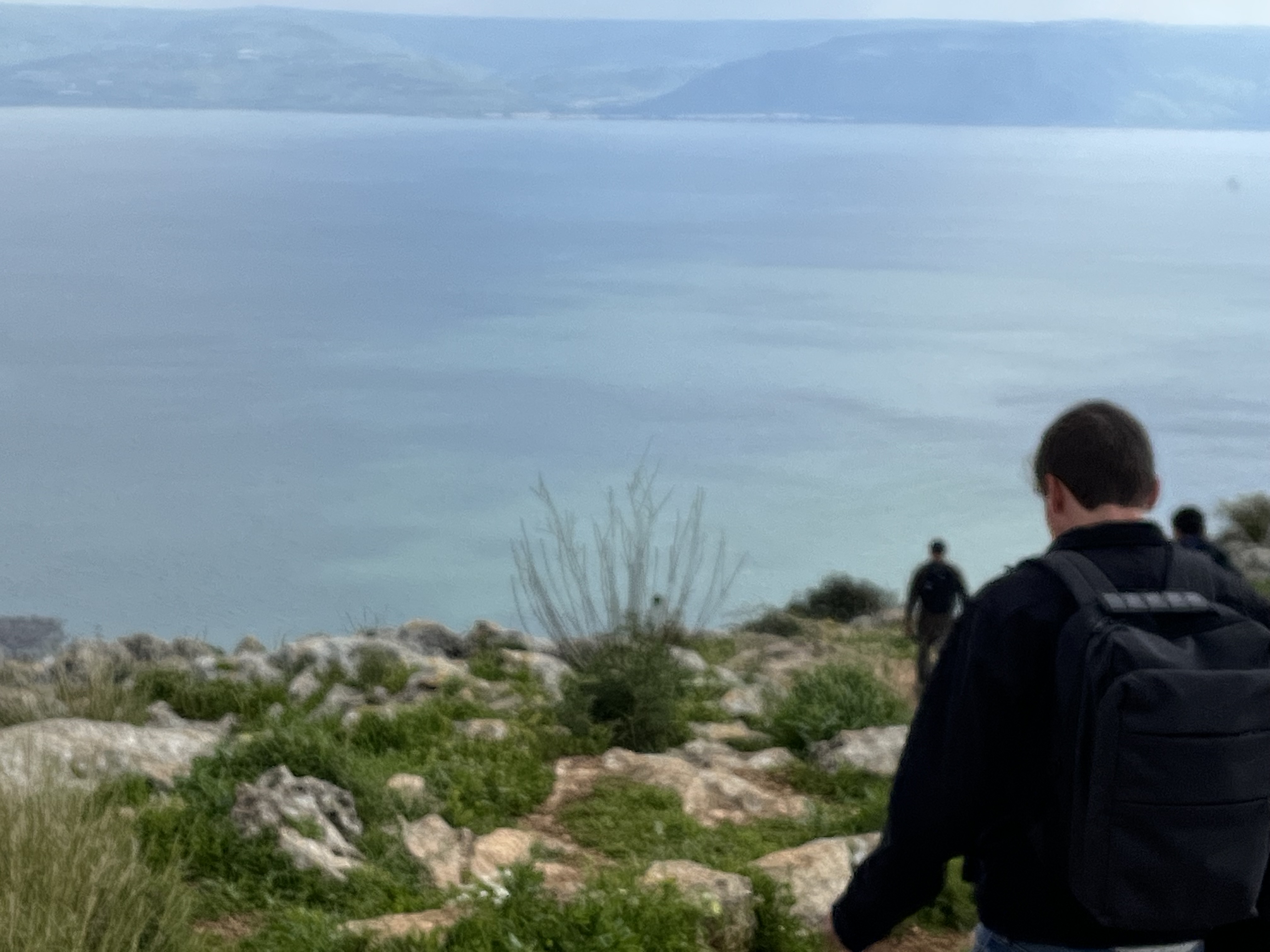
We had a last minute change of plans enabling us to hike Mt Arbel. Wow, was that cool! Your friends have not done this!
While it’s not a biblical site, it has a colorful recurrence in history including unsuccessful fortifications during political rebellions both shortly before and after the time of Christ. An understanding of them informs your understanding of the Galilean people and even why they may have viewed Christ as an up-and-coming political savior.
It’s hard to describe the amazing views over Magdala and the Sea…the cows parking themselves along the path…the bright red and yellow flowers. I cannot stress enough how different it was to see Israel in March instead of late May.
The climb gets aggressive a/k/a fun along the way. Let’s just say I understand why they close the trail when it rains.
All in all, we were proud of our time, we did it in about one hour and thirty-five minutes including time to snap photos along the way.
Our next stop was up a windy hill in the now Arab town of Nazareth. It was chilly as we piled out of the van and into a neat little dining area used by the folks at Nazareth village to feed us a period lunch.
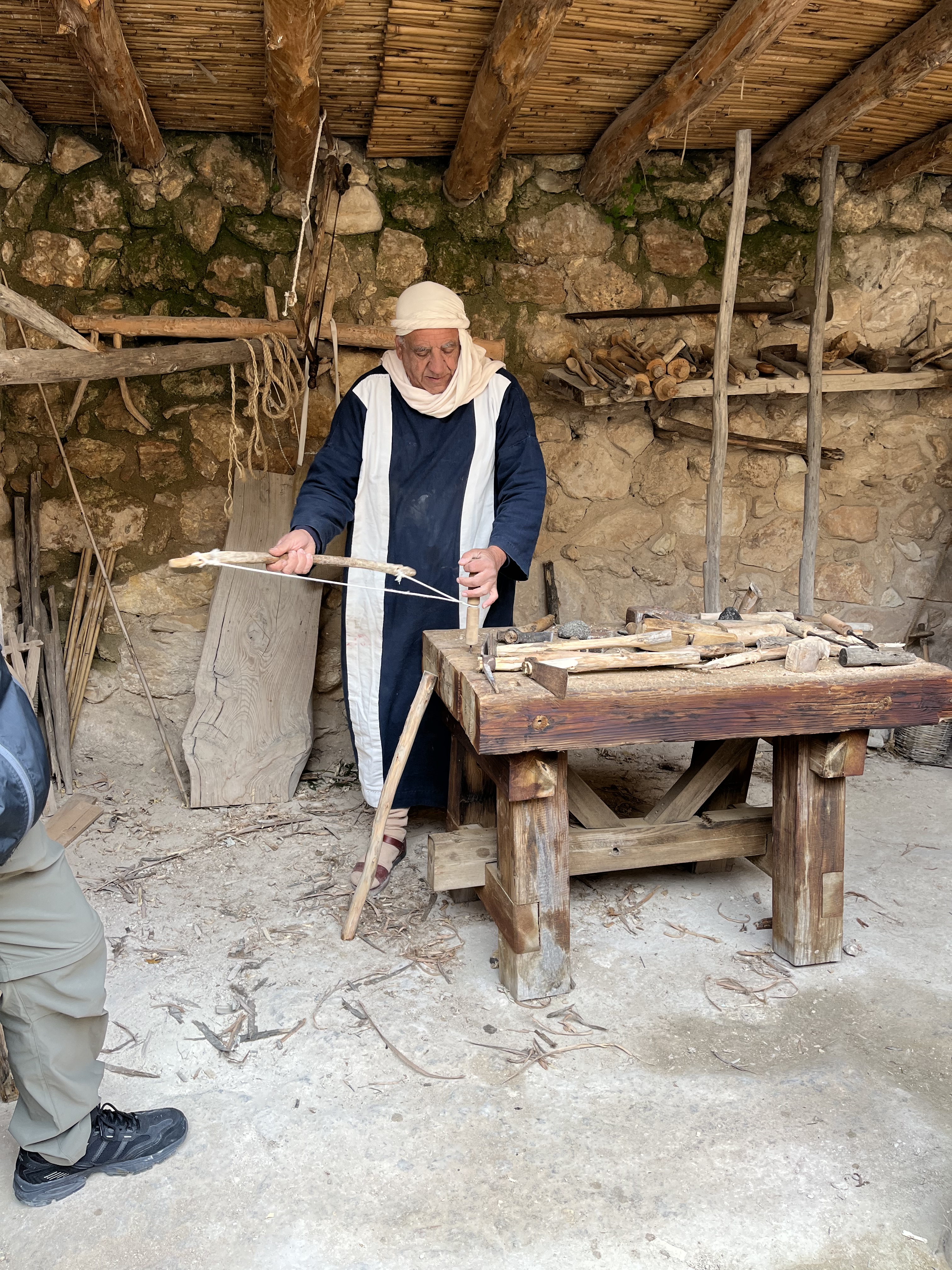
Nazareth Village is a recreation of first century Nazareth. It is helpful in bringing the ruins to life and letting you see what a corner of the village might have been like.
The coolest part of Nazareth Village is the first century wine press. Jesus quite possibly stood on that very community wine press…(contrary to popular misconception, there are not many places one can walk where Jesus actually walked). This is one. If you don’t know what you’re looking at, it’s just one rock in the midst of many rocks that make up a rocky mountain. But if you take the time to investigate, it’s not hard to picture little Jesus stomping on grapes alongside his friends.
Probably one of Israel’s best kept secrets, Nazareth Village does a great job with its recreation and commentary and I was thankful for their interpretations that helped make the “everyday” come alive—including the climax in the synagogue.
While Capernaum was Jesus’ headquarters during the ministry years, Nazareth was Jesus’ hometown–Likely populated by just a few hundred who would have seen Jesus grow up. They were not ready to accept Him as Messiah and when he stood in their synagogue and read the passage of Isaiah prophesying of the Messiah and pointed to himself as diety and hinted that hinted that He had come for the gentiles as well, the fine folks of Nazareth did their best to throw him off a cliff. Not exactly a warm welcome from your friends and relatives. (Luke 4:16-30).
Actually being in the town helps you understand this story—it hugs the side of the mountain and they apparently had a designated spot for just such executions.
Our Muslim friends would contend that Jesus did not claim to be God. A simple reading of the gospels would show that not only did He claim to be God…the Jews around him knew precisely that He was making this bold proclamation on several occasions; often at the threat of His life.
After Nazareth, we squeaked in a visit to Magdala–the fish processing hometown of Mary the Magdalene. The Bible doesn’t specifically record Jesus coming to Magdala, but it most certainly was one of the other “cities and villages” where he would have preached in the synagogue. This town destroyed in the revolt during 70 AD and never rebuilt. It was only discovered in 2009 and the ruins which stand in the way of a hotel parking lot include the floor and benches from a true first century parking lot. Coins they found in the floor indicate it would have been in use during Jesus’ time.
“And Jesus returned in the power of the Spirit into Galilee: and there went out a fame of him through all the region round about. And he taught in their synagogues, being glorified of all.” Luke 4:14-15
We had dinner at an empty restaurant just down the street from Magdala and then those of us who were not too cold and exhausted ended the day warming our hands by a fire next to the Sea of Galilee. A perfect bookend to a perfect day.
There is no easy way to get up the next morning after an overnight flight coupled with a 7 hour jump ahead in time. But I didn’t second guess the alarm clock because Curtis had us on a tight time schedule leaving the hotel at 8:00. Most everyone had just enough time to grab a cup of coffee.
Our first stop was the beach just before Caesarea. We marveled at the powerful aqueduct Herod had built to bring fresh water to the new city he was building along with the largest port of Israel.
Here we were introduced to the land of Israel—the small, complicated patch of planet earth God chose to be the stage for his chosen people roughly 2000 BC. It’s an unlikely crossroads between three major continents—the epicenter of wars and conflict, ideology and history.
There was a brisk breeze and rain sprinkled on and off as we walked and talked. The beach was rich with tiny shells and smooth stones.
Along the natural berms near the ocean, erosion has exposed layers of civilization where you can find broken pieces of pottery that so quietly hold the stories from a thousand years ago.
Broken pottery buried underneath the floor of a later civilization
This is my second journey to Israel and I’m so glad to be back. There is more than what can be absorbed in just a few days. This trip was promised to take us “where our friends haven’t gone” (and a few places they have).
Following the beach, we pulled into Caesarea—which was almost devoid of tourists. We stopped in a small rock hallow along the shore and discussed the sordid history of Herod the Great and his powerful and ruthless family legacy.
Caesarea Maritime was built as a pledge of loyalty by Herod to Octavian–the man who would later call himself Caesar Augustus—the self-proclaimed savior of the world (just ahead of the coming of a quiet, working-class contractor across the ocean whose legacy would turn the world upside down).
I accidentally left my phone in the van and I regret not getting any photos in this amazing port town but we talked about the birth of the gentile church here at Caesarea about 10 years after the ascension of Christ. One would be remiss not to see the amazing hippodrome and theater.
The rain drove us back to the van and we made a quick stop for a mall lunch on the way to Capernaum—the fishing village that would be Christ’s home during much of his ministry years.
The cramped stone houses just feet from the waters edge would have held no secrets and left no need for social media or even telephones.
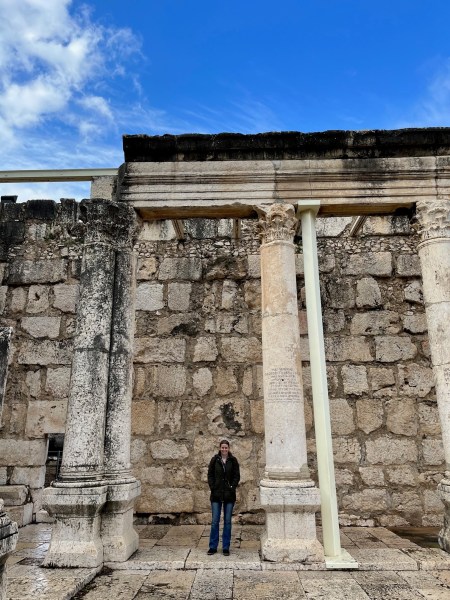
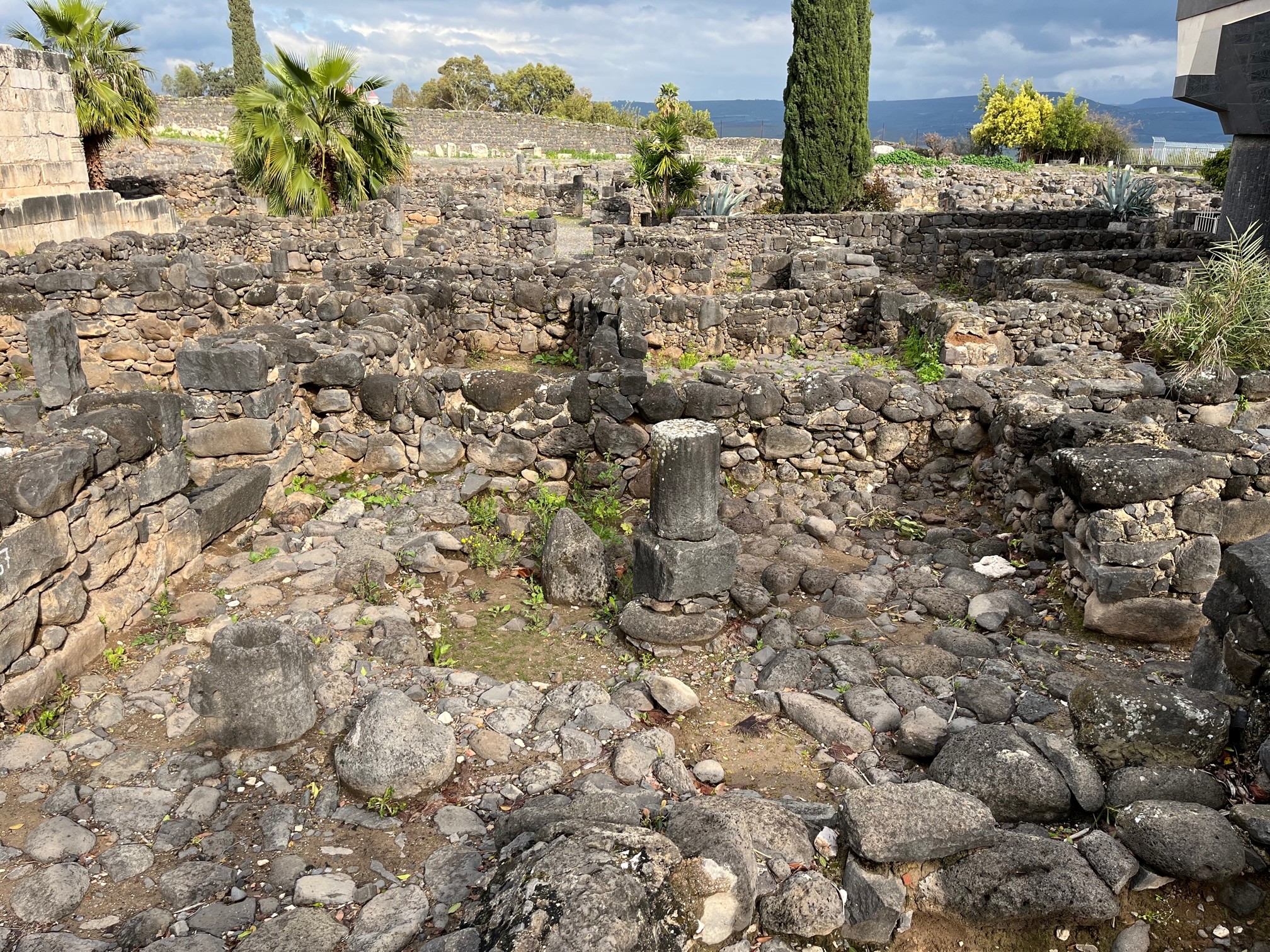
Peter’s house is almost certainly identified and it was surreal to stand so close to the walls that may have witnessed Christ miracles such as healing Peters’ mother-in-law. The city of 1,500 was sometime gathered at the door of this unassuming home such that the roof was torn off for access to Jesus.
We also went to the synagogue which, although destroyed and rebuilt since the time of Christ, still boasts to be the site of Christs’ casting out a demon.
Interestingly, Capernaum’s strategic position as a rest stop along the Via Maris made it a convenient place for collection of taxes (think Matthew) and location for a Roman garrison (think Centurion who asked Jesus to heal his servant).
Capernaum is the site of many more miracles such as the healing of Jairas’ daughter, and catching a fish for tribute tax money. How many can you name?This trip has made me pay so much more attention to the “where” and the “when” of the Bible stories we have mindlessly read over and over.
Unfortunately, Capernaum did not—despite their interest in Jesus—respond to him as Messiah. Consequently, it incurred one of Christ’s sternest warnings in Matthew 11:21-24.
From Capernaum we traveled to Hippos. This is a fairly recent dig opening to the public really for the first time. Your friends have not been here.
While this more up-scale town was not specifically named as such in Scripture, it’s position in the Decapolis on the other side of the Galilee allows us to identify it as the likely place where Jesus comes to heal one man who has been possessed by demons.
Jesus’ peculiar stop in an unclean, far-off town to radically change the life of one crazy man lit a flame that quickly raged into a bonfire. He would likely be in this same town where 4,000 would be listening so long that Jesus felt the need to feed them from a few loaves and fish.
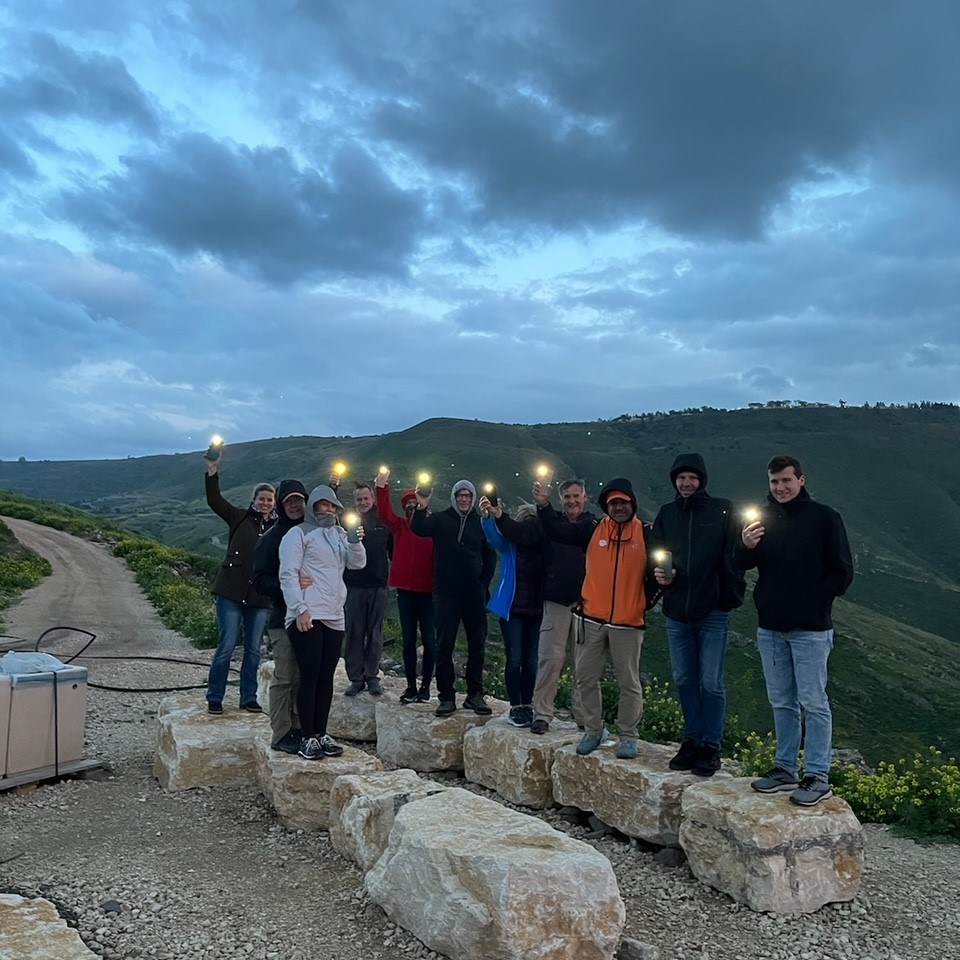
It is very possible that as Jesus gave his famous Sermon on the Mount just across the sea (likely near Capernaum) he might have used Hippos as his illustration when he spoke the words “Ye are the light of the world; a city set on a hill cannot be hid.” Maybe not. But just the same, we used this spot to renew our commitments to be a city on a hill to light up the night in this darkening world.
Unfortunately, our candles would not light in the chilly wind, so we resigned ourselves to waving our cellphone lights over the Sea of Galilee. A beautiful way to end our first day in the little strip of land God chose as the setting for the birth of His son.
Did I Mention it was Cold? it was cold. It was green. It was beautiful.
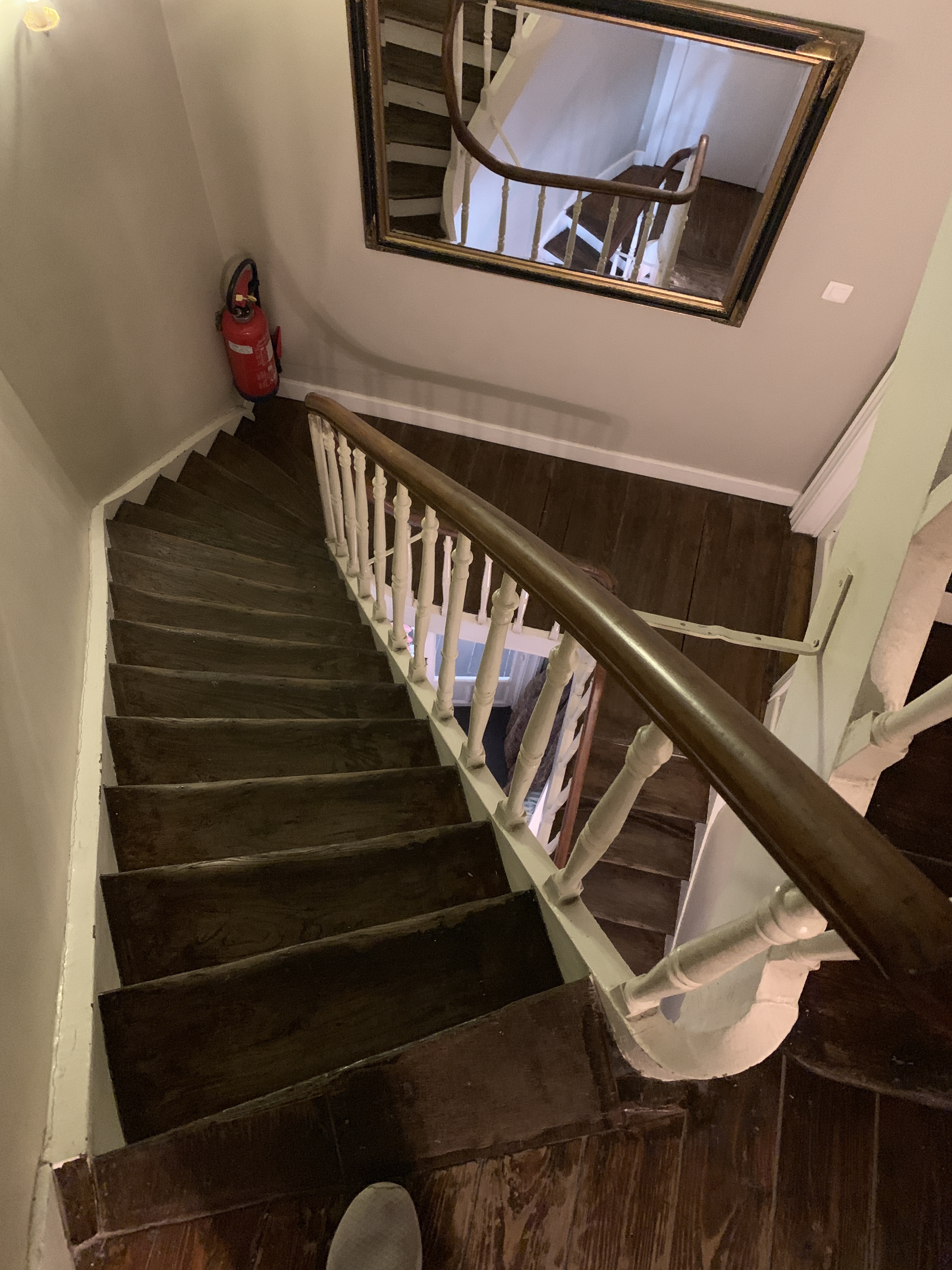
Each day starts with me locking my hotel room door with a key from the roll I was given when I checked in, then winding my way down six flights of steep, creaky stairs to the lobby. There, a little man who takes his duty to feed us breakfast very seriously, gives a cheery “Bon Jour!” and offers me a glass of freshly squeezed orange juice. I never say no.
After that, he brings a basket of bread to the table, crowned with a soft buttery croissant. I do not know who makes them but I want to take them home with me. I can smell the freshness. He also brings a plate of meats and cheeses and will make a boiled egg if I ask. Of course, There is also a selection of fruit and muesli. Today, I had a plumb and an apricot.
I realized that I still haven’t had a waffle here in Belgium and I probably should before I leave. In fact, I definitely should.
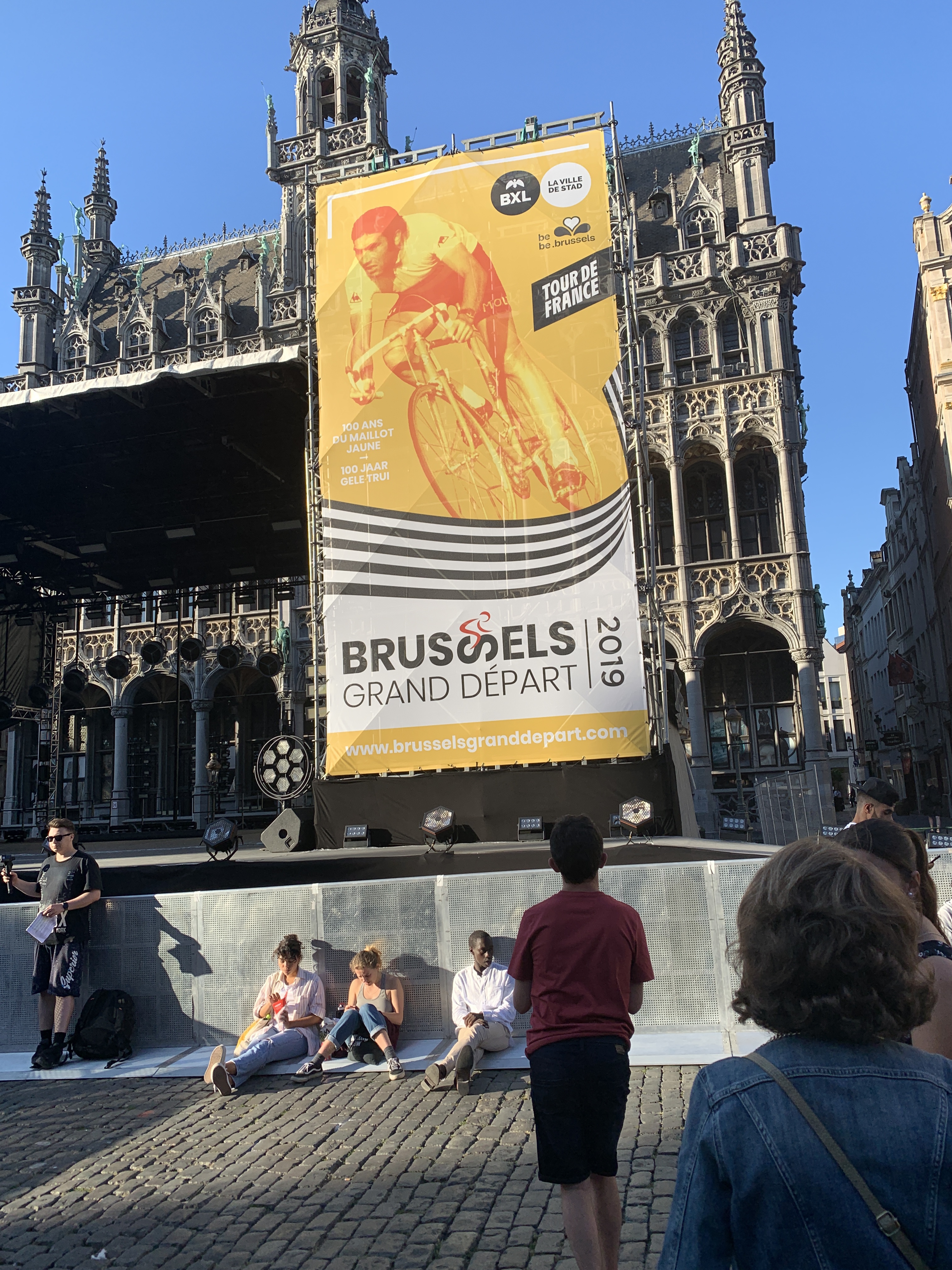
The area around my hotel (the main square) is being set up for the Grand Start if Tour de France beginning Saturday. I have watched the set up take shape each day as I walk past.
Last group tour today; I was going to Amsterdam. Our guide today couldn’t have been more opposite of the energetic Spanish girl we had yesterday. He was tall and large and quiet. This tour was supposed to be in both English and Spanish and I don’t think either was his native tongue, so it seemed like it was often too much trouble for him to translate, so he said nothing at all.
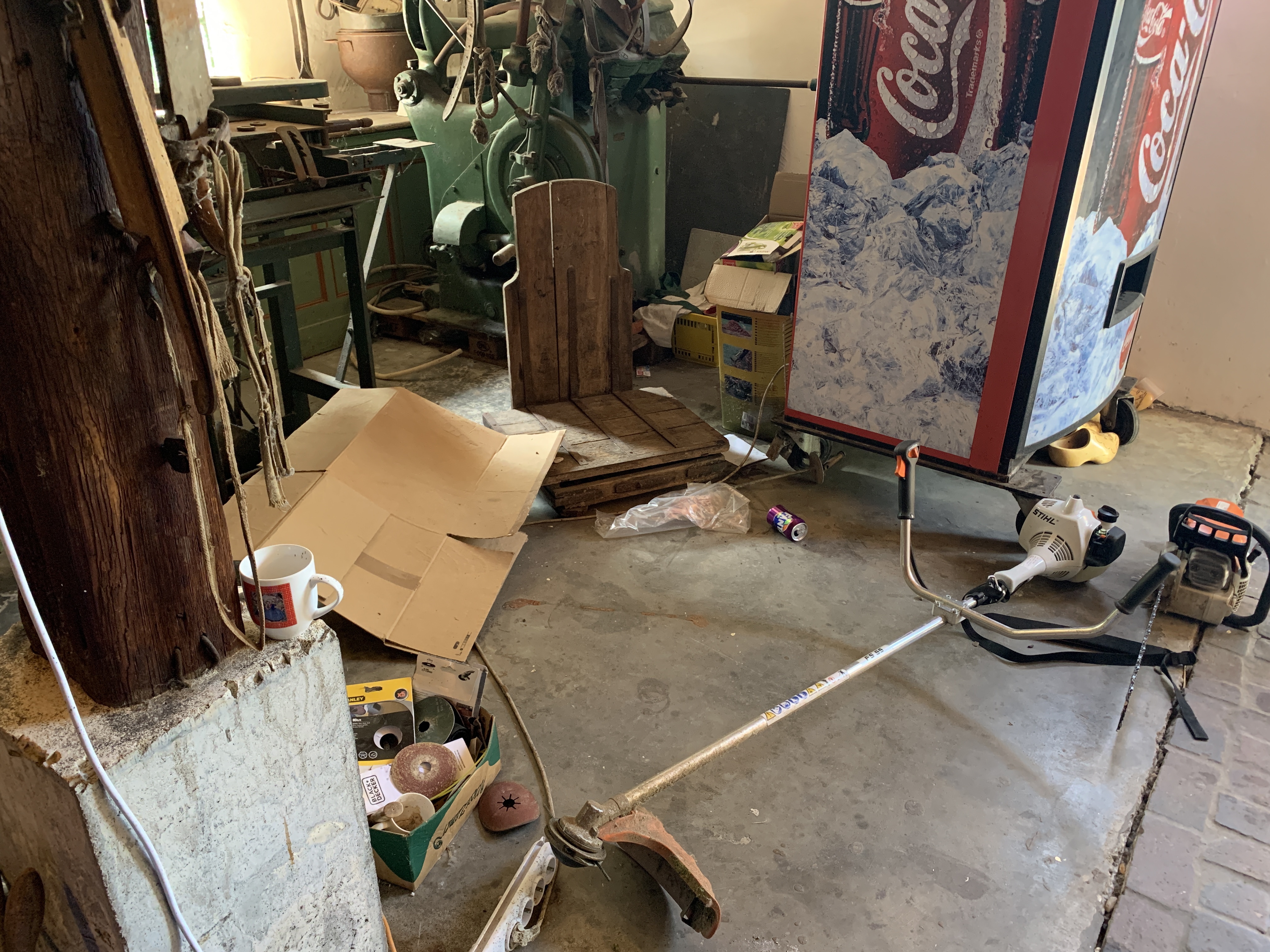
Our first stop was a small, family owned farm near the city center where they make cheese and clogs. My first impression getting off the bus was that it was a bit quirky and unkept—not at all the type of place you would expect a tour bus to stop. My second impression—and all of them after that—was that it was VERY quirky and unkept.
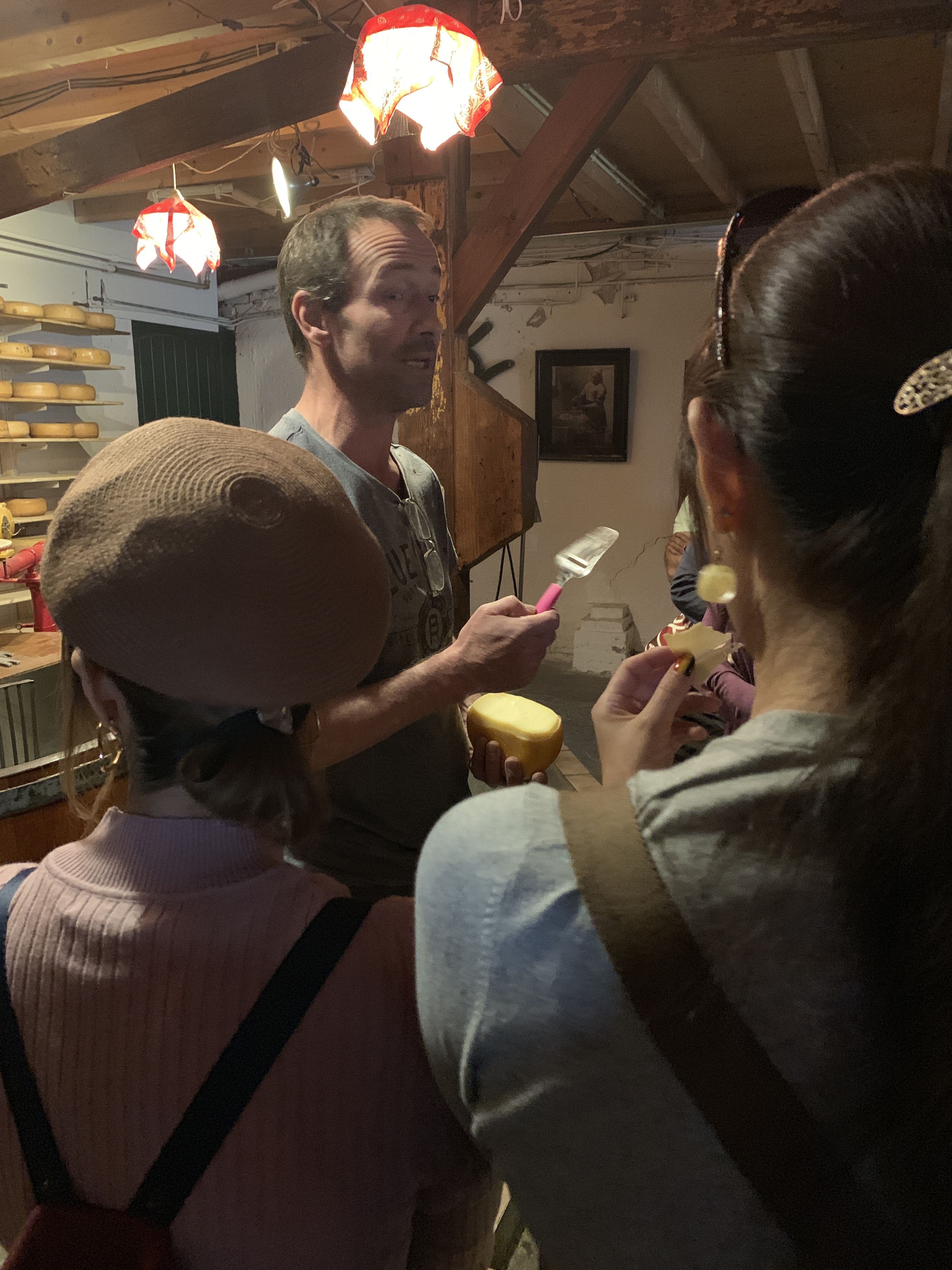
Perhaps we stopped there because the owner spoke many languages. He impressed us by spouting off in English, and the languages used in the surrounding countries (French, German, Dutch), but also Chinese (says he knows three dialects), Japanese, Spanish, Russian, and maybe others; I don’t know.
He tried to do his little cheese making demonstration in English and Spanish—he really did. But I think it was more of switching back and forth—one step in English, the next in Spanish, and so on. Either way, he had a lot of personality and was fun to listen to. He started and finished with samples of their Gouda cheese in various flavors and it was delicious. He said he was an eighth generation cheese maker. That’s hard to get my head around.
We didn’t get a demonstration, but they had clogs in all stages of development and he was clacking around on the concrete floors modeling them for us and claiming they were very comfortable.
His wife and son ran the gift shop so it had some order and charm to it. I have no room in my back pack for a block of cheese, so I choose a magnet for my memory of this fun and funny little place.
After the cheese shop, they gave us a photo op with a windmill. While the technology of these old windmills has been replaced with a newer version, there are lots of the old ones still running. I learned they were meant to be (and this still is) someone’s residence. I don’t know how convenient it is, but It’s sure cute.
Another thing I never knew about that area is how many Dutch live in little houseboats along the water. There were all shapes, sizes, and price ranges. And there were cool looking bike paths all through the country. That looked like fun to me.
The guide showed us some of the highlights of Amsterdam as the bus slowly crawled through the city. While Belgians are more known For their bike riding, I quickly realized that the Belgians have nothing on Amsterdam. “Beware of bikes!” Was the guides final admonition as we got off the bus. I heard some folks talking that there are 3,000 bike/pedestrian accidents in Amsterdam a year and I realized this was, quite possibly, the most dangerous part of my trip. The bicycles often had their own lane, but one had to cross the land somehow and there was a constant stream of bikes and they did not slow down. The bike parking lots were amazing and at the train station I wondered how one would ever find their bike again.
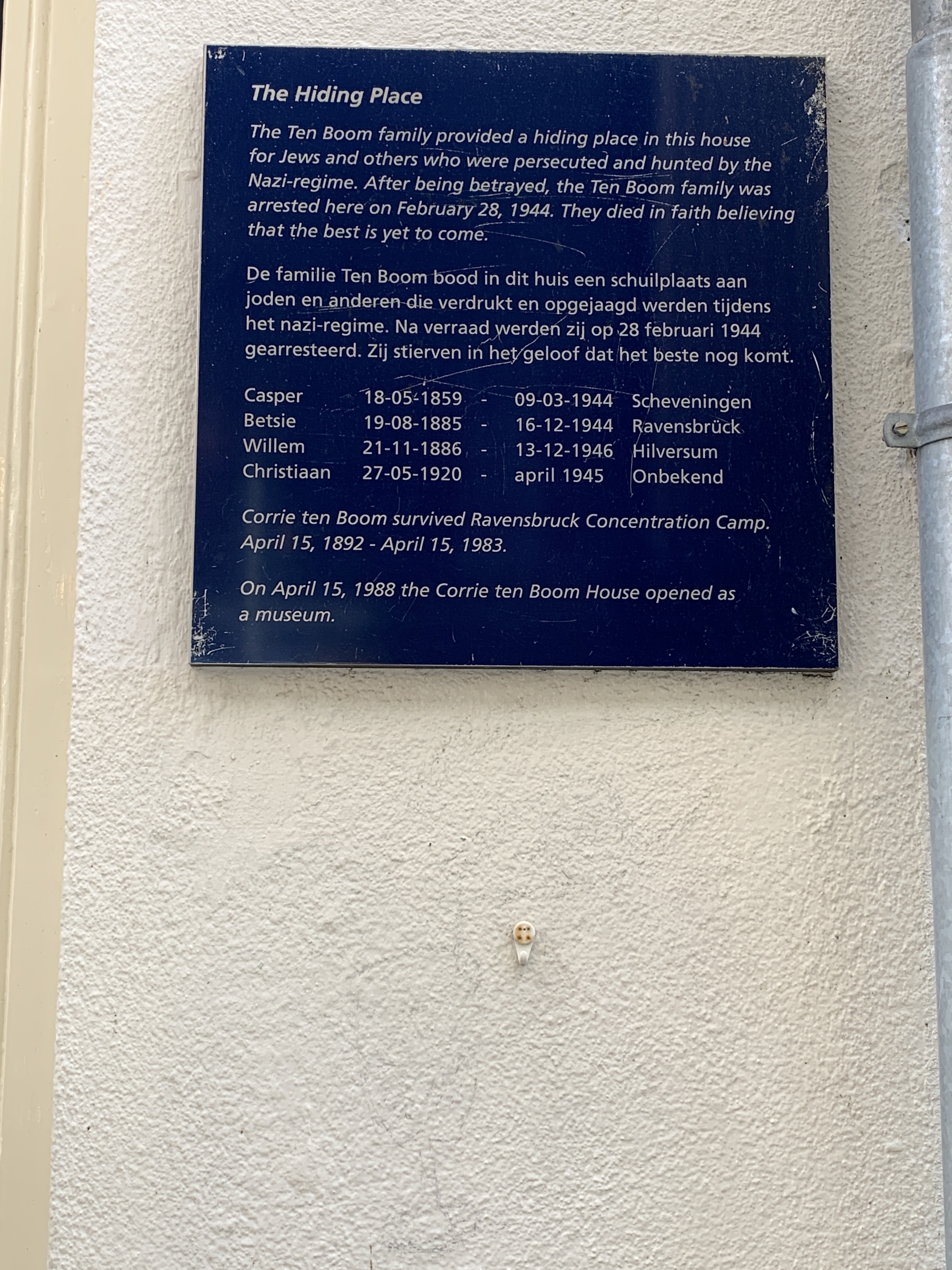
I decided to go to Haarlem by train first. I have been there before but I was drawn to the home of Corrie ten Boom and her family. They helped Jews during WWII and consequently Corrie suffered in Ravensbruck concentration camp and her sister died there. I would recommend the stop if you are ever nearby.
Back in Amsterdam, I walked around, smelling Cannibis and attempting to get in the Anne Frank museum, but I guess you can’t even enter a gift shop unless you buy tickets months in advance.
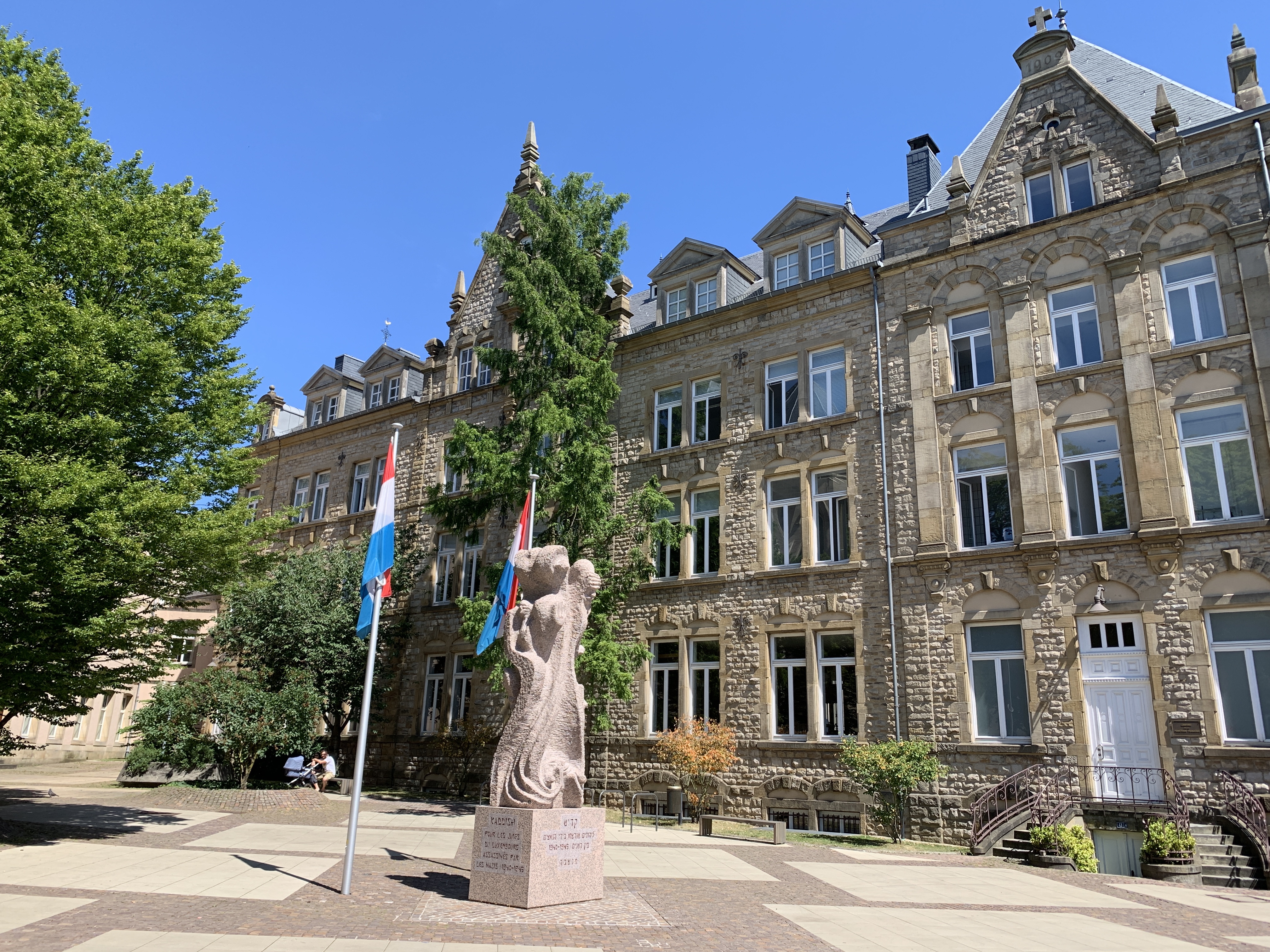
I dodged bikes, walked along the flower market, attempted to avoid the red light district, and and eventually bought a smoothie and some Dutch chocolate. It’s a very busy city and there was lots more to see but things I was most interested such as the Bible museum and Jewish museum seemed to be closed. If I had known the bus was going to be more than 30 minutes late, I would have taken the time to go by the Jewish WWII memorial that we had driven by earlier. Oh well.
My take away from Amsterdam is that it is a beautiful town and you might enjoy it if you are quick on your feet and like the sickly sweet smells. But the highlight of my day was probably the quirky cheese man and his delicious Gouda cheese.
Up until now, the group tours I have taken have had max a dozen people. Today, we were 50 people strong all on one big bus. The common tie between all of us: English.
That definitely doesn’t mean American. In fact, I’ve been surprised at how few Americans I’ve met on this trip. Far more have been Canadian, Australian, from the UK, or even India. Many times, I’ve looked at someone and thought they were from the US until they opened their mouths.
Anyway, our perky Spanish guide held a large purple sign over her head and hearded us toward the bus. There were a half dozen other tours leaving from the same time and place so it was a bit of a zoo. Thank goodness for her purple paper taped on a wood stick which she held triumphantly above the crowd.
It is a long ride to Luxembourg. But Marium taught us a lot about both Belgium and Luxembourg on the way. Belgium is a country of about 11 million (roughly the population of Georgia); Luxembourg has about 600,000 residents. Both are effectively governed by Parliament although Belgium has a king and Luxembourg has a duke.
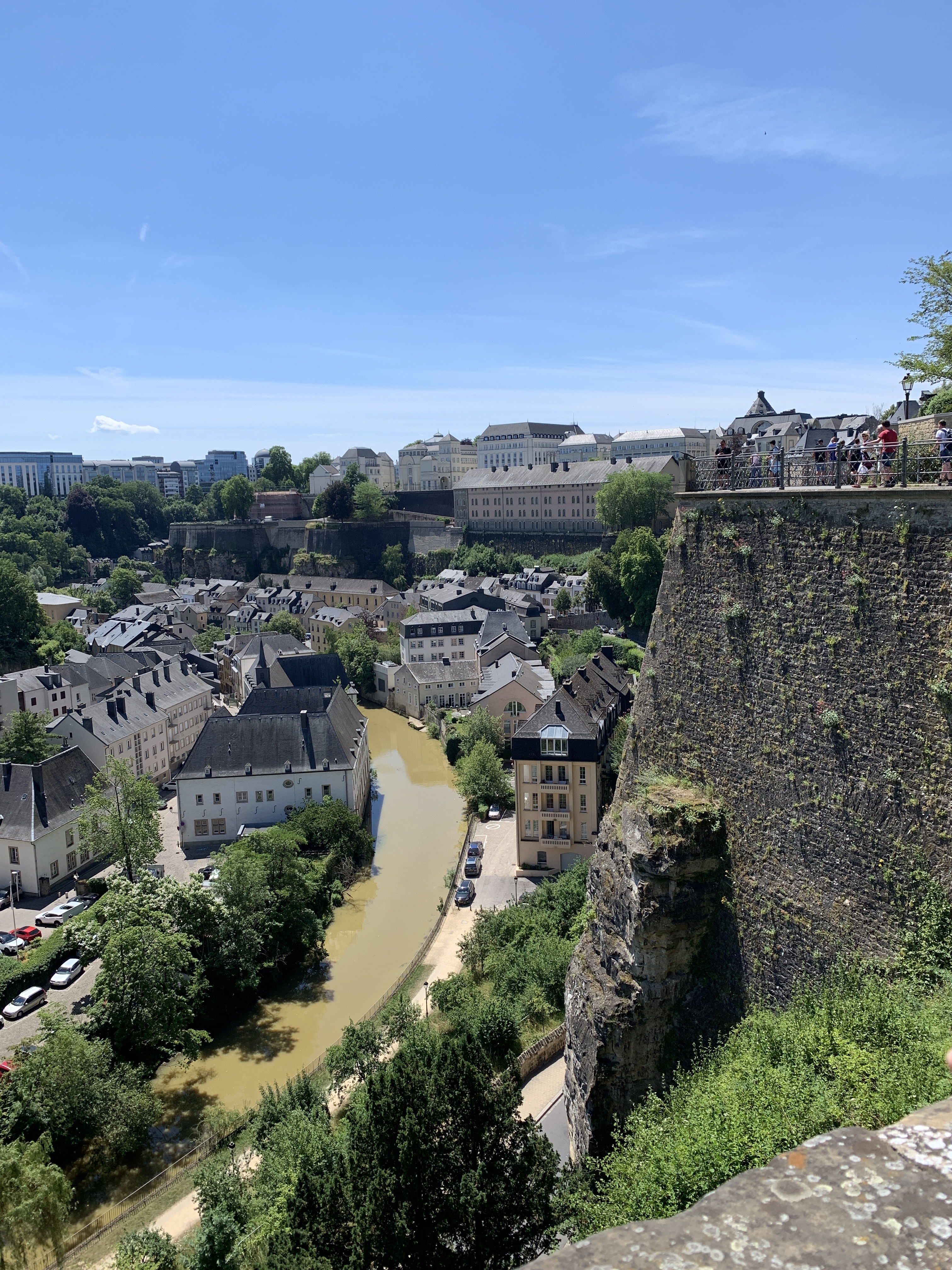
Luxembourg, the city, is as old as the ninth century—having originally been settled by the Vikings. Luxembourg, the country, only dates to the nineteenth century. The name Luxembourg means “little fortress” and the city was apparently a very good one. When we got there, we saw some of the old city walls and it was easy to see why the location above the river was formidable.
The main industry in Luxembourg is banking and finance and it is a wealthy country considering its size. Minimum wage is roughly ~$13,50/hr and they have more Porsches per capita than anywhere in the world.
I didn’t really feel like paying 25 Euro for lunch, so another girl and I walked around a bit and then got a wrap at a small corner cafe. I haven’t said this (or thought it) about any food I’ve had so far this trip, but there is only one word to describe it: disgusting. (Mostly mayonnaise with wisps of lettuce, tomato, and prosciutto). I noticed my friend threw hers in the trash can too as we walked as well.
The guide showed us Parliament and the Duke’s residence. There were a number of churches, squares, an outdoor farmer’s market, and all the typical retail offerings of a small, high end town. She also talked a good about the EU, which had its beginnings here and cracked me up with some of her English phrases such as her frequent references to “sky scrappers.”
Leann and I walked across the bridge to the new part of town and back…There is a pedestrian/bike bridge suspended below the car bridge which made for a nice shady place to walk and take some pictures.
By the time we were back, we pretty well felt like we’d seen Luxembourg. There were some nice parks, and overall, I got the feeling that it would be a pretty nice place to live if you’re in the banking and finance world and you really like mayonnaise.
On our return trip, we stopped in Dinant, a very picturesque Belgian village where the inventor of the saxophone is from. We then wound our way up the river; it was a very beautiful drive. The area had had a coal boom in the 60s and 70s but has since lost most of its industry and is now mostly summer homes and strawberry growers.
I felt a little yuk by the time we got back. I wasn’t sure it is was from the long ride or the mayonnaise lunch that I had tried to chase away with gummy bears.
Overall, it had been a good day, but I felt the boxes had sufficiently been checked and I likely won’t be returning to Luxembourg.












































 Law, Grace, & Real Estate